Get Full Government Meeting Transcripts, Videos, & Alerts Forever!
Get email alerts on the Open Meetings Law topic
No spam. Unsubscribe anytime.
City legal counsel reviews new open-meetings rules, warns against quorum emails and texts
Summary
City legal counsel Aaron Shibe told the Huron City Commission that a recent legislative change treats electronic communications among a quorum as an open meeting, and he recommended notice and restraint on sending policy material to all commissioners at once.
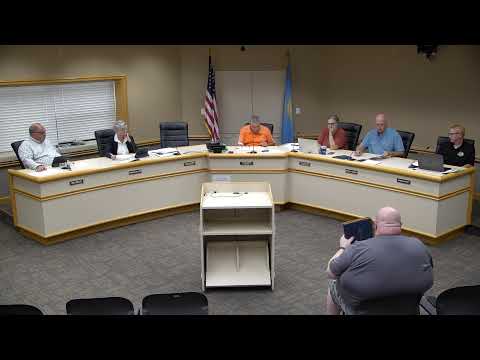
Huron — The Huron City Commission received its required annual review of open-meetings rules from city legal counsel Aaron Shibe, who told commissioners the Legislature clarified this year that electronic communications among a quorum are considered a public meeting and should be avoided for policy discussions.
Shibe said the new requirement — part of recent legislation he summarized for the commission — also includes a statutory obligation to record the training in the minutes. “Don’t text each other with a quorum of the commission. Don’t email each other with a quorum of the commission to talk about, you know, some issue that’s facing the city,” Shibe said, adding that logistical messages (for example, asking about availability for a special meeting) remain permissible.
Shibe told the commission that, as a practical matter, the statutory notice requirement remains 24 hours for public meetings and that councils should post agendas at least 24 hours in advance. He recommended calendaring the training annually, ideally at the first regular meeting each fiscal cycle, to meet the new statutory requirement.
The attorney emphasized the distinction between informational communications and those likely to prompt policy discussion. He said sending substantive material simultaneously to all commissioners may invite substantive replies and thus create an unintended, unposted meeting. “If the white paper goes out and then commissioner Smith replies all and says, well, I think that this is ridiculous and this is what I think we should do… that’s what the law is intended to not have happen,” Shibe said.
Commissioners asked several clarifying questions about logistics and best practice. Commissioner Smith confirmed the 24-hour notice is measured in clock hours (for a 5:30 p.m. meeting the agenda must be posted by 5:30 p.m. the prior day). Commissioner Klute and others asked whether social or ceremonial events require quorum notices; Shibe said notice of a quorum is a reasonable practice in some cases but likely unnecessary for purely ceremonial events where policy discussion is unlikely.
Shibe also reviewed permissible topics for executive session, including litigation, contract negotiations and certain personnel matters. He reminded the commission that use of executive session is discretionary and that, when in doubt, the body can consult counsel and consider public notice.
The review concluded with no formal action other than the commission’s recording of the training in the meeting minutes as required by law.