Get Full Government Meeting Transcripts, Videos, & Alerts Forever!
Get email alerts on the Traffic Enforcement topic
No spam. Unsubscribe anytime.
Woonsocket officials discuss possible red-light and speed cameras under RFP 6309
Summary
City officials, including the police chief and Mayor Christopher Beauchamp (via a written statement), described safety goals for automated traffic enforcement, reviewed state rules for cameras and cited vendor bids for RFP 6309; no ordinance or contract was adopted at the Sept. 8 council meeting.
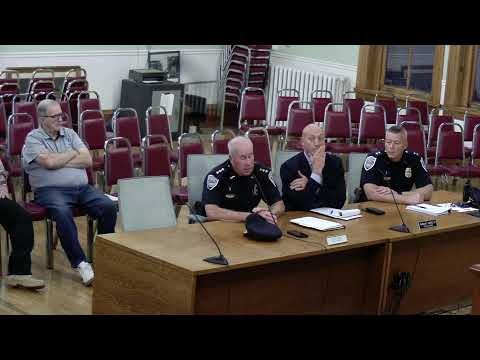
Woonsocket City Council members on Monday discussed a proposal to deploy red-light and speed cameras across the city under prior RFP number 6309, with police leaders and the mayor saying the system aims to change driving behavior and reduce crashes.
Police Chief said the objective of automated traffic enforcement is “to generally enhance the safety of the motoring public and pedestrians as well as ped as pedacyclists here in the city of Woonsocket.” He told the council the cameras are intended to change the habits of drivers who routinely speed or fail to obey traffic signals and that traffic complaints are among the department’s most frequent calls.
Mayor Christopher Beauchamp, in a written statement read to the council by the city solicitor, said, “I am supportive of this initiative going forward.” Beauchamp wrote that authorizing speed and red-light cameras as allowed by state law would “assist our police department [to] enforce traffic laws and ultimately keep our community and students safer.”
The discussion emphasized that the cameras and their processing are governed by state law. The solicitor and police described statutory limits in general terms: school-zone cameras operate only during the school year (180 days by default), typical legal hours are 7 a.m. to 6 p.m. unless modified, and footage retention is restricted (video not tied to a violation must be deleted within 90 days and footage tied to adjudicated cases must be destroyed within one year, as stated during the meeting).
Director Gillette said he strongly supports the program, calling automated enforcement “the only way to change traffic violators' behavior” and noting it frees police officers for other duties. Councilwoman Gonzales said she was “definitely in favor” of cameras, citing the technology's continuous coverage and the department’s staffing shortages.
Officials described operational details discussed with other jurisdictions: Pawtucket reported reductions in serious crashes after installing cameras, while Warwick recently added cameras and recommended starting with more cameras rather than fewer because it is easier to remove locations later than to add them. Police staff said vendors have recommended camera placement based on traffic studies and crash data, but final siting decisions would be made locally.
The council heard specific technical and enforcement points the police plan to follow: an officer must review and verify each potential violation before it is issued; the threshold for issuing a school-zone speed violation discussed in the meeting would be 11 mph over the posted limit (for example, in a 20 mph school zone a violation would begin at 31 mph); and civil penalties discussed were framed as a $50 fine for a violation under the described process. Officials repeatedly said the violation would be civil, not a moving violation, and would not affect driving records or insurance points under the current statute as described to the council.
Council members and staff noted common concerns raised by residents, including perceptions the program is a revenue grab and cybersecurity or privacy risks. The police and solicitor repeated statutory safeguards and data-retention limits discussed above and encouraged residents to review external studies and other cities’ reports on safety outcomes.
No ordinance, contract award, or final policy was adopted at the meeting. Staff told the council that vendor bids for the RFP had closed again that day at 2 p.m. and that proposals will be reviewed; the council would be briefed on a final project before cameras are activated.
The meeting ended without further action on the cameras. A motion to adjourn, made by Councilwoman Gonzales and seconded by Councilwoman Harmon, passed and the meeting was adjourned.