Get Full Government Meeting Transcripts, Videos, & Alerts Forever!
Get email alerts on the School Discipline Pbis topic
No spam. Unsubscribe anytime.
Fox Chapel High rolls out FCA Way, a schoolwide PBIS program to recognize positive behavior
Summary
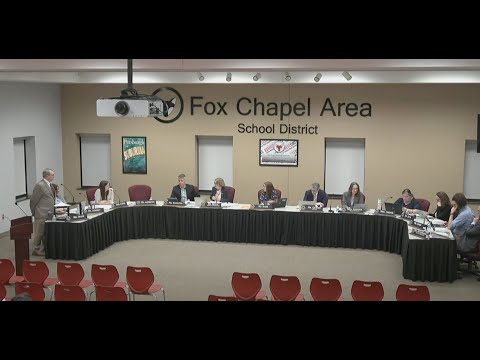
At the Sept. 8 Fox Chapel Area School District board meeting, high school staff and students described the new FCA Way, the district’s implementation of Positive Behavioral Interventions and Supports (PBIS) at the high school level, including training, recognition systems and a student-produced video.
At the Sept. 8 Fox Chapel Area School District board meeting, Fox Chapel Area High School staff and students described the school’s newly implemented PBIS program, called the FCA Way, designed to teach and recognize three core expectations: focused, caring and accountable.
District and school leaders said the FCA Way is the culmination of a K–12 PBIS rollout and is intended to provide common language and recognition systems at the high school. Dr. Nicole Smith, introduced to the board as Fox Chapel Area High School principal, said a team of about 20 teachers and five to six students developed the high school’s version of PBIS and produced a matrix that defines what “focused, caring and accountable” looks like in different school settings. “It flips the narrative,” Smith said, explaining the program emphasizes recognizing positive behavior rather than reacting only to mistakes.
Student junior Aidan Drucker, who helped produce a short video about the FCA Way through the district communications work-experience program, told the board the initiative “proactively recognizes and rewards positive behavior while keeping students accountable for their actions.” Drucker said the FCA Way was created with student and teacher input and that he already “can feel the difference” in school culture.
Dr. Howard, identified in remarks as a high school principal, and teacher Mr. Poulnitz (a member of the initial educator-student team) described classroom and schoolwide uses of the FCA Way. Howard said the program “serves as the final stage in a coordinated K to 12 framework” and stressed that habits of behavior remain relevant through high school. Poulnitz said the FCA Way has “promoted a more positive integrated classroom culture” and helps students stay focused on learning while supporting personal growth.
Board members and staff described training and rollout details: the district provided roughly four days of training with the Allegheny Intermediate Unit (AIU) for principals and core teams; the high school’s core team then developed recognition systems. The board was shown a student-produced video explaining the FCA Way; presenters noted the meeting’s playback had intermittent sound problems, but the board later played the video successfully during the meeting.
The board also heard operational details about early recognition efforts. For example, the high school will award FCA Way points for punctuality during a month-long initiative; grade levels with the most points will receive a special breakfast. Materials for parents, including a matrix and a QR code linking to the expectations, will be distributed at open house. Administrators said the high school is the last building in the district to implement a PBIS framework and that each school’s program differs because of local school community input.
Board members expressed support for the initiative. No formal action item related to adoption or funding of the FCA Way was on the agenda; speakers described it as an operational rollout supported by prior planning and training.