Get Full Government Meeting Transcripts, Videos, & Alerts Forever!
Get email alerts on the Environmental Health topic
No spam. Unsubscribe anytime.
District to resume air-quality checks and radon testing; board to vote on funding in Sept. 22 meeting
Summary
Facilities staff presented a plan to resume routine indoor air-quality monitoring and radon testing across the district, estimating about $40,000 to test half the buildings this cycle and proposing a three-year testing cadence; the board will consider the purchase at the Sept. 22 meeting.
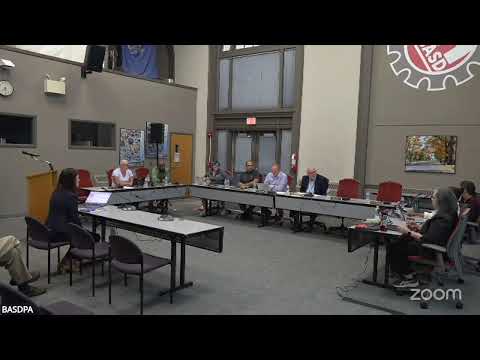
Bethlehem Area SD facilities staff told the board Sept. 8 that the district will resume its long-standing indoor air-quality monitoring program and will restart radon testing this fall after a roughly 10-year gap.
Facilities staff said the district has performed proactive indoor-air testing since about 2005 on an alternating A/B schedule (roughly half the buildings each year) and monitors temperature, relative humidity, carbon dioxide, carbon monoxide, volatile organic compounds and fungal spore traps. The district plans to test its “B” buildings this fall and to align radon testing on a three‑year cadence going forward.
Officials described radon as a naturally occurring gas from rock and soil decay and noted there is currently no Pennsylvania law requiring school radon testing. Staff said the district last tested about a decade ago and will return to testing to take another “pulse” after extensive HVAC work in many buildings.
Facilities staff estimated the cost for the spot air-quality program at about $18,000 for half the district and estimated radon testing at roughly $23,000 for half the district, totaling approximately $40,000 for this cycle. Staff said they hope to start radon work in October and that testing will focus on spaces in contact with the ground (slab‑on‑grade), not every classroom; they referenced an EPA sampling guideline of roughly one sample per 2,000 square feet as a planning reference.
The administrators told the committee they are negotiating directly with the radon-testing vendor used about a decade ago to reduce costs and will present the air-quality and radon purchase to the full board for approval during the Sept. 22 regular meeting. Board members asked whether the items could be split into separate votes at the regular meeting; staff said the board can move to split items at either the committee level or the regular meeting.
Facilities staff emphasized that test reports will be available and that the district intends to be transparent about results. They also noted that testing is a preventive measure and that the home environment (for example, basement bedrooms) can present different radon risks than schools.