Get Full Government Meeting Transcripts, Videos, & Alerts Forever!
Get email alerts on the Liquor License Class Change topic
No spam. Unsubscribe anytime.
Neighbors divided as Bar V seeks full-liquor license and earlier opening hours on Morton Street
Summary
Bar V’s owner offered to withdraw a sidewalk-cafe request and narrow other changes but kept a bid for full liquor and earlier opening hours, prompting months-long neighborhood debate and no immediate committee decision.
Bar V, a wine-focused neighborhood restaurant on Morton Street, pressed the Community Board 2 licensing committee Tuesday for a class change to allow full liquor service and to open earlier for lunch — while withdrawing a previously proposed sidewalk-cafe application.
The applicant’s attorney, Max Bookman, told the committee the owners had “eliminated the sidewalk cafe” request and dropped a request for later closing hours after neighbors objected, but were keeping a request to convert the restaurant’s license to allow distilled spirits and to open at 11 a.m. for lunch service rather than the current 2 p.m. opening. “We’ve taken it away,” Bookman said of the sidewalk-cafe submission, “and as a gesture of good faith to the community … we’ve withdrawn our application with DOT.”
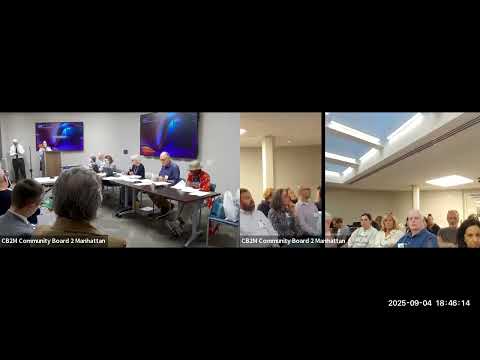
The proposal prompted a large turnout from Morton Street residents, who said the narrow, mostly residential block already suffers noise and late-night activity from nearby nightlife. Several speakers said Bar V’s present wine-and-beer operation is welcome but that a full-liquor license and any move toward later hours would change the street’s character.
Opponents emphasized the block’s physical constraints and the proximity of residences. “We have bedroom windows that open either to the air shaft behind the restaurant [or] to the street,” said a Morton Street resident, noting many units lack central air and are habitually occupied with windows open. “We will be kept awake by the air conditioning unit that runs later if it runs longer.”
Supporters and regular customers offered the opposite view, saying the owners are long‑time neighborhood residents and careful operators who have helped make the place a community gathering spot. “Bar V is superb beyond belief in terms of offerings of wine and food,” said Armin Parsanajat, who described visiting the restaurant regularly. “I would just love Bar V to thrive and be around for 20 years.”
The committee’s discussion focused on compromise language: the applicants proposed keeping background music only, limiting private events, and agreeing to maintenance and noise‑control measures for HVAC and exhaust systems. Residents pressed for firm, enforceable stipulations on hours, no exterior speakers, limits on private events and quarterly maintenance checks of mechanical equipment.
No final committee recommendation was recorded at the meeting. The matter remained under consideration at the close of the hearing; the applicant and neighborhood representatives said they would continue discussions. The transcript records extended negotiation but not a committee vote on the class‑change request.
Why it matters: The licensing question pits two routine city policy goals against one another — support for small neighborhood restaurants and protection of residential quality of life. A full‑liquor license can materially change operating economics and clientele for a small restaurant; neighbors said they want to see a track record before the committee approves a permanent change.
What’s next: The application remains before the committee. Applicants said they would continue talks with neighborhood groups; any formal change to the state license will require a separate review by the New York State Liquor Authority.