Get Full Government Meeting Transcripts, Videos, & Alerts Forever!
Get email alerts on the Open Fires Local Law topic
No spam. Unsubscribe anytime.
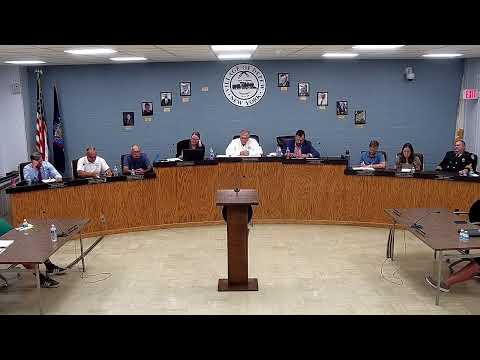
Depew trustees hold public hearing on proposed open‑fires law after residents complain of persistent smoke
Summary
The Village of Depew held a public hearing Sept. 8 on Local Law No. 3 of 2025 to adopt the current New York State Fire Code, move permitting to code enforcement and limit 'constant burns' to four hours; residents described multi‑day backyard fires and heavy smoke.
The Village Board of Trustees of the Village of Depew opened a public hearing Sept. 8 on Local Law No. 3 of 2025, a proposed local law to update rules governing open fires and incinerators and to give village enforcement officials clearer authority to address persistent or hazardous burning.
Attorney Sam Alba, who drafted the proposed law, told the board the measure would adopt by reference the most recent New York State Fire Code, move permitting for larger fires to the code enforcement office, and add a limit that would bar "constant burns" that continue more than four hours. "The idea here isn't to stop people from having regular campfires," Alba said. "It is simply to give the village a little bit more authority to stop people who are overdoing it, constantly burning things all day, burning rubbish, burning waste material, or making fires that are way too big and too close to their houses."
The proposal is framed as a reactionary tool for addressing nuisance or safety situations rather than routine recreational fires, Alba said. He and staff also said the law would allow the village to reference Department of Environmental Conservation rules regarding burning garbage and other hazardous materials so that village officers can enforce locally.
At the hearing, several speakers described recurring smoke and prolonged backyard fires. "My neighbor ... started a fire that Monday night. I kid you not, it smoked till Thursday," said Susan Wisniewski, who gave her address as 33 Rogers Drive. "I had to close my windows every single day that week." Wisniewski urged the board to adopt enforcement tools so police or code enforcement can respond when neighbors are affected.
A village code enforcement officer and a representative of the fire department described how enforcement would work in practice. The code officer suggested adding language to allow officials to require extinguishment when burning unseasoned or wet wood produces excessive smoke. The fire department representative said crews have been called in the past to extinguish unattended or hazardous backyard fires and that the new law would give the village a clearer starting point for action. "If smoke is going into somebody's house ... or it's a safety hazard," the speaker said, police could instruct people to extinguish the fire and issue summonses if they do not comply.
Resident Dave Cruiser said he supports reasonable limits and that he enjoys small bonfires at home: "I'm okay with that. I like to have little bonfires in my backyard." Several trustees and staff emphasized the intent to avoid penalizing ordinary, safe recreational fires.
The board authorized advertising and holding the public hearing on Sept. 8 and opened the hearing at 7:16 p.m.; trustees closed the hearing at 7:27 p.m. Trustees and staff said the board will consider any suggested improvements before a final vote at a future meeting.
The public record shows the law was previously on the books until it was repealed in 2011; staff said they could not locate a clear contemporaneous rationale for the repeal and that the updated draft is intended to restore local enforcement tools while aligning with current state code.
The board invited written comments and suggested edits before taking a final vote at the next meeting.