Get Full Government Meeting Transcripts, Videos, & Alerts Forever!
Get email alerts on the Land Use Zoning topic
No spam. Unsubscribe anytime.
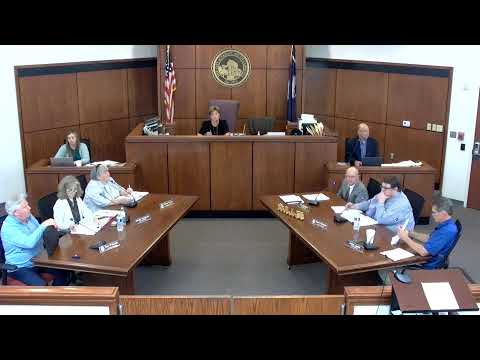
Easley council approves first reading of Unified Development Ordinance after debate; adopts two amendments
Summary
After extended debate, the City of Easley City Council approved first reading of a new Unified Development Ordinance, voting down a tabling motion, then approving two amendments: a roughly 10% density reduction and removal of a 500-square-foot fresh-produce requirement for convenience stores.
The City of Easley City Council voted to approve first reading of an ordinance to repeal the existing zoning and land development regulations and replace them with a Unified Development Ordinance, after rejecting a motion to table the item and adopting two amendments.
Council members spent more than an hour debating whether the document was ready for a vote and whether the council should extend the moratorium while tweaks are made. Councilwoman Donna Rainey urged a delay, saying, "I don't see any issue with extending that moratorium 3 months for us to get this document correct." The motion to table received two votes in favor and five opposed, and council moved forward with the first reading.
Councilman Justin Alexander proposed and defended two amendments that were adopted before the main vote. Alexander described the first amendment as "about a 10% density reduction," saying it replaces a set of density values with lower ones. The second amendment removed a proposed requirement that convenience stores set aside at least 500 interior square feet for the sale of fresh produce; Alexander argued, "The government should not be in the business of telling private businesses what they have to stock." Both amendments were read into the record and carried by council vote.
Supporters of immediate adoption said the UDO process has taken more than a year and the city can continue to amend standards after adoption. One council member urged that the city "wrap this thing up and vote on it" so the document can be used and further revised as problems arise. Opponents said the ordinance remained incomplete and that voting on an unfinished draft was poor practice.
Council members and staff repeatedly noted that several recent developments were approved under the 2015 zoning rules, and that some density categories had already been reduced in August 2023. Council discussion included references to prior approvals and to the city's stated goal of balancing growth and infrastructure capacity.
The ordinance passed first reading. Council did not provide a roll-call tally in the minutes for the final first-reading vote; the transcript records the tabling vote as 2 in favor and 5 opposed. The ordinance will return for subsequent readings according to the council's schedule.
The meeting record shows the city has spent money on the UDO process; one speaker noted the project cost to date was $78,600. Council members said further changes can be made through amendments on later readings if necessary.
Ending: Council members said they expect additional public comment and future council workshops to address outstanding issues before final adoption. The first-reading approval allows the city to proceed to the next statutory steps for ordinance adoption and further council consideration.