Get Full Government Meeting Transcripts, Videos, & Alerts Forever!
Get email alerts on the Animals Noise Ordinance topic
No spam. Unsubscribe anytime.
Clemmons residents press council to limit roosters; council asks staff to review ordinance options
Summary
Residents asked the Village of Clemmons to adopt rules restricting roosters after repeated early-morning crowing; law-enforcement officials described limits to enforcement and the council directed staff to review a Winston-Salem ordinance and other options.
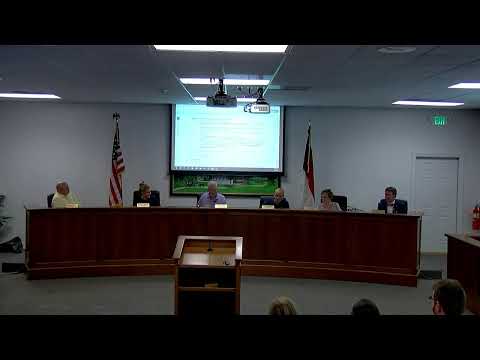
Residents of a Clemmons subdivision urged the Village Council on Sept. 8 to adopt an ordinance restricting roosters after repeated crowing that neighbors say has disrupted sleep and daily routines.
"We are being disturbed throughout our day and night by one rooster," resident Crystal Heston told the council, adding that lots in her subdivision are about a quarter-acre and that roosters crow "throughout the day and night." She gave council members a copy of what she described as Winston-Salem ordinance 2022-18 and asked Clemmons to adopt the same requirements for keeping chickens, fowls and pigeons.
The request matters, residents said, because county animal-control and law enforcement told them enforcement options are limited without a local ordinance. Lieutenant Chatham of the Clemmons-area law-enforcement team told the council that deputies must witness a violation to charge it and that a magistrate or the district attorney might decline prosecution absent in-person evidence. He said citizens can present time-stamped audio or video and file complaints with a magistrate but that the village’s ability to seize animals or compel removal depends on the wording of a local ordinance or animal-services authority.
"To charge somebody, it's gonna have to happen in our presence," Lieutenant Chatham said, adding that residents can go to a magistrate with evidence and that, in the city model, animal services can seize roosters under a local ordinance.
Councilmember Mike read a local noise code provision and pushed for a solution, saying the village cannot rely solely on county enforcement. He quoted North Forsyth’s noise ordinance (section 15-1) and argued the village should either enforce existing law more effectively or adopt an ordinance that is enforceable in practice.
Council members unanimously agreed to forward the Winston-Salem ordinance copy given by residents to village planning staff, the village attorney and the manager for legal review. The council asked staff to examine whether an ordinance should bar roosters or expand to other animals, and to consider setbacks, lot-size standards and other provisions so enforcement would be feasible.
The council did not set a deadline for staff work or adopt a specific ordinance at the Sept. 8 meeting. Residents seeking enforcement were told by deputies that they could pursue a magistrate complaint and must be prepared to testify in court if prosecution proceeds.
Clarifying details provided at the meeting include residents’ estimate of lot sizes (about one-quarter acre), the claim that rooster crowing had reached "up to 130 decibels" cited by a speaker, and the Winston-Salem ordinance reference given to council ("2022-18," described by the resident as appearing on page 68 of the 2022 ordinance book). The council and staff discussed that a city-style ordinance could allow animal services to seize animals in repeat or severe cases, while county/DA policies can limit criminal prosecutions without in-person evidence.
The council directed staff to study options and return with legal advice and draft language; no ordinance was adopted at the meeting.