Aberdeen School Board hears ESL report: 280 English learners, 13 home languages
Loading...
Summary
ESL teachers told the Aberdeen School Board that the district serves 280 English learners across 13 home languages, with Spanish and Korean the largest groups; staff described assessment, service models and interpreter needs.
Aberdeen School District 06-1 ESL staff told the School Board on Sept. 8 that 280 students currently receive English-language learner services and that the district supports speakers of 13 home languages, with Spanish and Korean the two largest language groups.
Tara Hill, ESL teacher at Mike Miller Elementary, and Bailey Hoffman, ESL teacher at Lincoln Elementary and CC Lee Elementary, told the board about staffing, assessment and how students qualify for — and exit from — the program.
Hill said the district has eight certified ESL teachers, five stationed at elementary schools, one middle‑school teacher who serves both middle schools and two high‑school teachers, and two educational assistants. "We have 280 English learners," Hill said. The teachers described a mix of pull‑out small groups, one‑on‑one instruction and push‑in co‑teaching in general classrooms.
The presenters described the district's assessment and exit rules. Families who mark a language other than English on the home‑language survey trigger the WIDA screener. Students who qualify begin ESL services and take the state ACCESS test each January–February. Hill and Hoffman said the district's stated exit criteria are a score of 5 or higher on ACCESS or a combined pathway using the student's classroom ELA score and ACCESS results (for example, a 3 or 4 on ELA plus a 4 or higher on ACCESS). "This last year in the 24‑25 school year, we had 11 percent of our students exit the program," Hill said.
Teachers said service frequency varies by student proficiency: some students receive services two to five times per week. Hoffman described common language acquisition patterns: "Listening actually probably comes the easiest to our students," she said, while reading and writing tend to take longer to reach the district's exit benchmarks. They told the board that the state estimates it can take five to seven years for English learners to reach full academic proficiency.
The presenters reviewed supports for families. When parents cannot participate in conferences in English, the district hires vetted interpreters or uses a phone‑based interpreting service called Propio; staff also recruit bilingual community members to assist. Hoffman said the district is actively seeking Korean interpreters, which staff identified as a recurring need.
Board members asked how many languages the district has served historically; Hoffman said the high was 21 languages. The teachers also shared an example of a recent newcomer student who scored a 6 on the WIDA screener after arriving midyear, a case staff said illustrated how quickly young children can acquire English in some circumstances.
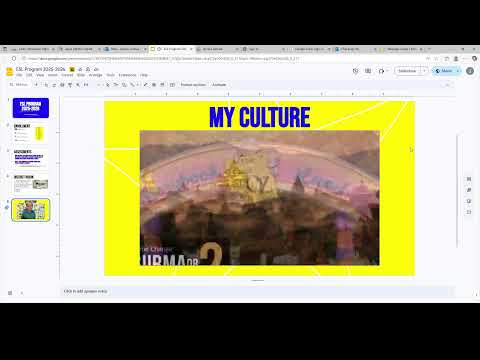
The presentation concluded with teachers describing classroom projects used to build language and cultural connections, such as student multimedia projects on family and culture that combine speaking, writing and technology.