Get Full Government Meeting Transcripts, Videos, & Alerts Forever!
Get email alerts on the Finance Audit topic
No spam. Unsubscribe anytime.
Auditors give DeWitt Public Schools clean opinion on 2024-25 financial statements
Summary
External auditors presented the district's year-ended June 30, 2025 audit, reporting an unmodified (clean) opinion, no material weaknesses in internal control, and a decrease in the district's pension liability and an increase in its OPEB asset.
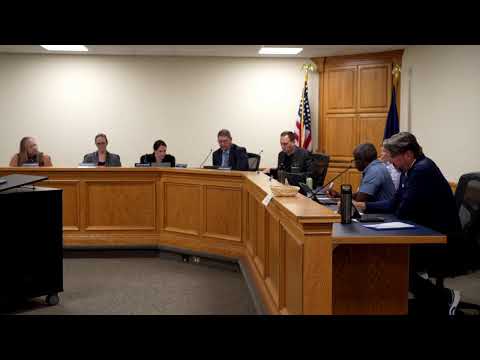
DeWitt Public Schools auditors presented the results of the audit for the year ended June 30, 2025, telling the board they issued an unmodified — or "clean" — opinion on the district's financial statements and found no material weaknesses in internal control.
The presentation, delivered by the audit team, summarized three documents in the board packet: the board presentation and two official audit documents. The auditors said they completed the audit in accordance with U.S. generally accepted accounting principles and the auditing guidance in AU 260. The team reported no disagreements with district staff, no audit adjustments, and no instances of suspected fraud or legal acts that required reporting.
The auditors highlighted several year-over-year balance-sheet and budget trends. General fund assets were reported at just under $14 million, about $700,000 lower than the prior year, driven mainly by state-aid receivable timing for July and August. General fund liabilities were about $4.6 million, roughly $400,000 lower than the prior year, primarily because of a reduction in unearned revenue.
On pension and postemployment benefits, the auditors said the Michigan Public School Employees' Retirement System (MPSERS) pension liability declined from about $58 million last year to about $46 million this year, a decrease the auditors characterized as roughly 20 percent. The district's other postemployment benefit (OPEB) position, which was an asset of about $1 million last year, increased to approximately $8 million this year.
The auditors also noted changes in revenue composition: total general fund revenues were roughly flat compared with 2024 (about a $50,000 increase), local sources were about the same, state sources rose slightly, and federal revenue declined. The decline in federal revenue reflected the end of COVID-related ESSER funding; the auditors said ESSER-related amounts fell below the $750,000 single-audit threshold for the year, so no single-audit engagement was required.
Expenditures in the general fund increased about $1.4 million, or 3.5 percent, year over year. Salaries rose by about $1 million, fringe benefits fell about $600,000, supplies and other rose about $1.2 million, and debt service fell about $100,000. The presentation showed instruction spending as the largest functional category, about 64–71 percent of operating expenditures depending on the comparison year; the auditors noted DeWitt's instructional share (71% on the state-data comparison) was higher than the state average reported in the available data.
The auditors flagged the district's fund balance as a percentage of expenditures had declined from about 24 percent to roughly 22.5 percent, which they said was consistent with the district's budgeted plan to use fund balance and with the timing of one-time federal and categorical revenues that ended in the year.
The audit team said capital assets on the government-wide statements were about $27.5 million. The district showed an unrestricted deficit on the government-wide presentation driven primarily by the pension liability; restricted net position of about $10 million reflected an OPEB asset and restricted bond funds.
"We issued an unmodified or a clean opinion on the statements," the auditors told the board, and they dated the management representation letter on Sept. 4. The auditors also informed the board that they had implemented the new GASB standard related to compensated absences (GASB 101) and that, aside from required GASB disclosures, there were no audit adjustments or findings.
The board asked clarifying questions during the presentation; district staff and the audit team described starting the audit work earlier than usual this year and noted extra time was required to implement the new accounting standard. The auditors emphasized that the testing of capital-project expenditures tied to bond language produced no exceptions.
The board did not take formal action on the audit during the presentation; the 2024-25 annual audits were included later on the consent agenda and approved as part of routine items.