Get Full Government Meeting Transcripts, Videos, & Alerts Forever!
Get email alerts on the Unified Development Ordinance topic
No spam. Unsubscribe anytime.
Easley council debates new unified development ordinance; members split on ADUs, density and setbacks
Summary
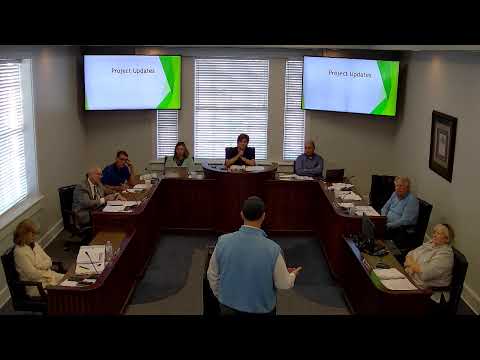
City of Easley councilors spent the Sept. 8 meeting on a first reading of ordinance 2025-11, a proposal to repeal the city's zoning ordinance and land development regulations and replace them with a unified development ordinance; councilors debated accessory dwelling units, second-entrance triggers, creek buffers, setbacks and density but did not take a final vote.
City of Easley councilors spent the bulk of their Sept. 8 meeting on a first reading of ordinance 2025-11, a measure to repeal the city’s existing zoning ordinance and land development regulations and replace them with a unified City of Easley development ordinance (UDO).
The debate focused on six open questions staff flagged for council direction: whether to include accessory dwelling units (ADUs) in the UDO or treat them as a separate ordinance; whether subdivisions should require a mandatory second entrance based on lot counts or a traffic study; the size of buffer zones adjacent to protected water bodies (currently 25 feet or four times the channel width); whether traffic impact studies should be mandatory for developments with more than 100 parking spaces; removal of campgrounds/RV parks from the code; and setbacks and density adjustments.
Why it matters: the UDO would replace two longstanding planning documents and set rules for future development. Councilors said the measure affects growth, housing affordability and public safety (access for emergency vehicles), and the city is operating under a moratorium that expires in November. That deadline framed arguments for both moving forward and pausing for more review.
Most contentious issues
Accessory dwelling units (ADUs). Staff and the city planner said ADUs had been included in the draft but that planning staff and the planning commission left the policy choice to council. City Planner Corey (identified on the record as “our city planner”) told council the draft could be modified and that the city would draft a separate ADU ordinance if council preferred. Multiple councilors expressed concern about standalone ADU structures being rented as short-term rentals or left vacant; planner Corey said options include deed restrictions and recorded covenants that “run with the land” to limit non-owner occupancy. A number of councilors favored removing ADUs from the UDO and drafting a standalone ADU ordinance for later incorporation; others said they preferred to incorporate ADU language into the UDO and amend later.
Second-entrance requirement. The draft currently uses 51 lots as a trigger for requiring a second entrance or a traffic study. Council discussion noted this threshold varies by nearby jurisdictions (Camden uses 31 lots) and that practical constraints—existing development and South Carolina Department of Transportation (DOT) approvals—sometimes prevent additional entrances. Staff suggested retaining the traffic-study approach and letting studies determine if a second entrance is required; some councilors said the question deserved a separate discussion and possibly a later amendment.
Buffers for water bodies. The draft currently requires either a 25-foot buffer or four times the width of the water body (whichever is greater). Staff explained that for small streams the “four times” rule yields modest buffers but that larger creeks generate much bigger setbacks. Several councilors supported keeping the currently written approach; none proposed a final numeric change during the meeting.
Traffic studies: may vs. shall. The draft currently states that a development with more than 100 parking spaces “may” be required to submit a traffic-impact study; several councilors supported changing “may” to “shall” to make the requirement mandatory for larger developments.
Setbacks and density. Councilors discussed raising front setbacks from 20 feet to 30 feet in certain residential zones (R-7.5 and R-6) and standardizing side setbacks at 10 feet. One councilor proposed a 10% reduction in the draft’s density numbers (an amendment provided to councilors before the meeting that would, for example, move some per-acre densities down by roughly 10%). Supporters said a modest density reduction would slow growth and preserve infrastructure capacity; opponents said reducing density would raise lot costs and could worsen housing affordability.
Public-notice and annexation issues. Councilors and staff also discussed protest annexation procedures, notification signage and written notices to neighbors within a specified radius for annexations. Staff said the draft incorporates expanded notice practices recommended from prior public engagement.
Process and timing
Several councilors asked to delay final action so members could review changes staff continues to make to the draft; staff and other councilors said the moratorium’s November expiration meant the council must either adopt the UDO or extend the moratorium. Staff proposed two paths: approve the first reading as drafted and use the second reading to adopt targeted amendments, or table action and schedule additional meetings. Multiple councilors said second reading amendments would be a cleaner, more efficient path: approve the first reading tonight, then return with amendments incorporated for second reading and final vote.
Quotes
"We extended this moratorium. It has a deadline. I just don't understand why all of this stuff is coming up at the nth hour," said a councilor who identified concerns about last-minute changes.
"We will change them when — before the next meeting — and we'll put those changes in a document saying, here's what we changed from this draft to the final draft," Mario, a staff member, told council.
What was decided
Council did not adopt final ordinance language during the Sept. 8 session. Staff said edits discussed on the record would be incorporated and presented at second reading; several councilors signaled support for approving the first reading tonight and returning with amendments at second reading. No final votes on ordinance 2025-11 were recorded in the transcript.
Next steps
Staff committed to produce a version that tracks the edits and to circulate the draft amendments before second reading. Council also discussed the option of scheduling a special meeting or extending the moratorium (the latter would require a separate vote at a subsequent meeting).