Get Full Government Meeting Transcripts, Videos, & Alerts Forever!
Get email alerts on the School Budget And Equity topic
No spam. Unsubscribe anytime.
Forsyth County commissioners debate public remarks, school funding and equity concerns
Summary
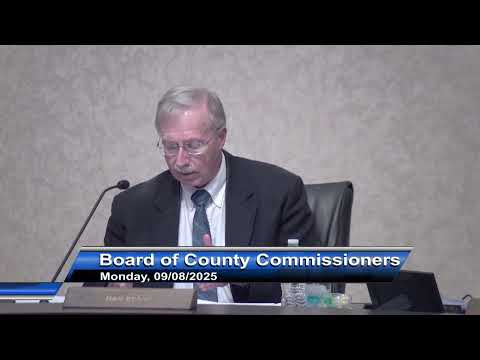
A briefing on Sept. 8 saw an intra-board exchange after Commissioner Woodbury criticized a colleague's public remarks about a June budget motion; commissioners used the moment to reiterate concerns about school layoffs, district debt and racial inequities in contracting.
Commissioners for Forsyth County addressed a public dispute and renewed concerns about school finances and racial equity during a Sept. 8 briefing ahead of the board's Sept. 11 meeting. Commissioner Woodbury said comments made publicly about a June budget motion had been hurtful; Chair Martin and other commissioners responded with acknowledgments and calls to focus on county priorities.
The exchange began after Chair Martin read a statement describing his review of June budget motions. He said he had asked the county manager to retrieve a video of the June budget discussion to clarify motions that would have increased the tax rate to support the school system. Martin said he regretted not raising the request privately and acknowledged that his public request had made Commissioner Woodbury feel hurt.
Commissioner Woodbury used her remarks to highlight substantive county issues: layoffs affecting Winston-Salem Forsyth County Schools (which she said numbered "over 200 employees"), a cited $46,000,000 debt figure for the schools, and what she described as a need for "over 14,000 to 20,000 single family housing units." She also cited published research and reports alleging deep structural inequities: a Harvard (Chetty) finding referenced on economic mobility, a 2023 BPR report on intersectionality and structural segregation, and a 2019 disparity study the county had that found roughly 2.27% of contracts were awarded to minorities across county, city and school procurement, by her account.
Other commissioners stressed support for county staff and the manager's role. Vice Chair Wisenhunt and Commissioner Best urged that staff not be criticized publicly and that policy be made by the board rather than the manager. Chair Martin and others emphasized their mutual interest in supporting schools and working together to address the county's fiscal and equity challenges.
The remarks were a mixture of personal apology, public policy concern, and requests for future collaboration. Commissioners present repeatedly framed the matter as an internal board issue that should not distract from larger county priorities, including school funding, housing needs, corporate retention, and disparities in education and criminal justice outcomes.
No formal action or vote occurred during the briefing on the matter; the discussion was recorded as part of the Sept. 8 briefing and will not itself change policy without a separate agenda item. Several commissioners asked staff to continue coordinating with the school system and community stakeholders to identify policy steps and to avoid further public personal confrontations.
Ending: The board moved on to other agenda items after the exchange. Commissioners said they intend to continue working with the county manager and school board staff on budget and equity issues at regular meetings and at the scheduled Sept. 11 session.