Get Full Government Meeting Transcripts, Videos, & Alerts Forever!
Get email alerts on the Electoral Board Compensation topic
No spam. Unsubscribe anytime.
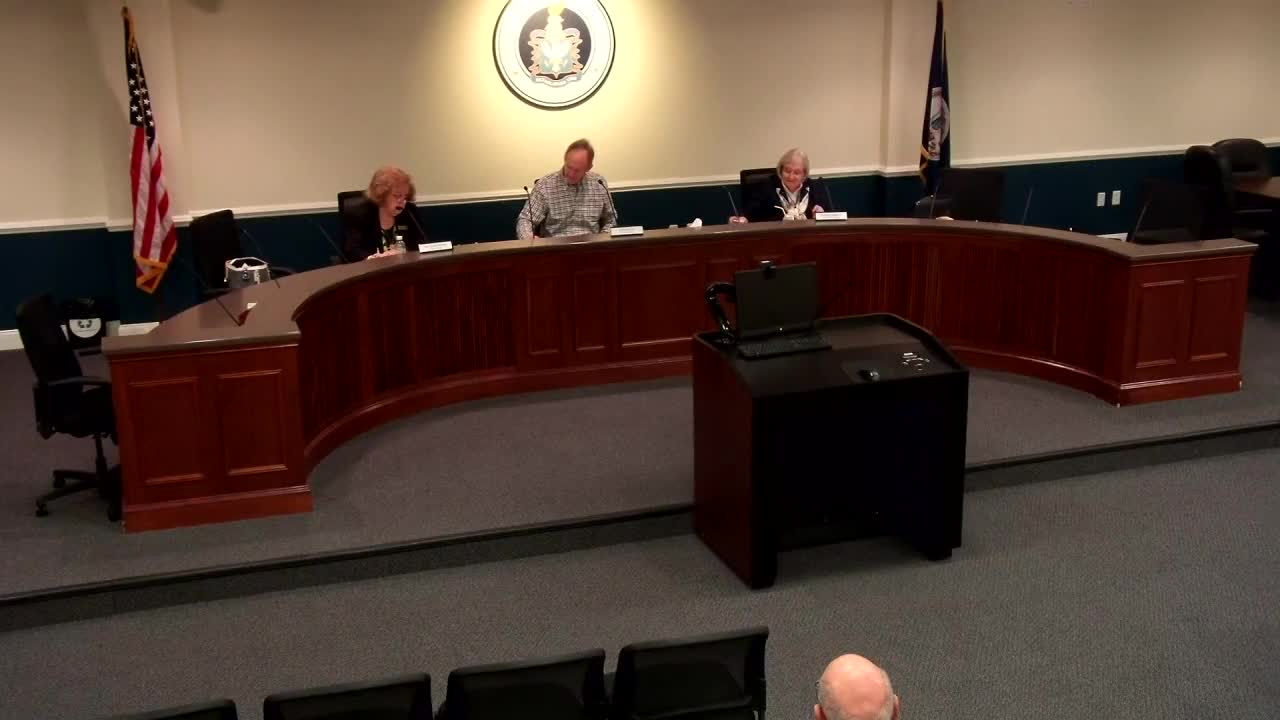
Harrisonburg electoral board presses for pay parity; registrar urges separate budget line
Summary
At a Sept. 8 Harrisonburg City Electoral Board meeting, members pressed for pay equal to precinct chiefs and urged the city to add an electoral-board budget line; the city registrar said state law fixes member pay and recommended the board submit a separate budget request for training and travel.
Harrisonburg City Electoral Board member Ramona Sanders pressed the board’s funding case on Sept. 8, calling for pay parity with precinct chiefs and urging the locality to add electoral-board compensation to the city budget. “The lowest hanging fruit, in my opinion, is equalizing the election-day pay for us with the pay of what the chiefs get, which is $300 a day,” Sanders said.
The board’s registrar, identified in the meeting only as Mark, said he had forwarded the board’s request to include higher pay into his budget submission but emphasized that actual compensation for electoral-board members is set by state law. “I did send your request into my budget that I submitted to Mister Probst, but just because I submitted it doesn’t mean it would be approved or added,” Mark said. He added that he must avoid unilateral financial decisions that could place him at legal risk.
Why it matters: Board members said their duties and hours warrant higher pay; the registrar and board must navigate a mix of state compensation rules and city-level budget processes to change how electoral-board members are paid.
The meeting included repeated discussion of state authority over member compensation and how local supplements are handled. Sanders cited recent increases for chiefs — “it was $280 last year that you paid the chiefs and you put in a raise for them up to $300” — and urged the electoral board to secure parity. The registrar responded that statute and Department of Elections guidance determine the routine compensation and that local supplementation is limited by the specific language of state code. In the meeting the text of the compensation provision was read aloud and discussed as a limitation on the city’s ability to unilaterally supplement electoral-board pay.
Because the legal framework is not uniform across positions, the registrar recommended a procedural change to separate the board’s discretionary items (training, travel and any locally funded supplements) into their own line item in the city budget. “What I’m going to recommend going forward… I would like to separate out you all’s compensation, your training and travel, and any sort of other requests for compensation into a separate budget solely for the electoral board,” the registrar said, explaining he wants to remove himself from decisions that could create a conflict of interest when board members request additional funds.
Board members supported pursuing both state and local channels. Sanders said she has already contacted state legislators and urged others to press their representatives. The registrar said the Department of Elections supplies compensation letters and that occasional corrections from the state have caused confusion; he recommended that the board pursue legislative remedies and also work with the city manager’s office to create a distinct budget line that would track electoral-board expenses year to year.
The meeting produced no formal change in compensation. The registrar said he will discuss the separate-line proposal with City Manager Probst and Finance Director Banks and return with a concrete procedural recommendation. Board members were urged to continue advocacy with state legislators for any statutory change.
Ending: The board did not vote to change pay at the meeting. The discussion closed with the registrar’s pledge to consult with city staff on establishing a separate, itemized electoral-board budget request for future budget cycles.