Get Full Government Meeting Transcripts, Videos, & Alerts Forever!
Get email alerts on the State Budget And Education topic
No spam. Unsubscribe anytime.
MACo warns of growing fiscal pressure on counties; flags education blueprint and housing costs
Summary
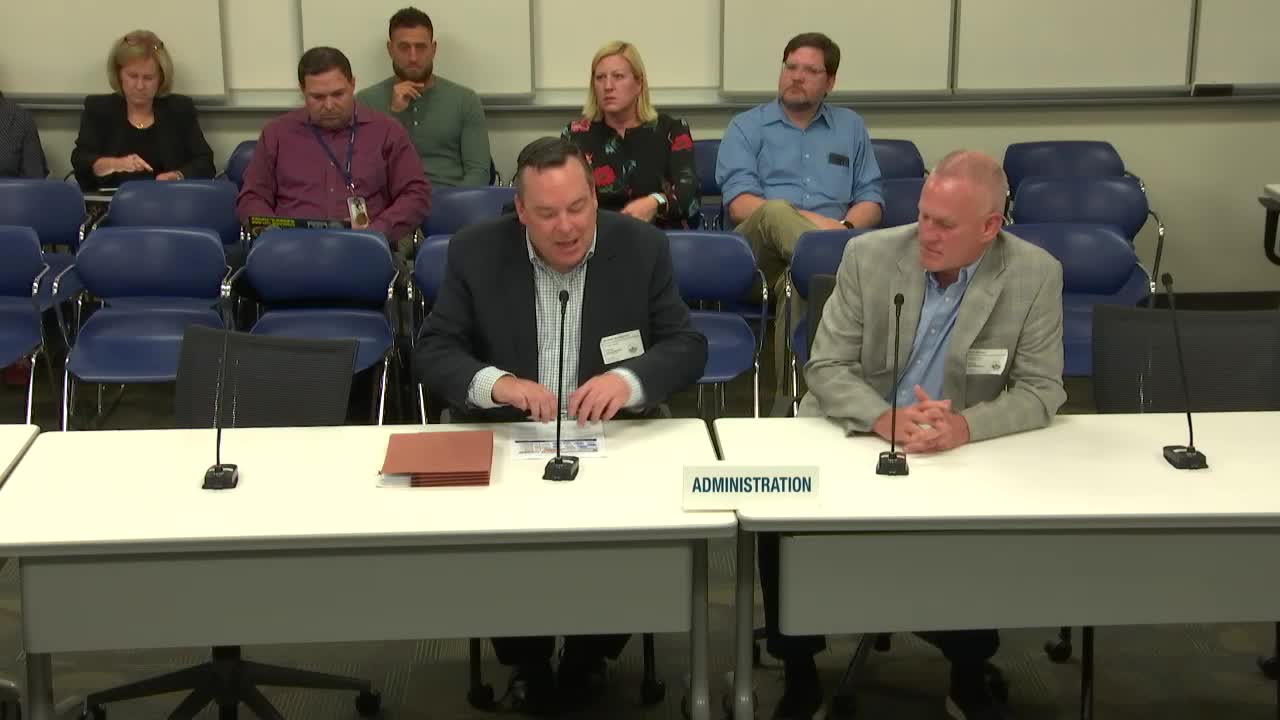
At the Howard County Council's September monthly meeting, Michael Sanderson of the Maryland Association of Counties warned of fiscal uncertainty tied to federal and state budget shifts, the Blueprint for Maryland’s Future funding timeline, and housing shortages that will keep pressure on counties' budgets.
Michael Sanderson, director of the Maryland Association of Counties, told the Howard County Council at its September monthly meeting that counties face rising fiscal uncertainty driven by federal budget shifts, undone assumptions in Maryland’s education funding plan and a statewide shortage of housing.
Sanderson said the region’s proximity to the federal government is no longer an unalloyed stabilizer for local budgets and that the state’s 10‑year education plan, the Blueprint for Maryland’s Future, has left counties carrying unplanned costs. “The federal government contributing to current uncertainty is kind of a new thing for us,” Sanderson said. He warned the county that the state’s Education Trust Fund — which helped pre‑pay parts of the blueprint — will be drawn down by FY 2028, forcing more costs into the general fund.
Why this matters: county leaders said shifts of obligations from Annapolis already are significant and recurring. Council members pressed MACo to quantify the aggregate effect of “state shifts” such as teacher pension invoicing, election costs and other mandates that counties now pay. County officials said those shifts affect budgeting for schools, public health, public safety and capital projects.
Sanderson summarized three priorities for counties: contend with fiscal and federal uncertainty; monitor how the blueprint’s phased funding aligns with real costs; and confront a housing shortage that has raised prices and constrained supply. He said the state used a mix of new revenues and accounting changes to smooth the most recent budget cycle but warned deeper problems could reappear if revenues soften.
Council members amplified the local impact. Councilmember Deb said specific state‑to‑county shifts this year — including pension and assessment administration charges — cost Howard County “approximately $8,000,000.” She also listed recent county items that she called unfunded mandates, including body‑worn camera costs and expanded election training and signage, and asked MACo to begin compiling a consolidated list of shifts and mandates for advocacy in Annapolis.
Sanderson also highlighted the Blueprint for Maryland’s Future. He said the program was largely funded early by a dedicated Education Trust Fund — financed in part by casino proceeds — but that trust fund payments will decline and the state will need to pay a larger share from the general fund beginning in FY 2028. That change, he said, will complicate the 2027 legislative session and could bring more pressure on counties as state leaders look for budget solutions.
On housing, Sanderson said Maryland is short of housing units relative to demand and that state leaders are preparing initiatives to accelerate development on state‑owned land and coordinate permitting. He described a potential tension between faster approvals and preserving robust local public participation on land‑use decisions.
On energy and economic growth, Sanderson and other speakers said generation and transmission capacity are becoming constraints. Sanderson warned that growth in data centers and artificial‑intelligence workloads is driving spikes in electricity demand that existing models did not anticipate. He said transmission upgrades and siting decisions will be central to whether Maryland can attract energy‑intensive investment.
The MACo delegation closed by urging a shared, two‑year advocacy strategy to resist additional unfunded state shifts and to press for clearer, predictable funding for shared responsibilities.
Ending: Council members thanked the delegation and asked MACo to supply the county with more detailed, itemized numbers on state shifts, and to quantify both one‑time and recurring costs so Howard County can refine its 2026–2027 budget planning.