Get Full Government Meeting Transcripts, Videos, & Alerts Forever!
Get email alerts on the Traffic Calming topic
No spam. Unsubscribe anytime.
NDOT shows preliminary traffic-calming plan for Winthorn Drive; residents push for fewer speed cushions
Summary
David Greaves, an NDOT engineer, presented a draft traffic‑calming plan for Winthorn Drive at a virtual meeting on Aug. 27, 2025; residents reported frequent speeding and urged NDOT to reduce a proposed five‑cushion layout to two or three cushions and to prioritize emergency‑vehicle access and drainage.
David Greaves, an engineer with Nashville’s Department of Transportation (NDOT), presented a preliminary traffic-calming plan for Winthorn Drive at a virtual neighborhood meeting on Aug. 27, 2025, saying the design is a draft for discussion and will be revised after community feedback.
The session matters because NDOT designs aim to reduce vehicle speeds to lower the risk of serious injury and death under Nashville’s Vision Zero goals. Residents reported frequent high-speed driving on Winthorn, including unreported incidents, and pushed for fewer, better‑placed vertical calming devices and safeguards for emergency vehicles and drainage.
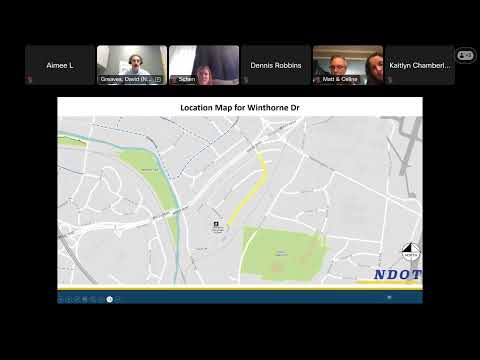
Greaves said the project segment runs between Glen Park Drive and the Bridal Parkway bridge, measured an 85th‑percentile speed of 30 mph, counted 938 vehicles on the study day (as reported in the meeting), recorded roadway widths of about 19–22 feet, and found two crashes involving a pedestrian or cyclist in the past 10 years. He described the traffic‑calming toolkit (speed cushions, speed tables/raised crossings, radar feedback signs, pavement narrowing, bulb-outs, chicanes and mini‑roundabouts) and explained design tradeoffs such as cost, emergency‑vehicle impact and drainage.
"The reason that they have those gaps ... is to reduce the impact to emergency response vehicles," Greaves said, explaining that speed cushions are typically modular rubber sections about 3 inches tall that are bolted to existing asphalt and that cushions commonly come in 7-, 10.5- and 14-foot lengths. He said Winthorn would likely use the 10.5-foot option and that cushions are usually spaced about 300–500 feet apart.
Residents described frequent loud, fast driving. "I regularly see cars ripping down this road going 45, 50 miles an hour," said Tracy (resident and the applicant who requested the project). Tracy said neighbors also reported a recent unreported incident in which a dog was struck and killed. Several other residents described seeing Chargers and other high‑performance vehicles use Winthorn as a cut‑through to avoid nearby speed cushions on Curry Road.
Some residents who oppose long runs of cushions described wear‑and‑tear concerns and noise. "They are a lot of wear and tear on our vehicles every time we pass over them," said a resident who opposed multiple cushions; others suggested full‑width, asphalt speed tables similar to those on Old Glen Rose Road as a less jarring alternative.
Neighbors and NDOT staff debated the number and spacing of devices. Residents repeatedly suggested reducing the draft plan of five cushions to two or three between the two stop signs along the project segment; others favored keeping more cushions. Greaves said three cushions across a roadway require a minimum pavement width of about 24 feet and that Winthorn is mostly 19–22 feet wide, limiting options for a three‑across layout.
Greaves also described non‑vertical measures: radar feedback signs (solar, informational, not enforcement) typically reduce speeds 6–7 mph at the sign; pavement narrowing and curb bulb‑outs slow turning speeds and shorten pedestrian crossings; and raised crossings or speed tables that go full width can serve as marked pedestrian crossings but require additional drainage and construction work.
Participants raised practical questions about placement, emergency access and driveway proximity. Greaves said the construction plans will show exact cushion locations and will include address references and dimensions from driveways so property owners can see whether a cushion would be installed in front of a particular house. He said NDOT tries to minimize gaps where drivers could skirt cushions and will place signs and, when necessary, position cushions closer to the center of the travel lane.
On process and timeline, Greaves said NDOT will: incorporate tonight’s feedback into a revised concept, perform a site visit to confirm widths and constraints, draft construction plans (typically 1–2 months), then post plans online and mail notices before a 6‑week ballot period. The program requires a two‑thirds (66%) yes vote of respondents to approve a project; ballots are one vote per residential property, church or school that touches the affected right‑of‑way and are sent to property owners (renters are not eligible to cast the ballot under current policy). If approved, construction typically enters NDOT’s queue and is expected to occur about 8–10 months after a successful ballot, Greaves said.
Greaves noted NDOT’s selection process: Winthorn was selected in March 2025 from a pool of more than 600 applicant streets; NDOT selected 25 streets that cycle and aims for roughly 50 projects per year. He also referenced a limited 2023 evaluation of six projects that found average speeds declined from 31 mph to 22 mph and 85th‑percentile speeds fell from 37 to 25 mph after installing vertical measures.
Next steps confirmed at the meeting: NDOT will revise the draft to reflect community preference for 2–3 cushions between the pair of stop signs, perform a site visit to verify spacing and curb/yard conditions, post the revised plans for review, and open the formal 6‑week ballot. Residents preferred handling the design revisions and voting online rather than scheduling a second in‑person neighborhood meeting.
The meeting included NDOT staff outreach reminders: Engage Nashville (engage.nashville.gov/trafficcalming) hosts the online survey and project tracker; non‑emergency issues can be reported to HUB Nashville or 311; and NDOT warned that some design options (full‑width tables, concrete crossings) require more expensive construction and may introduce drainage or curb modifications.
NDOT closed by estimating the revised plans would be posted in about 1–2 months for ballot review and thanking residents for input.