Get Full Government Meeting Transcripts, Videos, & Alerts Forever!
Get email alerts on the Animal Shelter topic
No spam. Unsubscribe anytime.
Escambia County animal welfare director urges new shelter to expand capacity, programs; board questions $34M price tag
Summary
John Robinson, director of the Escambia County Department of Animal Welfare, presented a plan Sept. 4 to replace the county shelter with a climate‑controlled, pod‑based facility that would increase kennels from 105 to 168 and expand veterinary and program space.
John Robinson, director of the Escambia County Department of Animal Welfare, told the Community Redevelopment Agency on Sept. 4 that the county’s current shelter is outdated and that a new facility would increase capacity, improve animal care and support expanded community programs.
Robinson said the proposed design would raise functional dog kennel capacity from 105 to 168 and would provide expanded cat housing, clinical space for veterinarians and vet techs, separate intake and treatment rooms, pod-based housing to reduce cross-contamination and climate control throughout the building. “I think we’re probably overdue for a new facility that meets the needs of what we have in this community,” Robinson said.
The presentation described program goals beyond housing: a part-time veterinarian and vet tech (positions approved in the budget but not yet filled), low-cost spay/neuter services, expanded trap‑neuter‑return for community cats, a pet food pantry (Robinson said Jojo’s Paws helped about 2,400 families last year), volunteer and foster support space, a reentry training program for inmate crews, and a larger staging/storage area for disaster response equipment obtained through an MOU with the ASPCA.
Robinson said the Bacon Group feasibility study informed the kennel counts and layout and that the design emphasizes “fear‑free” animal movement and pod systems similar to modern shelter architecture to reduce disease spread and shorten animals’ length of stay. He told the board the current shelter frequently exceeds daily operational capacity (he estimated the shelter had around 298 animals in care at one point during the briefing) and described problems with the existing facility’s layout, lack of climate control and limited parking for staff and visitors.
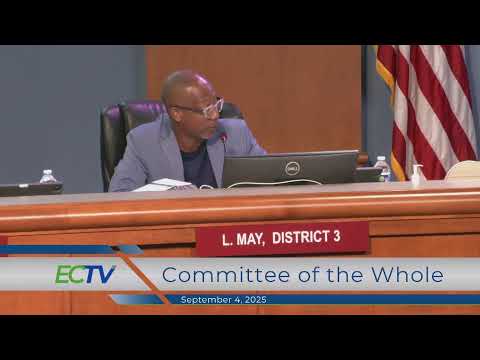
Commissioners acknowledged the operational need but raised funding and scope concerns. Commissioner Berry called the price tag “shocking” and urged staff to reduce nonessential square footage while preserving critical animal‑care elements. “As we start looking at the footprint and we have to match what we can afford to the footprint, I don’t want to cut the kennel layout or the procedure rooms,” Berry said, but he asked to pare administrative and community‑meeting space if necessary. Commissioner May also urged a careful assessment of program areas and long‑term use.
On cost and financing, Robinson and county staff said earlier estimates ranged from the high $20 millions into the mid-$30 millions; Robinson said an initial number “right under $34,000,000,” while staff noted design choices and site selection could reduce that toward the high $20 millions. County staff indicated LOST reserves were a potential funding source and that procurement for design could begin “almost immediately.”
Board members asked several follow-ups: whether the county could secure municipal cost shares from Pensacola (staff said no formal city contribution currently but suggested there may be precedent for inter‑municipal agreements elsewhere), whether the facility footprint could shrink with a two‑story design, and how the county would staff expanded veterinary services (Robinson said recruiting shelter veterinarians is difficult and that the approved part‑time positions have not yet been hired). Robinson said a successful live‑outcome/transport coordinator could improve placement rates and reduce shelter population by moving animals into rescue and transport networks.
Robinson also flagged programmatic steps the agency plans to take before or independent of a new building, including continuing low‑cost spay/neuter partnerships, TNR target area work and expansion of the pet food pantry. He said the department will bring updated ordinance language and other materials back to the board before formal adoption; a full repeal-and-replace of the county animal ordinance is planned for a future meeting.
The board did not take a funding vote at the Sept. 4 meeting. Commissioners asked staff to continue refining design and cost estimates, to explore potential municipal contributions and contractual cost‑share options, and to return with timelines and staffing plans for veterinary hires and program implementation. Robinson said he would provide more detailed costing and the Bacon Group calculations that supported the kennel count.
A nodal takeaway from the discussion: board members support upgrading the shelter’s animal‑care functions but voiced clear interest in reducing project cost and square footage that do not directly affect clinical or housing capacity.
• Votes at this meeting: none on the shelter; procurement for design was described as actionable by staff but no formal board appropriation was taken.