
HHS reports: ADRC breakfast pilot, vaccine clinics, staffing updates and placement‑fund overview
Get AI-powered insights, summaries, and transcripts
Sign Up Free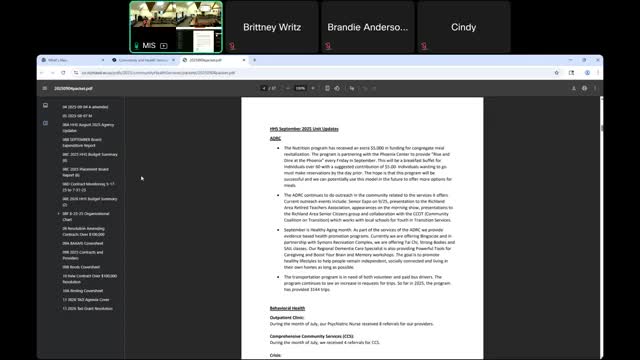
Summary
At its Sept. 4 meeting the Richland County HHS Committee heard program updates including a $5,000 ADRC congregate‑site revitalization, upcoming vaccine clinics, staffing vacancies and a briefing on placement funds and institutionalization costs.
Richland County Health and Human Services staff briefed the committee on program updates, including a $5,000 award for a congregate‑site revitalization, scheduled vaccine clinics that will include COVID vaccines for the uninsured, several staffing vacancies and an overview of placement funds and institutionalization costs.
HHS director (name not specified) summarized the department report and asked if committee members had questions. Staff said the Aging and Disability Resource Center (ADRC) received an extra $5,000 to support a "Rise and Dine" breakfast program for people 60 and older at the Phoenix Center on Fridays in September from 8 a.m. to 10 a.m.; attendees should sign up with the ADRC by the day before the event.
On vaccinations, public‑health staff Brandy said the department has vaccine clinics scheduled Sept. 25 and Oct. 23 and that the clinics will offer the most up‑to‑date recommended COVID vaccine for people eligible under the federal Vaccines for Children (VFC) and Vaccines for Adults (VFA) programs. Brandy added the county cannot bill uninsured people for that COVID vaccine at the county clinic; insured people should seek a clinic that can bill their insurer.
Brandy also noted measles activity elsewhere in the state: "We currently have none reported for this county," she said, while urging the committee to monitor regional trends.
Staff reported several personnel updates: new behavioral‑health staff have started in the past month, there are vacancies in mental‑health therapist and social‑work positions, and the ADRC added an on‑call temporary nutrition driver to build depth for absences. Committee members asked about volunteer drivers' reimbursement; staff said drivers receive the federal IRS mileage rate (reported in the meeting as 70¢ per mile) and meal reimbursement where applicable.
On placement funds, staff described that adult placements are accounted for in fund 54 and children's placements in fund 44. The department reported institutionalization counts are higher this year in terms of events, but shorter average stays have limited total placement fund exposure so far. Staff cautioned that a single long stay can significantly increase costs and that final county costs are subject to state reimbursement and reconciliation processes.
No formal action on the program updates was taken beyond routine acceptance of the reports; committee members agreed to add follow‑up agenda items, including a future detailed breakdown of high placement costs and timing of state reconciliation payments.
Why it matters: the updates touch on direct services for seniors and clients, vaccination access, county staffing capacity and the fiscal dynamics of high‑cost institutional placements that can affect the county budget.