Get Full Government Meeting Transcripts, Videos, & Alerts Forever!
Get email alerts on the Land Use topic
No spam. Unsubscribe anytime.
Planning commission backs R‑2 rezoning and conservation preservation for 109‑acre Culture Road tract after public safety, flooding and traffic concerns
Summary
The Conway Planning Commission on a voice vote recommended assigning R‑2 (medium‑density residential) and a conservation preservation overlay to a roughly 109‑acre tract along Culture Road, a move that would place about 43 acres of the site in a no‑build conservation zone if City Council approves annexation and final zoning.
The Conway Planning Commission on a voice vote recommended assigning R‑2 (medium‑density residential) and a conservation preservation overlay to a roughly 109‑acre tract along Culture Road, a move that would place about 43 acres of the site in a no‑build conservation zone if City Council approves annexation and final zoning.
Residents who live in Midtown Village said they fear increased flooding, greater traffic and the loss of privacy as new subdivisions surround their neighborhood. "We actually fell in love with Conway because it seemed like such a small town," said Ann Marie Bollinger, a Midtown Village resident, adding that areas behind her house “are now starting to look like wetlands” after recent storms.
The commission's recommendation is advisory to City Council; final annexation and ordinance adoption require council action. Planning staff repeatedly told speakers that the item before the commission was the zoning assignment upon annexation, not approval of an engineering plan, and that detailed technical reviews — including traffic studies and stormwater controls — will occur later if the property is developed.
Why it matters: The property is currently in Horry County as Commercial Forest Agriculture (CFA) and allows a range of uses under county rules. If the tract remains in the county it could be developed under different rules (including half‑acre lots), staff said; annexation with the proposed R‑2 zoning would limit uses to medium‑density residential and impose the city’s residential design standards and the conservation preservation protection for the floodplain.
Public concerns and staff response Residents pressed for details on buffering, road connections and flood risk. "We're used to walking in the middle of our street," said Joe Reggio, a Midtown Village resident, describing how four subdivisions have already been built around his community and how he expects additional through traffic if the new development connects to existing stub outs.
Planning staff (Miss Hux) told the commission the hearing was about zoning only: "We're not looking at any specific plans ... When they submit plans for development, they will go through the technical review committee and staff from all departments will review them." Staff also said that the applicant proposed conservation preservation for the floodplain and that the request is less dense than the city's future land use map in some locations.
On traffic and connectivity, staff and the applicant said several requirements will apply if the project advances to plan review. A staff member and the developer said a traffic study will be required at the plan stage if warranted; the applicant noted that state DOT review would be required for larger projects and that, by code, developments of 30 lots or more must provide two points of ingress and egress.
Developer comments and preliminary numbers The applicant’s representative, identified in the meeting as Mr. Wilfong of the Development Resource Group, said preliminary studies show the entire parcel could yield roughly 130 lots but that site constraints — including wetlands, a 10–12 foot fall across the site and the central floodplain that pinches the tract — will limit density in many places. "Things we've looked at right now are, as a whole, about a 130 lots," he said, adding the presence of wetlands and grade changes creates engineering challenges.
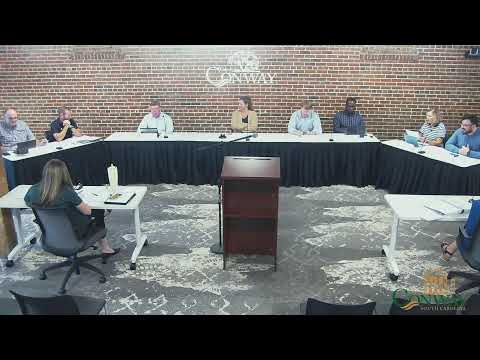
Commission decision and next steps After discussion the planning commission chair moved to recommend approval of the zoning request as presented; the motion was seconded and passed on a voice vote. The commission’s action sends a recommendation to City Council, which held first readings for related annexation and zoning matters on prior dates and is scheduled to consider final readings at upcoming meetings.
Votes at a glance (actions the commission took in the same meeting) - Planning commission recommended approval of the rezoning and conservation preservation overlay for the Culture Road parcel upon annexation (recommendation to City Council). Outcome: approved (voice vote). Note: final annexation and ordinance adoption by City Council required. - Request to annex and zone a College Park lot (approx. 0.39 acres) as R‑1 (low/medium density residential): recommended for approval. Outcome: approved. - Request to annex and zone ~10.68 acres at the intersection of Highway 548 and 501 as Highway Commercial: recommended for approval. Outcome: approved. - Commercial project (Freddy's and a grocery tenant) on Highway 501: planning commission recommended approval. Outcome: approved. - Two advertised text‑amendment items (articles 2/4/5/6) were deferred to allow staff to incorporate edits: motion to defer approved; new consideration expected in October. - A larger package of cleanup amendments to the UDO (Article 1, 3, 6, 13, 14) was presented and recommended as drafted. Outcome: approved (recommendation to City Council). - Amendments to Article 4 (use tables) and Article 5 (specific use regulations), including a provision to allow noncommercial keeping of livestock or fowl on Forest Agriculture (FA) parcels of five acres or more and to add Rural Residential as a permitted district for certain noncommercial livestock uses (subject to minimum acreages and setbacks): recommended for approval. Outcome: approved.
What the recommendation does NOT do (important limits) - It does not approve any development plans, site engineering, subdivision plats or road layouts. Staff emphasized repeatedly that technical review, traffic studies, stormwater controls, and detailed civil plans will be required once an applicant submits a development plan. - It does not annex the land; annexation and final ordinance adoption are council actions. Planning commission provided a zoning recommendation that City Council may accept, modify or reject.
What residents can watch for next If City Council approves annexation and assigns the recommended zoning, future plan submissions will be posted in monthly planning packets and subject to review by the technical review committee and planning commission. Staff advised residents to follow planning department postings to view plans once they are submitted.
Concluding note Commissioners said they weighed the loss of tree cover and neighborhood impacts against the benefit of protecting the floodplain through the conservation preservation district and the ability to apply the city's residential standards rather than leaving the property governed by county CFA rules. The matter will move to City Council for final action, where residents may again present input.