
Planning commission briefed on Glenwood Riverfront amendments ahead of Sept. 16 public hearing
Get AI-powered insights, summaries, and transcripts
Sign Up Free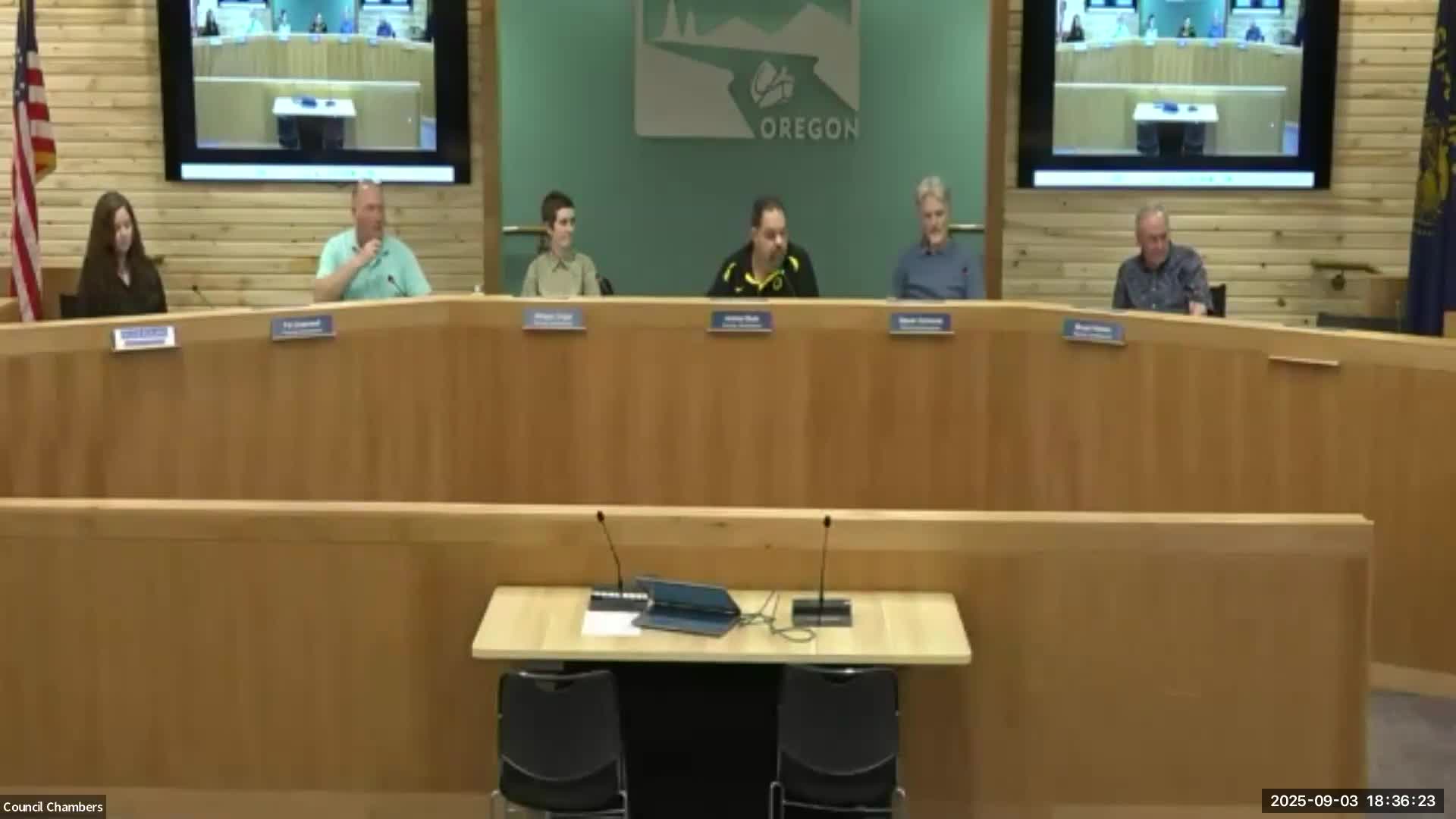
Summary
The Springfield Planning Commission received an informational briefing on proposed zoning, development-code and refinement-plan amendments for the Glenwood Riverfront master plan area in West Springfield.
The Springfield Planning Commission received an informational briefing on proposed zoning, development-code and refinement-plan amendments for the Glenwood Riverfront master plan area in West Springfield.
Tom Seaver, senior planner in current planning, told commissioners the city received three applications from the Springfield Economic Development Agency (SEDA), property owner Roth and Roth LLC and Homes for Good, Lane County’s housing agency, intended to implement a forthcoming master plan for about 38 lots on a little more than 22 acres along the Willamette River. “This evening, I plan to illuminate the commission on an upcoming public hearing that involves the Glenwood Riverfront in West Springfield,” Seaver said.
The applicants seek (1) a zoning map amendment to reconfigure Glenwood residential mixed use (GRMU) and Glenwood commercial mixed use (GCMU) boundaries from an east–west to a north–south pattern while expanding commercial acreage; (2) development-code text amendments targeted to the Glenwood Riverfront mixed‑use plan district to update permitted uses and standards that support higher‑density housing and commercial development; and (3) refinement plan text and map amendments to align the refinement plan with the zoning and code changes. Seaver said the amendments would remove an existing 50% cap on standalone high‑density residential in the CMU zone so high‑density housing could occupy up to 100% of a development area, while keeping commercial and employment uses permitted.
Seaver emphasized that riverfront amenities identified in the refinement plan—the riverfront path, park blocks and open space—are not proposed to be removed by these applications and will be addressed further at the master‑plan stage. He said development will be required to meet standards for flood safety, riverfront protection and pedestrian and bicycle access.
Christina (city attorney’s office / SEDA representative) told the commission the code changes are being paid for by the Springfield Economic Development Agency and are geographically limited to property already annexed to the city. “The changes are focused on those changes that are needed to allow the master plan to go forward rather than just general changes that would be in the interest of Glenwood,” she said, and added staff and SEDA coordinated timing with the larger Climate Friendly Areas (CFA) process even though the CFA work is on a different schedule.
Commissioners pressed staff on details and likely outcomes. Commissioner Seth Thompson asked why some code edits appear to increase commercial capacity (for example raising a grocery threshold from 25,000 to 30,000 square feet) even though the agenda packet’s issue statement says the amendments will “remove outdated restrictions on residential uses.” Seaver and Christina replied the intent is to increase flexibility across both zones so the master plan can respond to market demand—allowing more residential in CMU and permitting more commercial in GRMU if needed—while a future master plan will detail lot layouts and uses. Seaver said the 30,000‑square‑foot grocery threshold is intended to reflect a neighborhood grocery size that would better serve the development, not to require construction of a grocery store.
Commissioner Morgan Driggs and others asked about preserving public riverfront access and green space. Seaver said the refinement‑plan vision for multimodal riverfront access remains in place and that the park/open‑space elements are expected to be addressed at the master‑plan stage; he said the park blocks could be implemented as park or other recreation facilities, public or private, and details will be fleshed out in the master plan.
Other topics raised included how the proposed street grid changes (from six blocks to four in some diagrams) respond to the commercial buildable‑lands analysis and how interior property lines would be reconciled through future subdivision or master‑plan steps. Seaver described the master plan process as a two‑step procedure with a required pre‑application meeting and neighborhood meeting and said a preliminary master plan is typically a director‑level (Type II) action that may be elevated to a Type III application before the commission if it is complex.
Seaver noted the city received one public comment via Springfield Oregon Speaks and reminded commissioners the item will return at a noticed public hearing on Tuesday, Sept. 16, where applicants will present and the public may provide comment. No action was taken at the work session.
Questions from commissioners and staff answers about FEMA floodplain work, the relationship of these changes to the Climate Friendly Areas process and the schedule for master‑plan phases were part of the discussion; Seaver said FEMA and other litigation matters are ongoing and that most floodplain‑affected parcels are outside the currently proposed master‑plan area.
The commission did not vote on the amendments at the work session; staff said all notice requirements have been met and the public hearing will present detailed findings and proposed code language.