Get Full Government Meeting Transcripts, Videos, & Alerts Forever!
Get email alerts on the Liquor Distribution topic
No spam. Unsubscribe anytime.
Bill would tie liquor distribution fee increases to CPI, industry and distributors tell committee
Summary
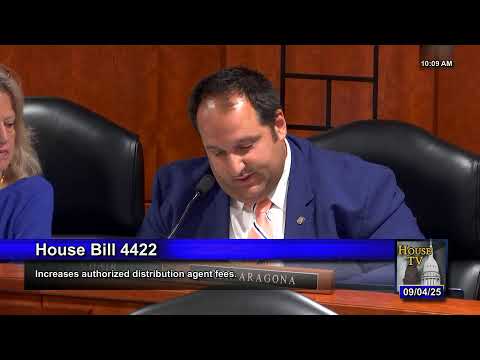
Rep. Wenzel and spirits-industry witnesses supported House Bill 4422 to stabilize the state-warehouse distribution system by tying ADA fee adjustments to CPI (or 5 percent cap), authorizing one-time emergency funding and clarifying that costs come from existing statutory markups.
Lansing — Representative Wenzel and industry representatives told the House Regulatory Reform Committee on Wednesday that a bill to update Michigan’s distribution-agent structure would create predictability for the state and for the distributors who deliver distilled spirits across Michigan.
"This legislation creates stability for the state, for the distributors who move every bottle of spirits across Michigan, and for the distillers who depend on a dependable supply chain and budget certainty to reach their customers," Representative Wenzel said in opening remarks to the committee. The bill would tie future increases in distributor fees to the consumer price index or 5 percent, whichever is less; allow the Liquor Control Commission to authorize one-time emergency funding if necessary; and clarify that those costs are to be paid from the statutory markup the state applies to spirit sales.
Industry witnesses described rising operational costs and delivery burdens and urged passage. Tony Mitchell of the Michigan Spirits Association said the state-run wholesale system is unusual and that the legal structure requires the state and its authorized distributor agents (ADAs) to maintain a reliable supply chain for retailers. Steve Rascho of RNDC described day-to-day operational costs, workforce and delivery demands — "we run approximately 170 trucks a day" — and said the business needs modest, predictable fee adjustments to keep the distribution system functioning. He told the committee the company picks roughly 125,000 bottles per night for Michigan deliveries and highlighted return handling and breakage as drivers of cost.
Why it matters: Michigan’s system for distilled spirits is structured so the state applies a statutory markup and uses authorized distributor agents to pick, deliver and collect product for retailers; the state receives large annual revenue from spirits sales. Witnesses said unpredictable fee adjustments and rising operating costs threaten the reliability of deliveries to stores and restaurants across the state.
Budget impact and timeline: Witnesses provided a short analysis showing a funding shortfall versus a CPI-linked benchmark over time and estimated an $11 million shortfall that a CPI adjustment would have reduced. The CRA testimony earlier in the meeting is unrelated to this bill.
Supporters included RNDC and trade associations; a number of suppliers and beverage distributors filed written support or registered in favor of the bill. Representative Wenzel urged the committee to consider the bill as a way to preserve the distribution network that supports retailers, distillers and state revenue.