Get Full Government Meeting Transcripts, Videos, & Alerts Forever!
Get email alerts on the Small Business topic
No spam. Unsubscribe anytime.
NFIB urges 'do no harm' approach to Michigan policy, warns energy and labor rules could raise small-business costs
Summary
Amanda Fisher of the National Federation of Independent Business told the Michigan House Committee on Economic Competitiveness that policy uncertainty, energy mandates and new labor and health mandates are raising costs and complicating hiring for small employers. Committee approved minutes and excused absences by unanimous consent.
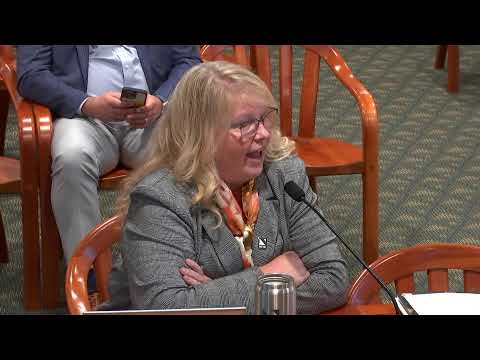
Amanda Fisher, a representative of the National Federation of Independent Business (NFIB), told the Michigan House Committee on Economic Competitiveness on an hour-long panel that state policy makers should adopt a “do no harm” approach when considering new taxes, regulations or labor mandates for small businesses.
Fisher told the committee that NFIB represents roughly 11,350 members in Michigan and about 300,000 nationwide and that 81% of Michigan small businesses are organized as pass-through entities. She said small-business income is frequently embedded in individual tax filings and cited a 2016 Anderson Economic Group analysis NFIB commissioned that found “around 843,000,000” in business taxes paid by small firms in that year.
The testimony laid out NFIB priorities the group says would help small employers: reduce regulatory uncertainty, avoid new health-care mandates that apply only to smaller plans, review and eliminate duplicative state agencies and programs, restrain large corporate tax incentives and protect reliability and affordability in energy policy. Fisher told lawmakers that policy changes can take time to produce results and warned that abrupt or poorly scoped rules can raise costs or discourage hiring.
Why it matters: committee members said they hear from constituents who say higher operating costs are passed to consumers and that rural hospitals and providers, in particular, could be affected by changes in federal and state health programs. Fisher stressed that small businesses often operate on thin margins, have fewer staff resources for compliance, and cannot relocate as easily as large firms.
Fisher urged lawmakers to consider the distributional effects of incentives run through the Michigan Economic Development Corporation (MEDC) and recommended expanding relief such as elimination of commercial personal property tax for more property types rather than relying primarily on targeted incentives. She also raised specific legal and regulatory concerns, including recent court decisions on “open and obvious” premises liability and the scope of agency rulemaking authority.
Committee members asked Fisher about health-mandate examples, tariffs, and MEDC programs. Fisher cited a string of incremental mandates and poster requirements as the kind of accumulation that raises administrative burden and pointed to prior mandates (for example, diabetes supplies and oral chemotherapy coverage) as examples that significantly raised costs for some employers. She said NFIB has not balloted members on proposed federal Medicaid cuts and that NFIB’s members had opposed Medicaid expansion when that ballot occurred.
Formal committee actions recorded on the transcript were procedural: Representative Saint Germain moved to approve the committee’s Aug. 21 minutes, which were approved by unanimous consent, and Representative Altman moved to excuse absent members; there was no objection and absent members were excused.
The committee heard no formal votes on policy changes during Fisher’s presentation; members followed with several questions before adjourning.