Get Full Government Meeting Transcripts, Videos, & Alerts Forever!
Get email alerts on the Regulatory Policy topic
No spam. Unsubscribe anytime.
House Rules Committee hears bill to require agencies to justify rules stricter than federal law
Summary
House Bill 4160 would restore a “no stricter than federal” standard that requires state agencies to demonstrate a clear and convincing need before adopting rules more stringent than federal requirements; industry groups testified in favor, citing compliance costs and competitiveness concerns.
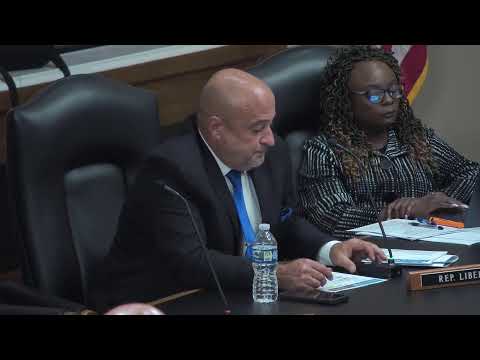
The Michigan House Rules Committee heard testimony on House Bill 4160, legislation that would require state departments to demonstrate a clear and convincing need before adopting rules more stringent than comparable federal standards.
Proponents told the committee the measure restores a standard in earlier law and would reduce regulatory uncertainty for businesses.
Representative Johnson, who introduced the measure, told the committee the bill “is about common sense and accountability in government.” He said the requirement existed under Public Act 602 from 2019 until 2023 and was repealed last term, leaving agencies able to adopt stricter rules without the prior justification on the regulatory record.
Tim Langholz, assistant state director of the National Federation of Independent Business (NFIB), testified in support and said the bill would help small employers. “House bill 4160 is straightforward. It gives a check on bureaucracy ensuring that they're taking into consideration all the implications that regulations have,” Langholz said. He cited a National Association of Manufacturers study that he described as showing federal regulatory compliance costs of about $12,800 per employee across all sectors, $14,700 for businesses with fewer than 50 employees, and about $50,100 per employee for small manufacturers when accounting for additional regulatory complexity.
Mike Witkowski, director of environmental and regulatory policy for the Michigan Manufacturers Association, told the committee the “no stricter than federal” framework provides regulatory predictability important to retaining and attracting manufacturers. “The no stricter than federal framework is essential to providing a stable and predictable regulatory framework,” Witkowski said, adding that inconsistent state rulemaking can raise costs and deter investment.
Committee members questioned witnesses on how the bill would operate in practice. Vice Chair Whitworth asked how the committee would determine when a state rule is more stringent than a federal standard and what “clear and convincing need” would require; witnesses said the requirement previously led agency directors to present scientific and cost evidence in regulatory impact statements. Representative Martin and others raised competitiveness concerns, noting manufacturers and employers compare Michigan with neighboring states when deciding where to locate or expand.
No committee vote was recorded on House Bill 4160 during the meeting. Several industry organizations filed testimony cards indicating support, including the Home Builders Association of Michigan, Small Business Association of Michigan, Mackinac Center for Public Policy, Americans for Prosperity, Michigan Bankers Association, Detroit Regional Chamber of Commerce, and the Michigan Chamber of Commerce.
The bill will remain under committee consideration pending any future scheduling for a decision or markup.