Lifetime Citizen Portal Access — AI Briefings, Alerts & Unlimited Follows
House passes a package of bills and resolutions including stricter residence limits for sex offenders and recognition for military branches
Loading...
Summary
On Sept. 4 the House approved multiple bills and joint resolutions in final votes, including changes to offender residency distances, recognition of Space Force members under the combatant statute, condominium-administration notice requirements, and energy interconnection guidance for LUMA.
The Puerto Rico House of Representatives completed final votes on a set of bills and joint resolutions Sept. 4, approving measures that range from criminal-justice changes to housing regulation and energy-policy guidance.
Key outcomes
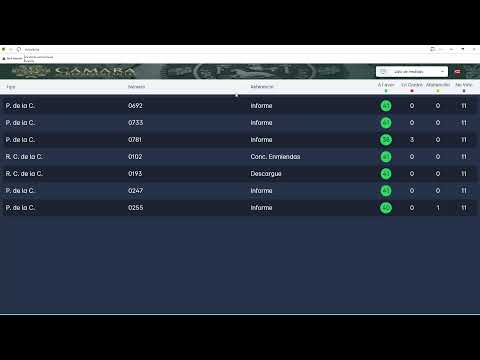
- Project of the House 7-33 (amended): Passed 41-0. The measure, authored by Representative Torres Cruz and described in the calendar as expanding existing distance restrictions, increases the prohibited residential distance for certain convicted sex-offense offenders from 500 feet/meters (text used both ways in the floor read) to 1,000 meters (one kilometer) from victims, witnesses and educational or licensed child-care facilities. The sponsor told the House the change responds to victim concerns where a convicted offender lived on the same street as a complainant after release. The final text read in the chamber replaces the prior 500 metric figure with 1,000 meters and adds language expressly listing schools and licensed child-care facilities.
- Project of the House 7-81 (amended): Passed 38-3. The bill amends Article 2 of Law 8 (professional combatant statute) to recognize members of the U.S. Space Force among combatant categories covered by the statute and to clarify application of benefits to humanitarian activations and domestic missions. Sponsors argued the statute should explicitly cover Space Force personnel and clarify coverage for domestic humanitarian activations.
- Project of the House 2-47 (amended): Passed 41-0. The amendment to condominium law (noted in the calendar as changes to Article 13 of the condominium law) requires condominium administrations to provide the condominium regulations to the real-estate agency defined by Law 10-94 (as read on the floor) in certain circumstances; the floor amendments added clarifying language about the limits on providing regulations to third parties without a legitimate transaction interest.
- Project of the House 2-55 (amended): Passed 41-0 (one member recorded as abstaining earlier in the roll activity for this measure). The measure (as amended on the floor) modifies definitions and adds provisions in Law 82-2023 related to policies for older adults and informal caregivers; floor amendment language included a new definition for “caregiver incidental” and revisions to the bill’s structure and sections. A member requested to be excused from voting on this measure for conflict of interest and was authorized to abstain.
- Project of the House 6-92 (amended): Passed 41-0. The bill amends sections of the civil procedure code to require that eviction proceedings involving veterans notify the office of the veterans’ advocate; floor amendments harmonized related articles.
- Resolution Joint of the House 102 (concurrence with Senate amendments): Passed 41-0. The House concurred with Senate amendments to the joint resolution in the session record.
- Joint Resolution 193 (downloaded and passed): Passed 41-0. The resolution directed the Puerto Rico Electric Power Authority and the network operator LUMA Energy to suspend charging certain interconnection or supplemental study fees for small systems and to adopt a revised interconnection regulation consistent with Law 17 of 2019 (energy policy) within a specified schedule; it was described on the floor as an instruction to adjust interconnection rules for systems up to 25 kW and to align AEE/LUMA policy with the island’s energy policy statute.
Context and debate
The House debated multiple measures on the special calendar. Representative Torres Cruz described project 7-33 as prompted by a case in which a victim was notified that a convicted offender would live on the same street after release; floor debate and amendments increased the restricted distance to 1,000 meters and added explicit references to schools and licensed child-care centers. Supporters across several delegations spoke in favor; the project passed without recorded nay votes.
Representative Jorge Navarro Suárez and others led floor debate on a separate resolution (listed in the calendar as Resolution 404 and later passed in amended form) requiring an inquiry into staffing reductions and service-restoration delays at LUMA Energy across the metropolitan region; the House approved a related resolution (listed in the calendar as the resolution concerning LUMA, project 404) and referred partial reports to agencies for follow-up.
A large calendar of other committee resolutions and investigations was also read and advanced; the roll-call results recorded final approval numbers for the measures above in the afternoon vote sequence.
Votes at a glance (final recorded tallies)
- PC 2-47 (condominium notice rules, as amended): 41 yes, 0 no - PC 2-55 (amendments to Law 82-2023 regarding older adults/caregivers, as amended): 41 yes, 0 no, 1 abstain (member excused for conflict) - PC 6-92 (civil procedure notice for veteran-related eviction): 41 yes, 0 no - PC 7-33 (sex-offender residency distance, as amended): 41 yes, 0 no - PC 7-81 (combatant statute, Space Force inclusion, as amended): 38 yes, 3 no - Joint Resolution (concurrence) RC 102: 41 yes, 0 no - Joint Resolution (download) RC 193 (LUMA interconnection fees/regulation): 41 yes, 0 no
What happened next
After the roll calls, the House recessed until Sept. 8. Several bills include direction for agencies or committees to report back; the House record indicates partial reports will be distributed to relevant agencies for follow-up.
Limitations
The transcript records final tallies but does not always display full sponsor text or the full reprinted bill language. Individual roll-call vote-by-name lists were not recorded in the section of the transcript summarizing final tallies; where a member requested to be excused from a specific vote that is noted in the record.