Get Full Government Meeting Transcripts, Videos, & Alerts Forever!
Get email alerts on the Special Education Funding topic
No spam. Unsubscribe anytime.
Regional finance subcommittee votes to recommend special education stabilization fund
Summary
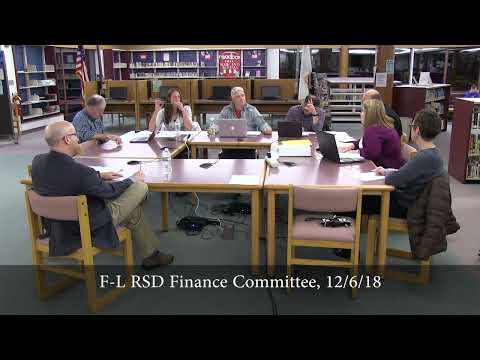
The Town of Lakeville Regional Finance Subcommittee voted Dec. 6 to recommend that the full school committee establish a special education stabilization fund. The subcommittee did not authorize funding; members discussed target amounts, funding timing and how the fund would interact with existing E&D and circuit-breaker carryovers.
The Town of Lakeville Regional Finance Subcommittee voted Dec. 6 to recommend that the full school committee establish a special education stabilization fund, a reserve the subcommittee said would help smooth large, unexpected special-education costs.
The recommendation, offered during a meeting of the committee, passed on a voice vote after a motion to forward the proposal to the full school committee. The subcommittee did not approve any funding at the meeting; members discussed seeking authorization to create the fund and then returning later with proposals for funding amounts and timing.
Committee members said the stabilization fund is intended as a mechanism to absorb large, one-time or unexpected special-education expenses without producing a single-year shock to town assessments. Members noted the district has depleted prior reserves in recent years: the committee reviewed E&D (excess and deficiency) withdrawals of roughly $300,000 in one year and about $515,000 in an earlier year, and described the district’s circuit-breaker carryforward as largely exhausted.
Discussion at the meeting outlined a two-step approach: (1) ask the full school committee to authorize creation of the fund, and (2) consider funding it later via town meeting action or other one-time resources. Members proposed a long-run combined reserve target — described during the meeting as roughly $1.2 million across E&D and a stabilization fund (about 3 percent of the regional budget) — and said any funding would be incremental and contingent on available one‑time revenue such as free cash.
Committee members raised several operational questions the district and towns must resolve before funding: whether a stabilization balance could be used to offset the next year’s operating costs if a previously unanticipated need becomes ongoing; how to replenish the fund if it is drawn down; and whether E&D balances could be moved into the stabilization account. Staff said establishing the fund is an administrative action that requires district and town approvals, and that funding the account could wait for a later town meeting if desired.
The committee voted to recommend the full school committee establish the special education stabilization fund; the motion was approved by voice vote. The recommendation does not itself allocate money or change the current assessment. Members asked staff to prepare information and a possible article for the spring annual town meeting and to return with additional policy language and debt/funding context for future meetings.
Background discussed during the meeting included the district’s recent use of E&D to cover special-education and other one-time costs, the depletion of circuit-breaker carryover, and the desire among some members that operational budgets be adequately funded so stabilization dollars are used only for unexpected costs, not recurring operations.
Members said next steps are: staff follow-up on the mechanics (whether establishing the fund affects the assessment sheet), preparation of an article for town meeting if the full committee supports the recommendation, and further work on policy language and a long-term funding strategy.