Get Full Government Meeting Transcripts, Videos, & Alerts Forever!
Get email alerts on the Historical Commemoration topic
No spam. Unsubscribe anytime.
Resident proposes monument to John Sassamon; commission hears plan and cautions
Summary
A Lakeville resident urged the Historical Commission to back a monument honoring John Sassamon and others from the King Philip War era, stressing Native input; commissioners and attendees discussed site, wording and next steps.
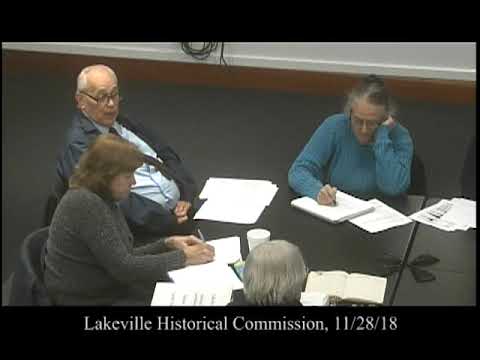
Daniel J. Kasiri, a Lakeville resident, asked the Lakeville Historical Commission on the evening of the commission's December meeting to consider a monument honoring John Sassamon and other people who lived in the area during the period that led to King Philip’s War.
Kasiri said he has “been learning a lot about the John Sassemon story,” and described Sassamon as a 17th‑century Native American who worked with colonial officials and whose murder and subsequent trial helped spark King Philip’s War. Kasiri told commissioners he wants the memorial to reflect historical significance rather than present-day hero worship and emphasized that he does not want to proceed if Native community members oppose the proposal.
“The particular person that he would like to honor is John Sassemian,” Kasiri said during his presentation, and later added, “I don't wanna do the monument if if the natives don't want it because that would be totally counterintuitive to the nature of what I want the monument to be.”
Kasiri suggested Fred Shaw Park as a possible site and said the memorial could take different forms — a statue, an obelisk, or a series of plaques — depending on what local and Native participants prefer. He said the project would include a plaque or text panel that commissions input from all communities and that he plans to contact the Bureau of Indian Affairs office in Boston for further outreach.
Commission members and other attendees pressed for sensitivity to how the figure is perceived by Wampanoag descendants and noted potential practical and political hurdles. Kasiri said he had already discussed the idea with the Board of Selectmen, and that the selectmen raised concerns about cost and the risk of vandalism or protests if the memorial were widely disputed. Kasiri said he would pursue broad input and suggested the monument could be an opportunity to present multiple perspectives on the town’s seventeenth‑century history.
Commissioners described several alternative approaches Kasiri could consider if consensus proved difficult: multiple plaques honoring several local people of the era, an interpretive panel rather than a figurative statue, or a smaller, less prominent marker. Kasiri said he was open to alternatives and to further community discussion; he gave a local phone number and email and said he would follow up after the new year.
The commission took no formal vote on the proposal during the meeting. Commissioners did, however, record several routine administrative votes during the session, including changing the order of business to allow Kasiri to present and approving minutes and financial reports.
Kasiri provided contact information at the meeting and asked interested residents and Native representatives to share input before the group develops a formal plan.