Get Full Government Meeting Transcripts, Videos, & Alerts Forever!
Get email alerts on the Late Hours Permit topic
No spam. Unsubscribe anytime.
Dallas board reverses police denial, grants Sue Ellen's two-year late‑hours exemption
Summary
The City of Dallas Permit and License Appeal Board on Sept. 4, 2025 reversed the police chief's automatic denial of a late‑hours dance‑hall permit for Sue Ellen's and granted a two‑year exemption under Dallas City Code, citing low incident history and community support presented by the appellant.
The City of Dallas Permit and License Appeal Board on Thursday, Sept. 4, 2025 reversed the chief of police's denial and granted a two‑year exemption allowing Sue Ellen's to operate under a late‑hours dance hall permit.
The exemption reverses an automatic denial under Dallas City Code that applies when a proposed late‑hours dance hall is within 1,000 feet of property devoted to residential use. The board voted unanimously to grant the two‑year exemption after hearing testimony from the appellant's witnesses and evidence presented by the Dallas Police Department.
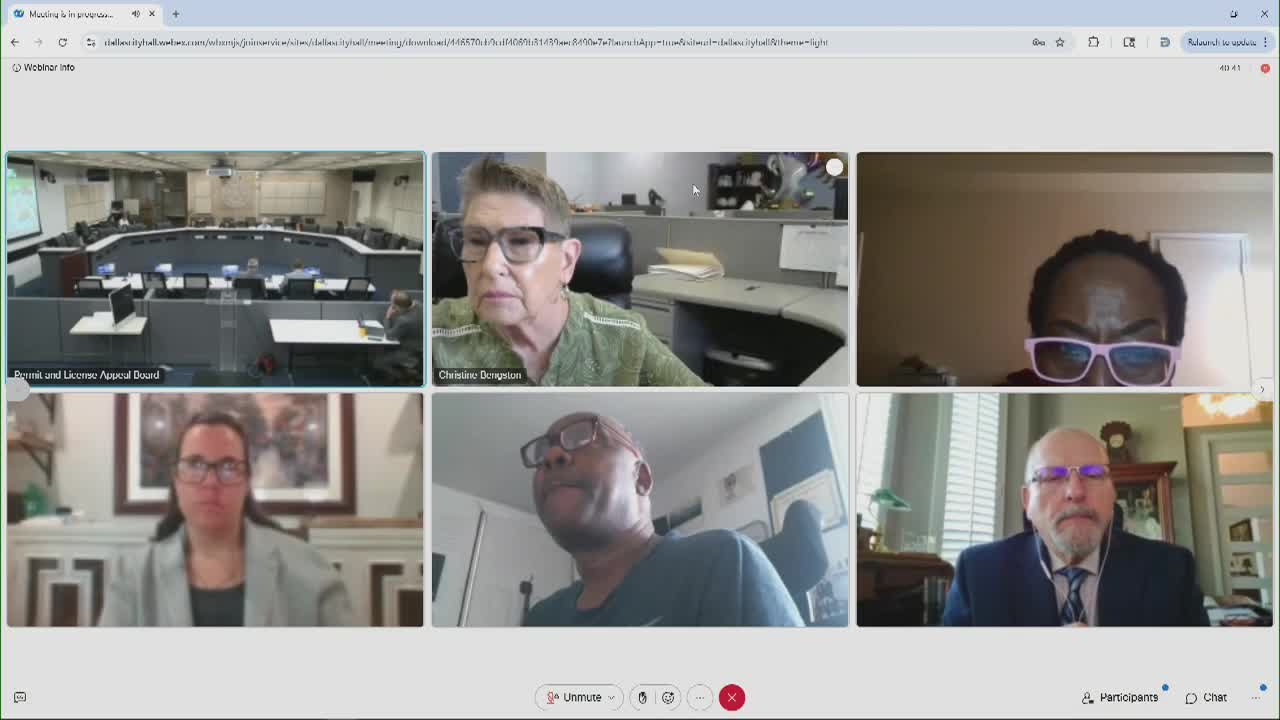
Appellant representative Jim Birch told the board that Sue Ellen's — operating under Isaac Corporation and affiliated with Cabin Enterprises — had presented documentation showing long‑term community involvement, security measures and neighborhood support. Christine Bingston, who said she has worked with Cabin Enterprises for nearly 40 years, testified about the club's security and community programs and read a letter from the organization into the record. "Maintaining the security and safety of our guests, staff and neighbors are key goals of Sue Ellen's," Bingston said.
Bingston said Sue Ellen's participates in neighborhood and nonprofit activities including partnerships with the Cedar Springs Merchants Association, Prism Health, Human Rights Campaign and school support programs tied to Sam Houston. She told the board the business donates space for nonprofit events and that the club's comptroller, Ben Polacek, estimates losing the late‑hours window would cut revenue by an "up to 30 to 40%" and materially reduce the club's local charitable contributions.
On operations and safety, the appellant's witnesses described on‑site and roaming licensed security, radio communications between managers and security, interior and exterior cameras, and a quoted consolidated annual security cost of about $100,000 for all four clubs on the block (the company said security is shared among the four locations). Bingston said speakers face inward, patio speakers are turned off around midnight and the business uses the same decibel‑monitoring devices the city would use for enforcement.
Detective Hector Monreal of the Dallas Police Department's license unit testified for the city and said the denial in July 2025 was automatic because the business is within 1,000 feet of residential property under the city's locational rules. He summarized the department's service‑call review, reporting 19 total 911 calls at the location during a one‑year review and noting "zero calls" during the late‑hours period (2 a.m.–4 a.m.) in that same year. Monreal told the board that other than the locational restriction, "there is no other reason to deny" the late‑hours permit.
Board members asked questions of both witnesses about capacity, security deployment, the process used to collect petitions and the school's relocation. The appellant submitted petitions and signatures the witness said totaled 296 in support from nearby residents and businesses.
Board member Hsing moved to reverse the chief of police's denial and grant a two‑year exemption; Board member Jefferson seconded the motion. Hsing told the board she found the appellant's presentation persuasive and praised the organization's community activities. The board voted unanimously to grant the exemption.
The board's action reverses the police chief's denial of the late‑hours permit and grants a two‑year exemption under the provisions of Dallas City Code discussed at the hearing. The board chair asked the appellant to continue to provide updated photos and support materials; staff indicated the board members will be asked to sign written findings following the hearing.
The hearing record includes the appellant's exhibits documenting operations, community partnerships and petitions, and the city's incident summary and application materials. The board's order grants Sue Ellen's a two‑year exemption from the locational restriction for a late‑hours dance hall permit.