Get Full Government Meeting Transcripts, Videos, & Alerts Forever!
Get email alerts on the Municipal Budget Millage topic
No spam. Unsubscribe anytime.
Finance committee approves tentative 1/8-mill cut and tentative budget after hours of debate
Summary
Jacksonville Finance Committee approved an eighth-of-a-mill reduction to the tentative property tax rate and advanced the city's tentative budget after extended debate over cuts to nonprofit and social-service programs, reserves and protections for public safety funding.
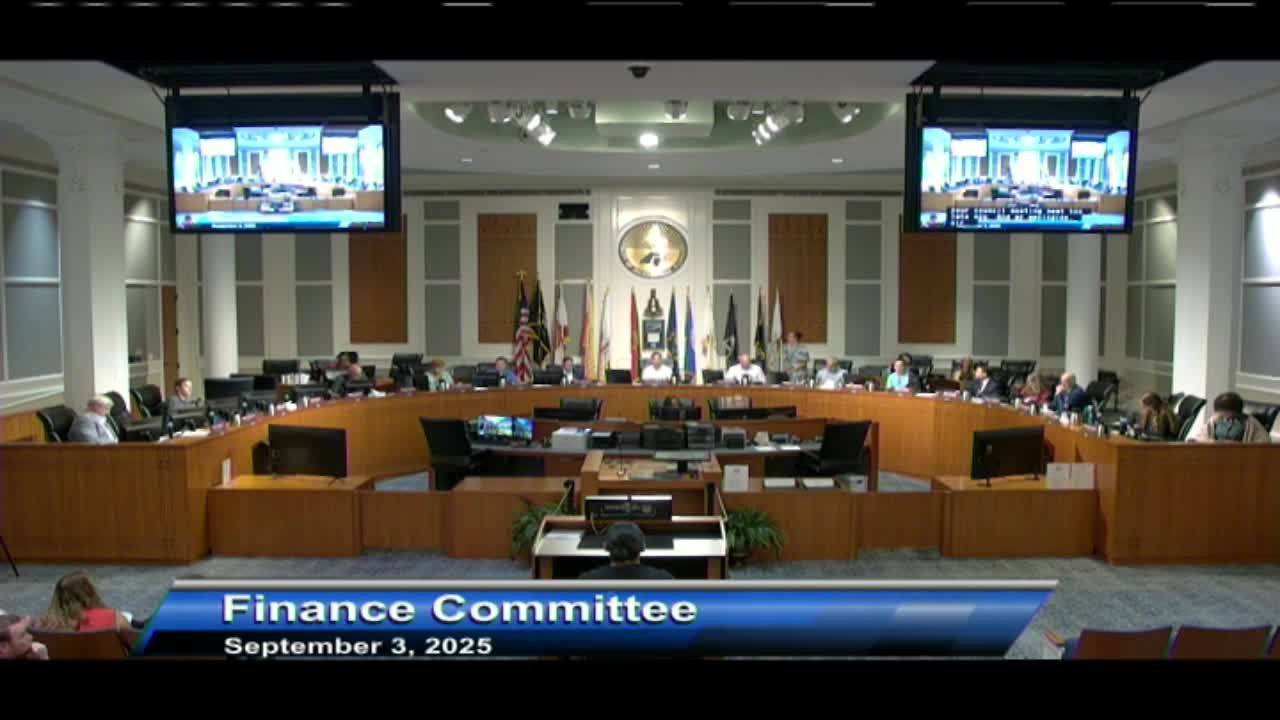
The Jacksonville City Council's Finance Committee on Sept. 3 approved tentative millage reductions and a substituted tentative budget, advancing the package to the full council after extended debate over social-service cuts, reserves and public-safety protections. The committee approved a one-eighth-of-a-mill reduction to the general services district tentative millage and moved the tentative budget as substituted.
The committee voted 6-2 to adopt the general services district tentative millage (ordinance 20250501) reflecting the one-eighth reduction to 11.1919 mills; it later approved the related beaches and Baldwin millage reductions (ordinances 20250502 and 20250503). The finance panel approved the budget substitute (ordinance 20250504) and related technical amendments by an 8-0 voice or recorded vote when taken on final motion during the meeting.
Why it matters: The millage move returns roughly $13 million collectively to property taxpayers while the committee also moved the year's budget forward. Supporters said the modest cut puts money back in household pockets without endangering core city services. Opponents warned the cut is symbolic and argued the city should instead preserve funding for seniors, housing and eviction-prevention programs.
Committee discussion and public comment: Chairing remarks and staff summaries set the stage for a long debate. Council Vice President (Howland/Holland) and other committee members framed the one-eighth reduction as a modest, repeatable exercise in restraint. Council Member Nick Hallman and others pushed for larger cuts; Council Member Rory Diamond and others urged deeper tax reductions than the eighth; Council Member Leandra Johnson (speaking as a resident in the transcript) and several public-comment speakers said the cuts threaten housing, Meals on Wheels and legal-aid programs.
Council Auditor Kim Taylor explained that the committee was considering three separate millage ordinances (general services, beaches and Baldwin) and that adoption at committee advances the city to required public hearings and final votes later in September. Auditor staff and outside budget staff repeatedly emphasized that the proposed cut is modest relative to recent revenue gains; council members noted the city collected roughly $240 million in additional property-related revenue in the last two years (a $160 million baseline increase plus one-time transfers of $40 million and a $40 million solid-waste adjustment cited by a committee member during debate). Proponents calculated a one-eighth-mill cut equals about $13 million in lower property-tax collections.
Key votes and outcomes recorded during the session included: - GSD tentative millage ordinance 20250501: approved as amended (one-eighth reduction) — recorded vote showed 6 yeas, 2 nays in committee. - Beaches tentative millage ordinance 20250502: approved as amended — recorded committee vote 5 yeas, 2 nays. - Baldwin tentative millage ordinance 20250503 (adjusted to maintain required interlocal differential of 18.8%): approved as amended. - Tentative budget substitute ordinance 20250504 (includes committee'approved amendments and technical cleanups): approved by committee (voice vote/recorded actions logged by staff). The substitute rolled up several technical amendments approved earlier in the hearing.
Contention points: The strongest opposition to the millage cut came from members and public speakers who said the cut would make it harder to meet urgent needs for seniors, affordable housing, eviction diversion and legal aid. Public commenters, including representatives of Florida Rising and local residents, described the budget as a moral document and urged the committee to restore cuts to social programs. Supporters argued the city's reserves and recent revenue growth make a modest cut affordable and that some recurring spending for nonprofits and downtown incentives should be re-examined.
Protections for public safety and reserves: Several committee members asked for assurances that reductions would not leave police and fire underfunded. The committee debated a proposal to set aside the tax-cut savings in a designated contingency for public safety; members agreed to pursue a parallel approach on the council floor and through a separate addendum so that, if necessary, the council could secure a supermajority-approved contingency for public safety (the finance chair and staff discussed procedural options to accomplish that before final passage of the millage and budget on council floor nights).
Public testimony: The committee heard more than a dozen public commenters during the meeting, including residents and community groups. Speakers urged restoration of funding for eviction prevention, JaxCare Connect/Health Link, Meals on Wheels and housing- and senior-focused programs, saying cuts would cause immediate harm to vulnerable households.
Next steps: The three tentative millage ordinances and the tentative budget will move to the full City Council for formal tentative adoption and the required public hearings this month. Committee members and staff said members would use the council's addendum process should they wish to adopt an additional, separate contingency for public safety before final adoption.
Ending: Committee members framed the day as a compromise: modest property-tax relief for owners paired with targeted funding and oversight of the budget. Several members urged continued review next year of recurring incentives and nonprofit spending to ensure the millage cut is sustainable in future years.