Get Full Government Meeting Transcripts, Videos, & Alerts Forever!
Get email alerts on the Elections Voters Choice Act topic
No spam. Unsubscribe anytime.
Imperial County elections official outlines switch to Voter’s Choice Act, cites faster results and voter flexibility
Summary
The Imperial County Registrar of Voters presented the county’s plan to move from traditional polling places to the Voter’s Choice Act model, explaining vote center locations, extended in-person voting, ballot security measures and a public-comment timeline.
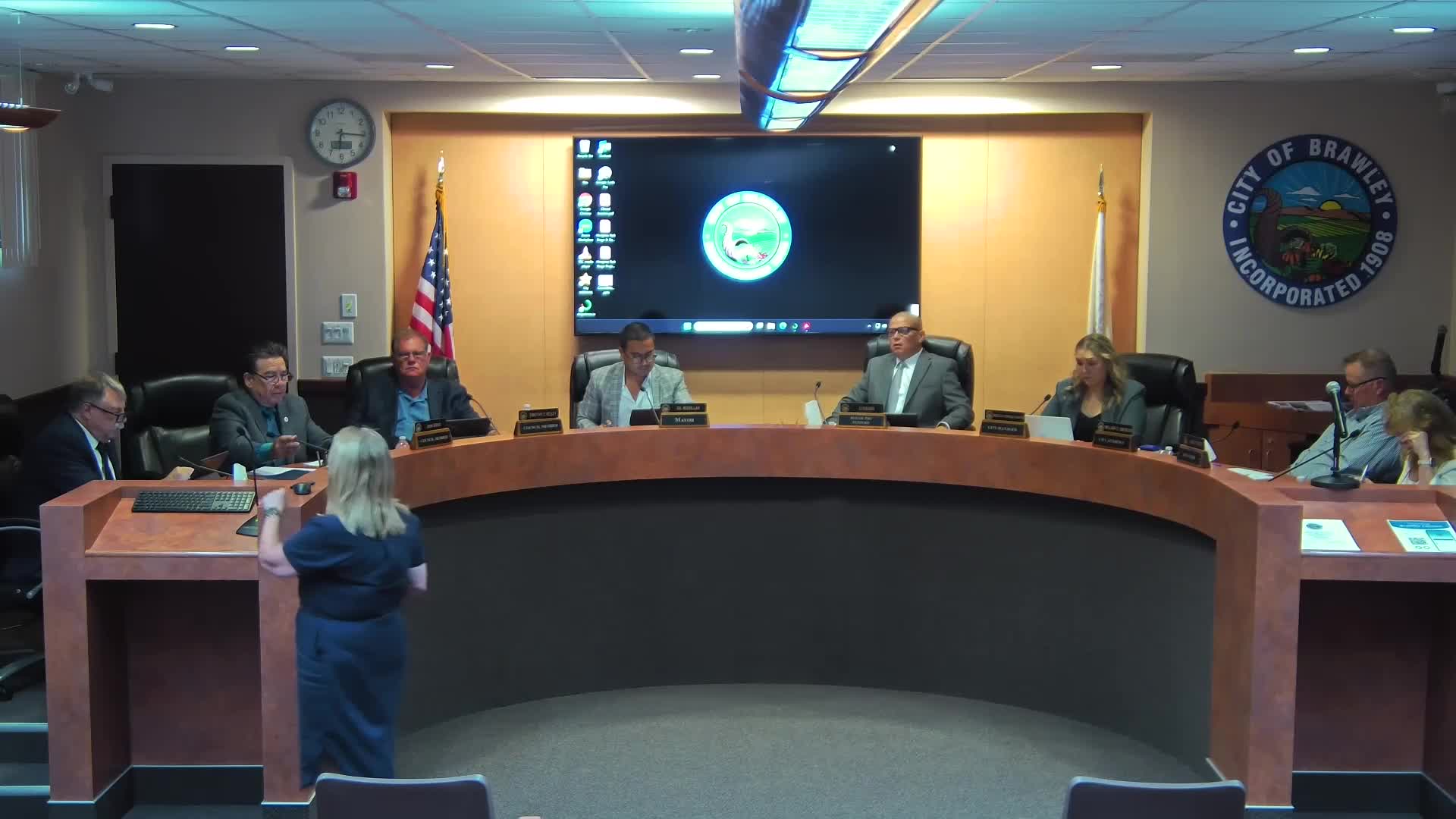
Lindsey Dale, the Imperial County Registrar of Voters, told the Brawley City Council on Sept. 2 that the county is preparing to implement the Voter’s Choice Act (VCA), moving away from traditional single-precinct polling sites to vote centers, expanded early voting and enhanced ballot-drop infrastructure.
Dale said the VCA was established by Senate Bill 450 in 2016 and described four VCA components: universal mailed ballots, secure drop boxes, the ability to vote at any vote center for the voter’s correct ballot, and expanded early in-person voting. “The Voter’s Choice Act…works to make elections more flexible and convenient for voters,” Dale said. She said Imperial County plans three primary 11-day vote centers in Brawley, Calexico and El Centro and additional shorter-duration centers across other communities to meet state requirements.
The registrar’s office told the council the county’s current problems processing provisional ballots contributed to long delays in final results in the last election. Dale said Imperial County processed roughly 5,500 provisional ballots in November and that each provisional ballot can take 10 to 12 minutes to verify. “Under the vote centers, this is going to significantly reduce the amount of provisional ballots that we will have to process,” she said, adding that fewer provisionals should shorten the time to complete vote counts.
Dale also described security and accessibility measures: all vote centers will be ADA compliant, have poll books with real-time voter registration access, and be sited near transit and well-lit parking. She explained the county checks 100% of vote-by-mail signatures and that staff will follow state guidance on any forthcoming voter ID rules. The office will offer Remote Accessible Vote by Mail (RAVBM) for voters who need electronic assistance to mark a ballot, and stressed it is not internet voting; ballots must be printed and returned for signature verification.
The registrar said public consultation is under way: an election administration plan is posted online in English and Spanish; public workshops were held in June and July; and the county scheduled a formal public hearing for Sept. 4 followed by a comment period expected to close in mid-September before submission to the Secretary of State. Dale said the office has worked with the Secretary of State through the planning process and expects to meet its filing requirements.
Council members asked about ballot security, signature verification and how the county would implement any future state voter ID requirements. Dale said elections staff perform yearly training on signature verification, check signatures for every mail ballot and contact voters when a signature does not match. On potential voter ID rules, she said the office would follow guidance from the Secretary of State. She encouraged residents to visit the registrar’s office or the county website for details and to participate in the public outreach process.
The county will begin additional community outreach to identify appropriate vote center locations in each city; Dale said Brawley should expect two vote centers (one 11-day site and one four-day site) as part of the county plan.