Get Full Government Meeting Transcripts, Videos, & Alerts Forever!
Get email alerts on the Mary Avenue Villas topic
No spam. Unsubscribe anytime.
Residents, neighbors press Cupertino council over Mary Avenue Villas plan, citing safety and parking
Summary
Dozens of residents, nearby property owners and service providers urged the Cupertino City Council to reconsider a proposed 40‑unit Mary Avenue housing project, raising pedestrian-safety, traffic, and parking concerns and asking councilmembers for more neighborhood outreach and studies.
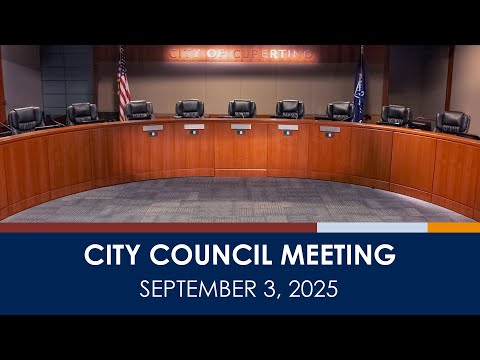
Dozens of residents and local stakeholders urged the Cupertino City Council on Sept. 3 to address safety, traffic and parking impacts from a proposed 40‑unit housing project along Mary Avenue, near Memorial Park.
Public commenters said the site is a cramped, congested corridor used by students, seniors and cyclists and argued the proposal would worsen pedestrian and emergency access and remove dozens of on‑street parking spaces. Several speakers asked the council and staff to pause or redesign the plan to mitigate impacts before moving forward.
The speakers included longtime residents, nearby property managers and representatives of local schools and nonprofit organizations who offered competing views of the project’s local benefit and harm. Joe Houser, a 50‑year Cupertino resident, said the area is already the city’s densest and “there will be a very difficult time crossing Mary Avenue” for residents who use walkers or wheelchairs. He cited the distance between marked crosswalks and said the nearest retail is on the far side of Memorial Park.
Brian Avery, who said his family company built and maintains a large neighboring property (Glenbrook), said removing about 89 on‑street parking spaces would force his community to consider gating and would compound parking conflicts with nearby Westport development. He told the council the property has experienced vehicle‑pedestrian confrontations and that additional units would “make a situation worse that’s already getting worse.”
Representatives of organizations that would be affected by the site urged the council to balance safety concerns with housing needs. Luthern Williams, head of Tessellations School, described the school’s small‑high‑school program on the site and said the campus provides more than $3 million annually to the Cupertino Unified School District through rent and associated economic activity. Williams said the school has implemented staggered drop‑offs, carpooling and on‑site traffic direction, and that neighbors and parents had formed a neighborhood partnership committee, but that the group had not continued meeting.
Jean Bedord, a longtime resident, urged the council to “expedite the final steps” so clients who need extremely low‑income housing for people with intellectual and developmental disabilities are not forced to leave Cupertino and lose community ties. "This project has taken too many years to get approval," Bedord said, and called for a final decision to avoid further delay and rising costs.
Connie Cunningham, chair of the Housing Commission speaking for herself, said the council previously moved the project forward and that the site is one the city identified in its housing element for lower‑income housing. Cunningham called the development “much needed housing” for residents who would otherwise be at risk of homelessness.
Several speakers pressed the council on traffic and emergency access. Multiple commenters said Mary Avenue is a principal route for families, school traffic, the public works yard and the dog park, and that the project’s ingress/egress points line up opposite two‑way driveways for an adjacent senior community, raising collision and congestion risk during peak hours and events at Memorial Park.
San Rao, a neighborhood resident and planning commissioner who spoke for himself, asked the council to study potential inverse‑condemnation liability and recurring city obligations after development and to consider the financial implications of ongoing support beyond one‑time county or grant funds.
Councilmembers and staff said they had met with neighbors and project stakeholders and that the project had been discussed at the Housing Commission and the Planning Commission. Staff noted the site is one the city identified in its housing element for this use and that the council previously advanced the project into study. They also said the city continues to evaluate parking, traffic and design alternatives and will provide additional information at future hearings.
No final vote on the Mary Avenue Villas appears in the Sept. 3 transcript; public comment occupied much of the meeting’s early evening and the council scheduled further internal discussion and follow‑up with staff and stakeholders.
The council did not adopt or reject the development on Sept. 3. The record shows strong neighborhood opposition focused on safety, parking and circulation, while housing‑commission and some residents urged moving the project forward to meet local housing needs.
Looking ahead, commenters asked for additional neighborhood meetings, refined traffic and emergency‑access studies, and clearer information on long‑term funding and management of supportive housing services for the site’s future residents.
Ending: The Mary Avenue Villas project remains under active city review. Councilmembers and staff signaled they expect additional meetings with neighbors and further technical analysis before any formal approval vote is scheduled.