Get Full Government Meeting Transcripts, Videos, & Alerts Forever!
Get email alerts on the Health Insurance topic
No spam. Unsubscribe anytime.
Highlands school board reviews Fleet trust, brokers and pharmacy savings at insurance workshop
Summary
Highlands County School board members and their insurance committee spent a workshop examining options to reduce employee health‑benefit costs, including joining the Florida Educators Health Trust (Fleet), hiring a broker or consultant, and pursuing pharmacy and stop‑loss procurement strategies.
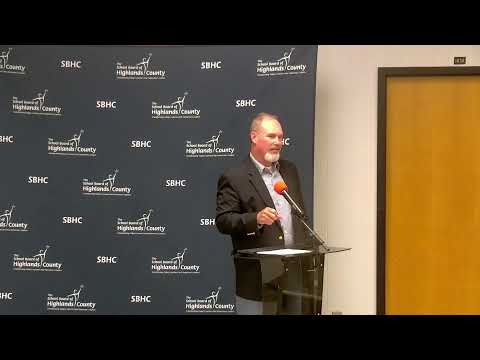
Highlands County School board members and their insurance committee spent a workshop examining options to reduce employee health‑benefit costs, including joining the Florida Educators Health Trust (known as Fleet), hiring a broker or consultant, and pursuing pharmacy and stop‑loss procurement strategies. The meeting included presentations from Mike Swindle, superintendent of Hendry County Schools; Kathy Gordon of Cyber Insurance Consultants; Darren Bridal (Avail/Fleet); and internal staff including Deputy Superintendent Andrew Lethbridge.
Board and committee members said they want clearer, district‑specific cost comparisons before committing to a path. Deputy Superintendent Andrew Lethbridge said the meeting was meant as a learning session and promised to circulate the materials shown at the earlier Fleet presentation. Lethbridge also told the committee he would arrange distribution of the Fleet pharmacy and stop‑loss projections so the insurance committee can review the numbers directly.
Why it matters: Highlands is already self‑insured and faces choices that could affect annual premiums, pharmacy costs and the district’s insurance reserve. Fleet is structured as a statewide educators’ trust that aggregates members to gain buying power on pharmacy and stop‑loss placements; joining would start a process of comparative forecasting. Fleet representatives said a signed participation agreement is typically required for Fleet to run the full actuarial and procurement modeling that would show Highlands’ potential savings.
Most important points from presenters
Mike Swindle, superintendent of Hendry County Schools, described his district’s recent shift from fully insured to self‑insured coverage and subsequent financial results. Swindle said Hendry moved to self‑insurance in January 2024 and that the district now has “a click over $5,000,000 in our insurance fund,” money he described as the difference between previous premiums and the program’s true claims cost. He credited his district’s consultant (Avail Benefits) for helping transition to self‑insurance and recommended that Highlands consider similar analyses. Swindle said of Fleet: “There is nothing hidden. There are no fees that gets paid outside of that whatsoever ever.” He added that Hendry does not use a traditional broker for medical coverage; rather, the district uses a consultant and a contract effectuator for member‑level servicing.
Kathy Gordon, an independent insurance consultant with Cyber Insurance Consultants, summarized what brokers can provide and how they are typically paid. Gordon said broker fees for full, district‑wide services can range widely; she gave an illustrative range of roughly $100,000–$230,000 a year for a comprehensive broker engagement for an organization of Highlands’ size, or alternatives such as per‑project fees, hourly charges, per‑employee‑per‑month (PEPM) fees, or commissions embedded in insurance contracts. Gordon advised that the important safeguards are disclosure and negotiated scope: “The only wrong way probably, frankly, is to be paying for a fee you don't know you're paying for.”
Fleet/Avail perspective and procurement process
Darren Bridal, representing Fleet/Avail, explained Fleet’s structure and procurement approach. Fleet is managed through a trust formed by the Florida Association of District School Superintendents (FADs) and uses Alliant Insurance Services as the trust‑level agent; Fleet then works with members to run stop‑loss, pharmacy and ASO procurements. Bridal said that when a district signs a nonbinding participation agreement Fleet can perform the actuarial and market analyses (stop‑loss, pharmacy and ASO) needed for a true comparison. He described a separate local role—commonly called a contract effectuator or effectuator—that performs member‑level servicing (open enrollment, claims advocacy, onsite education) and said Fleet requires standards for effectuation as part of readiness to enter Fleet’s risk‑sharing layers.
Pharmacy and stop‑loss projections
Presenters said the clearest near‑term savings for an already self‑insured district are likely in pharmacy purchasing and in re‑bidding stop‑loss contracts. Groomed pharmacy data runs through Fleet’s group‑purchasing arrangements can produce material savings, they said. Kathy Gordon and Fleet staff cited an Alliant/GPO analysis that suggested Highlands could have seen roughly $600,000–$700,000 in pharmacy savings in a prior year had the district been in Fleet’s GPO; presenters described that number as an illustrative, retrospective projection rather than a guaranteed future result.
Brokers, consultants and effectuators: roles defined
Speakers distinguished three roles: consultants (district‑side advisers who help with plan design and analysis), brokers or agents (entities that place contracts and may collect commissions or fees), and effectuators (vendor(s) who deliver member‑level services and handle open enrollment and claims escalations). Presenters said those roles can be combined or split depending on district preference; Fleet can run procurements for effectuators for members and can help align scope so the effectuator meets Fleet’s readiness standards.
Committee questions and next steps
Insurance‑committee members pressed for readable, district‑level projections and for assurance that committee members would have time to review the modeling. Jean Federico, HCEA president and insurance‑committee member, asked specifically how much Highlands would save moving from self‑insured to Fleet risk‑sharing versus the larger savings seen when districts shift from fully insured to self‑insured. Staff said they would circulate the Fleet pharmacy and stop‑loss materials that had been shown previously and work to make the underlying numbers legible to the committee.
No formal board action was taken at the workshop. Presenters and staff recommended two practical next steps: (1) staff to provide the insurance committee and board with the Fleet pharmacy and stop‑loss comparative materials and (2) the board consider whether to sign a nonbinding Fleet participation agreement (the agreement enables Fleet to run the full actuarial, pharmacy and stop‑loss analyses). Fleet representatives said a participation agreement typically must be in place in time to allow stop‑loss carriers to quote hardened rates for the coming plan year and suggested an autumn timeline for districts seeking a January implementation.
What was not decided
The board did not vote on joining Fleet, hiring a broker or selecting an effectuator. Several committee members asked that the district verify legal and procurement options such as piggybacking existing contracts and whether the board must approve a participation agreement; staff said they would confer with the district attorney and return answers.
Taper: staff and committee members asked for a follow‑up workshop and additional detail, and presenters offered to share templates and example RFP scopes so the insurance committee could evaluate broker/effectuator costs and program scope before the board considers any formal commitment.