Get Full Government Meeting Transcripts, Videos, & Alerts Forever!
Get email alerts on the Land Conservation topic
No spam. Unsubscribe anytime.
Walton commissioners ask county attorney to draft agricultural conservation easement program
Summary
After a University of Florida economist briefed the board on agricultural conservation easements, Walton County commissioners directed staff to return with a draft resolution and later ordinance outlining a local program to help preserve working farmland.
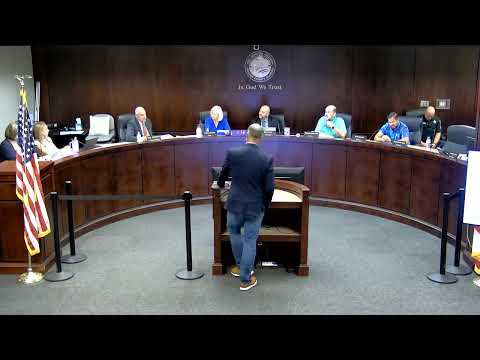
Walton County commissioners on Tuesday asked the county attorney to prepare a draft resolution and, later, an ordinance that would establish a county-level agricultural conservation easement program after a presentation from a University of Florida extension economist.
The board heard from Nathan Pilardi, assistant professor and extension economist in the University of Florida's food and resource economics department, who described how agricultural conservation easements buy only development rights from willing landowners while keeping the land in private ownership. “An agricultural conservation easement is a less than fee acquisition of development rights on agriculturally productive land,” Pilardi said, adding that easements “compensate property owners for restrictions on future development of their land in perpetuity while allowing landowners to continue agricultural activities.”
Why it matters: County-level easement programs can raise a parcel's competitiveness for state and federal cost-share programs, Pilardi said, and they are used by other Florida counties to maintain agricultural acreage, support local farm economies and limit sprawl. Pilardi noted the state rural family lands protection program conserves large acreages but is highly competitive, and that local cost-sharing boosts an applicant’s ranking in federal and state programs.
Board action and next steps: Commissioners gave staff direction — not a formal vote — to have the county attorney draft a resolution that would outline program elements and then return to the board with a draft ordinance if the board wants to pursue an ordinance. A county commissioner told Pilardi the board would “get with” county administration and local representatives to develop what a program “would look like.” Pilardi said he would assist county staff as needed.
What was said: Pilardi described key points landowners should know: easements are voluntary; they can be customized (they need not cover entire parcels); they often require appraisals, soil surveys and legal assistance; and funding is cyclical. “You need to consider what's gonna happen with property value, but there's also a risk to waiting,” Pilardi said, noting state and federal program cycles and competition. He warned some landowners are surprised at the length and complexity of the process.
Context and local relevance: Staff and the board discussed how a Walton County program could help local landowners compete for federal Agricultural Conservation Easement Program points and for state programs such as the rural family lands protection program and Florida Forest Legacy. Commissioners said a resolution would likely be the first step; an ordinance would follow if the board directs it.
Ending: The board’s direction gives county attorneys and staff a path to return with draft language for the board to consider; no binding funding or program design was approved at the meeting.