Get Full Government Meeting Transcripts, Videos, & Alerts Forever!
Get email alerts on the Public Health Overdose topic
No spam. Unsubscribe anytime.
Greene County health staff outline Narcan outreach, report rise in reported overdoses and local responses
Summary
County health staff told the Health Services Committee about an outreach campaign for Narcan distribution, shared local overdose data, and described follow-up programs including jail discharge Narcan distribution, drug-checking equipment and linkages to treatment.
Health services staff and county partners told the Greene County Health Services Committee about an outreach campaign to mark International Overdose Awareness Month and described work to distribute Narcan and to connect people who overdose to care.
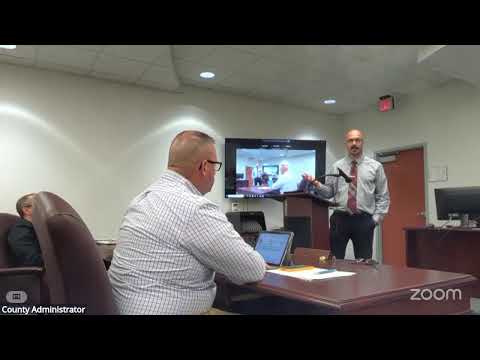
Laura Churchill, joined by clinic manager Wendy Johnson and registered nurse Donna Giuliano, briefed the committee on the county's outreach signs and a countywide campaign urging residents to obtain free Narcan. Johnson noted that Narcan "is not a controlled substance and is legal to carry," and Giuliano summarized county data: "There were 28 reported overdoses in Greene County [last year] and 12 of them were fatal. This year, we've had 49 overdoses so far. 22 of them were nonfatal with the use of Narcan." Giuliano added that, based on reported incidents, "89 percent of overdoses last year were in private homes."
Committee members and county staff discussed the local drivers of those statistics. Giuliano said fentanyl is frequently involved and is sometimes pressed into counterfeit pills, explaining how someone might take what they think is another drug and ingest fentanyl. Staff described a county purchase of drug‑checking machines for the sheriff's office and coordination with local groups. The county identified xylazine as a drug appearing in some toxicology reports but said it was not the major driver in most deaths.
Staff and the sheriff's office described steps to increase immediate access to Narcan, including plans to set up a Narcan station near the county jail where people being released could pick up a kit. Giuliano said the jail‑release distribution would be coordinated so officers would not have to carry out the distribution themselves but would make Narcan available at release.
County staff said the Narcan distribution and related programs are state‑funded overdose prevention efforts involving Greene County Mental Health and the sheriff's office, with on‑the‑ground partnerships that include peer support and the Oxford House recovery housing model. Committee members emphasized the need to pair overdose reversal with linkages to treatment; staff pointed to telehealth options and local treatment capacity as part of the county's strategy.
The sheriff's office described a longer‑running "impacted citizens" follow‑up program run by Lieutenant George Lewis with community wellness staffer Kate Murphy. The sheriff's office said deputies and first responders submit forms after overdoses and that within days staff reach out to offer services and supports, including peer support, assistance accessing treatment, phones and transportation as appropriate.
Presenters cautioned that the growing availability of Narcan and lay administration without 911 involvement means reported overdose numbers undercount actual overdoses. As the sheriff's office representative put it in committee remarks, rapid community use of Narcan is saving lives but "the data as far as overdoses is going to be skewed pretty much forever now" because many reversals are not reported to emergency services.
Committee members voted on two routine health‑service resolutions later in the meeting (appointment to the Public Health Department Metro Professional Advisory Committee and a budget mandate related to Greene County Mental Health and the New York State Office of Mental Health); both motions were carried as recorded in the minutes.