Lifetime Citizen Portal Access — AI Briefings, Alerts & Unlimited Follows
United Houma Nation details $56 million NOAA resilience grant; says Terrebonne will receive $23 million
Loading...
Summary
United Houma Nation officials presented UHN Rising, a five‑phase resilience plan funded largely by a $56 million NOAA grant, telling the Terrebonne Parish Council that more than half the award will be spent in Terrebonne Parish, including a $20 million retrofit of the tribe’s central hub at 400 Monarch Drive.
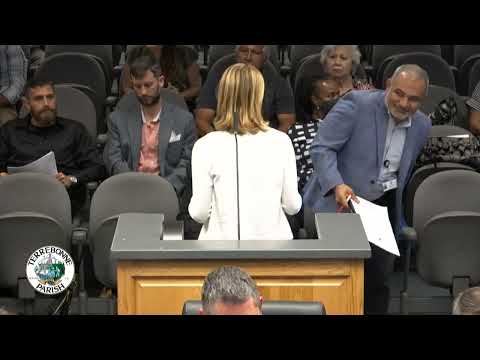
United Houma Nation leaders told the Terrebonne Parish Council on Aug. 27 that the tribe received a $56,000,000 grant from the National Oceanic and Atmospheric Administration in July 2024 to implement a five‑phase resilience program called UHN Rising, and that more than half of the funding will be spent in Terrebonne Parish.
Jason Trosclair, executive director of the United Houma Nation, said the award covers a regional effort across six parishes and that the tribe expects approximately $23,000,000 to be spent in Terrebonne Parish. “What you might not know is that more than half of that amount is scheduled to be spent right here in Terrebonne Parish,” Trosclair said.
The project is structured in five phases: (1) retrofit and establish a central resilience hub at the tribe’s headquarters; (2) establish satellite community resilience hubs across the service area; (3) enhance communications systems; (4) pursue economic development opportunities outside the NOAA scope; and (5) plan for potential Tribal migration and long‑term relocation strategies, presenters said. The grant award adjudication and kickoff timeline presented begins with a July 2024 kickoff and an implementation window the presenters said runs from Oct. 1, 2024, to Sept. 30, 2029.
Lance Fussell, senior program manager for the UHN Rising project, said the central hub at 400 Monarch Drive will be retrofitted to withstand future storm threats and to house programs that operate “in blue skies and gray skies.” Fussell said work on the central hub is phase 1; satellite hubs will receive retrofit funding and local partners must designate sites for those hubs.
“We are retrofitting that building to make sure that it’s withstanding the future threats of hurricanes,” Fussell said. He added the grant’s regional approach will support satellite hubs in each parish the tribe serves: Terrebonne, Lafourche, St. Mary, Plaquemines, Jefferson and St. Bernard.
Ali Jamm, the NOAA community engagement fellow assigned to the project, described NOAA’s Climate Resilience Regional Challenge as highly competitive and said the United Houma Nation was one of 19 winners nationally. “This investment supports aspects of community resilience planning, helping us prepare for and respond to weather challenges,” Jamm said.
Michael J. Billiat of the Law Offices of Michael J. Billiat, one of the project’s legal and planning partners, said his office will manage contracting and urban planning support for the five‑year implementation period. He and other partners named the Water Institute and the University of Michigan as science and evaluation partners for assessment and technical support.
Project staff outlined local spending the council was asked to note: roughly $20,000,000 earmarked for retrofitting the central hub at 400 Monarch Drive and about $3,000,000 intended for a tribal‑owned historic school on the east side of Houma (named in the presentation as the Dakeville/Dadeville school) to serve as a resilience hub; presenters said each satellite hub would receive about $3,000,000 for retrofit. Presenters stressed the central hub will provide services to the entire community, not only tribal citizens.
Councilman Amadee asked whether retrofits would focus on technology to accomplish the mission. Lance Fussell replied the work involves both facility upgrades and program investments, including services for veterans and vocational rehabilitation supports: “It's not just in the facilities. It's in investing in the people through programs.”
Presenters said the NOAA‑funded portion does not include the project’s economic development phase (phase 4) and that the tribe intends to pursue additional grants and other funding for business development. Officials invited council members to a public open house on Sept. 13, 2025, to review designs and provide input.
Nut graf: The UHN Rising presentation told the council that the United Houma Nation will direct a multi‑year, federally funded resilience program across six parishes, with an early concentration of investments and retrofits in Terrebonne Parish. The plan combines physical retrofits, communications upgrades, community hubs, and planning support intended to prepare communities for future storms and to provide services during non‑emergency times.
Background and details: Presenters said initial seed funding for the project came from the Greater New Orleans Foundation’s Next 100 Years Challenge, which helped the tribe prepare the competitive NOAA application. Officials described phase‑based management and named several local and national partners for technical, legal and evaluation roles. The presentation listed the five‑year implementation period and emphasized both community engagement and a community‑led governance structure for the hubs.
Ending: The council did not take any formal action on the presentation that evening; presenters provided materials to council members and invited them to an open house on Sept. 13, 2025. Project staff said further implementation steps will include formal contracting, community outreach, site designation for satellite hubs in some parishes, and a multi‑year schedule of retrofitting and communications improvements.