Get Full Government Meeting Transcripts, Videos, & Alerts Forever!
Get email alerts on the Foster Care Dss topic
No spam. Unsubscribe anytime.
Burke County foster-care social worker describes high-stakes daily work as county seeks more placements and support
Summary
DSS staff told Burke County commissioners on Sept. 2 that 186 children are in foster care and described staffing and case-load improvements, while a foster-care social worker provided a first‑hand account of the job’s demands and recent emergency placement work.
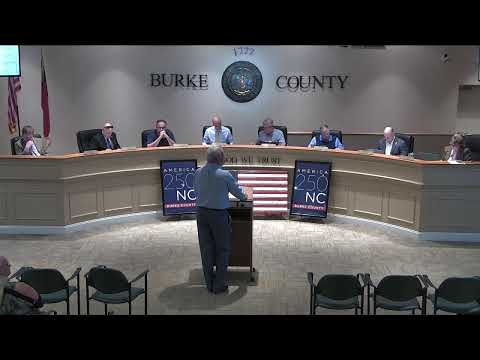
At a Sept. 2 Burke County Board of Commissioners pre-agenda meeting, social services staff presented monthly operations and a foster-care overview; foster-care social worker Garrett Smith described the day-to-day realities of working with children in care and adoption processes.
Corey Fisher Wellman, director of Burke County Department of Social Services (DSS), opened the monthly report and highlighted staffing and caseload numbers. When the report was prepared the department had 11 openings with 4 offers pending, translating to an approximate vacancy rate of 3.5% once offers were finalized. Fisher Wellman said the department’s CPS (child protective services) reporting averages about 65 reports a month, with screening-out practices closing about 60% of initial reports. He noted a prior spike in caseloads (a high of 306 in February 2024) and said work to reduce that backlog has brought caseloads to more manageable levels.
DSS reported 186 children currently in foster care (figures presented for the reporting month: 6 entries, 4 exits, net gain of 2). The director and social worker framed foster care work as both labor-intensive and emotionally demanding, requiring coordination with courts, Medicaid liaisons, guardians ad litem, recruiters and external providers.
Garrett Smith, introduced during the report as a foster-care/adoptions social worker, told commissioners: “It can be very difficult. It can be very emotional. It can be very draining. But in the end, it is worth it.” He outlined typical duties: court reports, monthly day sheets, child-family-team meetings, permanency planning reviews every three months, and Ryland’s Law home visits during trial home placements.
Smith explained placement levels used by DSS: regular family placement, level 2 therapeutic placements (including IAFT — intensive, single-child placements), level 3, and psychiatric residential treatment facilities (PRTFs) for high-intensity needs. He described the interstate placement process (ICPC) that allows children to be placed with prospective parents in other states and noted ICPC processing times commonly take up to six months, though times can vary.
Smith gave a recent case example: a child who had been visiting a pre‑adoptive parent out-of-state for more than two years and had moved into that home after ICPC approval was removed from that placement by the other county’s DSS following new allegations; the child was returned to Burke County DSS and experienced a severe panic attack that required hospital care before a new placement was found. Smith used that example to illustrate unpredictability in adoption work and the need for responsive emergency placement capacity.
Smith also described adoption processing steps: adoption assistance paperwork review, adoption committee review, petition filing, and post-petition steps leading to adoption day. He emphasized the role social workers often play in providing basic care and stability—transportation, attending school ceremonies, and offering continuity—especially for children who have “no one.”
Commissioners acknowledged the emotional difficulty of the work and discussed the possibility of providing this training or a condensed version to school personnel to improve awareness and detection. No formal action was taken; the DSS monthly operations report was accepted for the agenda as presented.