Get Full Government Meeting Transcripts, Videos, & Alerts Forever!
Get email alerts on the Early Childhood Funding topic
No spam. Unsubscribe anytime.
Buncombe County committee weighs how to focus early‑childhood fund after six years of grants
Summary
County staff and commissioners reviewed six years of data on slots, participation and readiness and debated whether to keep a competitive grant model or shift toward targeted supplements, employer partnerships or startup supports. Panel agreed to seek outside expertise and return with more data.
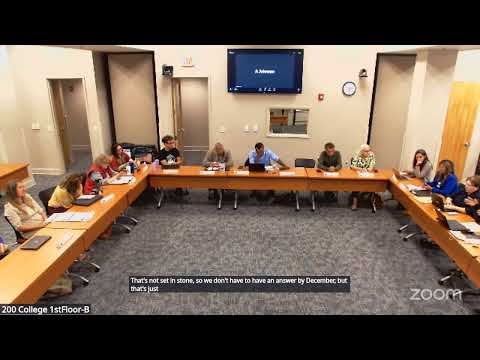
Buncombe County officials and early‑childhood partners spent the meeting reviewing results from the county’s early‑childhood fund and discussing how to focus the program’s investments going forward.
County staffer Rachel (last name not specified) told the committee the fund was created by a 2018 Board of Commissioners resolution to expand availability of early‑care and pre‑K classrooms, support workforce development and scale effective programs. She said staff compares program‑level reporting submitted by grantees with broader system measures such as licensed slots, percent of the 0‑to‑5 population served and kindergarten readiness scores.
The presentation noted that using FY19 as a baseline there has been little change in the number of licensed child‑care facilities while the percent of children 0–5 enrolled in licensed care was about 31.7% in FY19 (13,489 children total, 4,280 enrolled). Staff also reported a net loss of nine facilities but a net increase of about 52 licensed slots since the baseline year. Rachel cautioned that those system measures are affected by factors including COVID‑19 impacts and natural‑disaster damage, and she flagged several data limitations — notably inconsistent inclusion of kindergarten ages across datasets and a lack of local longitudinal tracking tying individual children’s participation in county‑funded programs to later school outcomes.
Committee members debated funding approaches. Several members, including Commissioner Al (last name not specified), Commissioner Whitesides and others, said the fund must balance competing goals: targeted investments to create new classrooms and operating support for existing slots, system‑level investments such as workforce development, and simpler broad supplements that might be easier to administer. Commissioner Al said, “My dream has been one day to look at universal pre‑K in Buncombe County,” while other members urged clearer, narrower grant criteria to reduce application and review burdens.
Public commenter Kalana, who identified herself as an entrepreneur trying to open a start‑up childcare program, described barriers to new providers in Asheville — high commercial real‑estate costs, regulatory requirements and competition from larger providers — and asked how the county’s funding and processes might be adapted to help startups. Rachel invited Kalana to follow up with staff and pointed to the meeting’s public comment period for fuller remarks.
Members discussed demand signals and wait lists. Staff said multiple independent wait lists exist and that a combined “single portal,” operated by Buncombe Partnership for Children, includes NC Pre‑K and Head Start referrals; staff reported the portal currently showed no wait list for pre‑K. Committee members flagged uncertainty about demand measures (for example, parents placing multiple names on different organization wait lists) and urged more direct parent input on preferred locations, hours and care types (for example, family‑childcare homes, overnight or weekend care tied to tourism and health‑care employers).
The committee also discussed employer engagement and matching models. Rachel described a state pilot known as NC TriShare (Tri‑Share) and said Buncombe was not among participating counties; she noted the pilot had discussed employer contributions on the order of $5,000 per slot. Members suggested convening major local employers and funders to explore matching or partnership models and legal constraints on how county funds could be tied to private donations.
As next steps the committee asked staff to gather additional data and outside expertise. Members proposed inviting Buncombe Partnership for Children and a state childcare liaison to present on models such as TriShare, to clarify data definitions (including how 3‑ and 5‑year‑old counts are handled), and to return with recommendations on whether the fund should continue primarily as a competitive grant program or shift toward supplements, targeted operating support, startup assistance or employer partnerships. The committee set a tentative next meeting for Oct. 7 and adjourned.
Adjournment and procedural actions at the meeting: the committee moved and seconded a motion to adjourn; the motion carried and the meeting was adjourned.