Get Full Government Meeting Transcripts, Videos, & Alerts Forever!
Get email alerts on the Schools Facilities topic
No spam. Unsubscribe anytime.
Chariho school committee to present elementary facility options; Hopkinton urged to publicize meetings
Summary
Louise Dinsmore, chair of the Chariho School Committee, asked Hopkinton residents on Sept. 2 to attend upcoming presentations by SLAM Architects on elementary school facility options, including renovation or constructing one to three new schools.
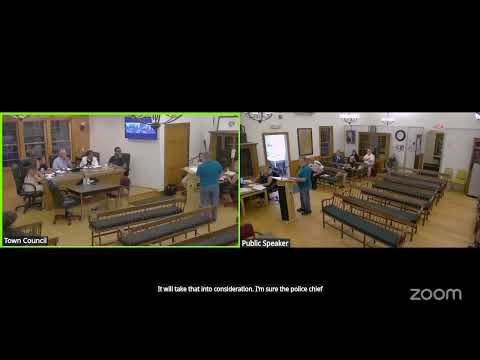
Louise Dinsmore, who identified herself as chair of the Chariho School Committee, told the Hopkinton Town Council on Sept. 2 that the district will hold several meetings to gather public input on elementary school facilities planning and to prepare a state-required five-year plan.
Dinsmore said SLAM, the architectural firm the committee hired, will present options at the next school committee meeting on Tuesday, Sept. 16, at 7 p.m. in the Middle School auditorium. She said SLAM's options will include renovating the district's three existing elementary schools, constructing one new elementary school, or constructing three new elementary schools.
Dinsmore said the district must submit a Stage 2 application to the Rhode Island Department of Education in February and that public input will inform the committee's recommendation. She urged Hopkinton to post meeting notices on the town website and Facebook page to reach voters, parents, staff and other residents beyond the school district's email list.
She also listed two other public meetings: an SLAM presentation at Ashaway Elementary School on Monday, Oct. 6 at 5:30 p.m., and the school committee's October meeting when the committee must choose which option to advance (the committee meeting she cited is Oct. 19 at 7 p.m.).
Dinsmore told the council she was speaking for herself and not on behalf of the entire school committee. Councilors acknowledged the timeline and encouraged residents to attend the public sessions.
Dinsmore framed the work as compliance with an education requirement that calls for a comprehensive facilities plan. She said the plan is a precondition for state review and potential reimbursement for future capital work, and she emphasized public input in deciding whether to seek funding for renovations or new construction.