Leawood council adopts $85.8 million 2026 budget, votes to exceed revenue-neutral rate and create golf enterprise funds
Loading...
Summary
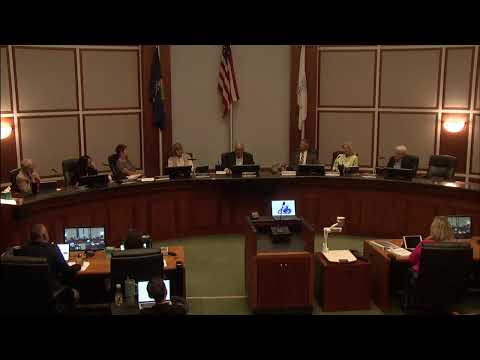
The Leawood City Council voted unanimously Sept. 2 to adopt an $85.8 million 2026 budget, approve a resolution to exceed the state revenue-neutral rate caused by higher assessed valuations, and adopt the city’s 2026–2030 capital improvement program.
The Leawood City Council voted unanimously Sept. 2 to adopt an $85.8 million proposed 2026 budget, to approve a resolution authorizing the city to collect more property tax revenue than in 2025 (exceeding the revenue-neutral rate) and to adopt the 2026–2030 capital improvement program (CIP).
City officials said the adopted plan keeps Leawood’s mill levy flat at 23.514425 mills while allowing the city to collect $1,450,000 more than last year because assessed valuations rose. Jana Raper, the city’s assistant finance director, explained the legal trigger for the hearing: “In Kansas, cities are required to hold a public hearing anytime they plan to collect more in total property tax revenue than the year before.”
The budget package funds core services, debt and capital projects. Staff presented the budget as balanced and noted Leawood’s AAA bond rating as a factor in long-term financial planning. Property tax revenue is the largest single source at about $33.8 million (roughly 41% of the budget). The city projected keeping the mill levy flat while absorbing a 4.3–4.4% increase in assessed valuation; staff estimated the average Leawood home (appraised near $839,000) would see an annual Leawood city portion rise from about $2,151 to $2,270 — roughly $119 more per year (about $10 per month) going to the city portion of the tax bill.
Nut graf: The council completed the legally required revenue-neutral-rate hearing, then adopted the budget and CIP. The package includes a new enterprise accounting structure for Iron Horse Golf Course; staff and public speakers urged greater financial transparency for the golf course operations and the council established transfers to seed operating and capital enterprise funds.
Details and context
Budget and revenue-neutral rate Staff described the revenue-neutral-rate (RNR) hearing as a technical requirement triggered by rising assessed valuation. The council voted 7–0 on the resolution authorizing the city to exceed the revenue-neutral rate; the roll call read Castor, Sunkel, Kane, Harrison, Gallien, Sippel and Larson as voting aye (Council member Fila was absent). Later the council adopted the 2026 budget by ordinance on a 7–0 roll call.
Allocation highlights and assumptions included: - Proposed total budget: approximately $85.7–$85.8 million. - Property tax revenue (city portion): about $33.8 million (41%). - Sales and use taxes: projected to increase about 2.3% year over year. - Fund balance targets: staff projected ending reserves able to cover roughly 74% of planned expenditures across budgeted funds. - No new full-time staff were proposed; personnel costs include a 3.5% pool for merit and market adjustments and a conservative 20% assumed increase for health insurance. - Debt service was projected to decrease in 2026 due to not issuing long-term debt in 2025.
Capital improvement program The council also adopted the city’s 2026–2030 CIP (voice vote, ayes have it on 7–0). Staff emphasized that the CIP is a multi-year planning document that remains subject to annual amendment and project-by-project approval. Council members urged continued attention to long-term infrastructure needs such as roads, undergrounding projects and parks capital. Council member Harrison noted the CIP’s role in preventing infrastructure failures that can affect public safety and property.
Iron Horse golf operations and enterprise funds Resident Deb Maywalt used the public-comments portion to push for greater transparency and a financial review of Iron Horse Golf Course management. Maywalt said the city’s management contract with Troon Golf “includes terms and conditions overwhelmingly benefiting the Scottsdale, Arizona company” and alleged that alcohol profits paid to Troon were “approximately $755,000” in fiscal year 2024, while the city received an $85,000 stipend under the contract. She recommended an independent review before the city finalizes enterprise accounting for the golf course.
Staff told the council the budget would create: - A golf operating enterprise fund initially seeded by a $1,000,000 transfer from the general fund to improve transparency into business results and operations. - A golf capital fund funded initially with $600,000 from the general fund and $400,000 from the public buildings reserve fund to track capital and maintenance expenditures for facilities and equipment.
Council members and staff said the new enterprise funds are intended to increase transparency and allow the city to better track revenues and costs tied specifically to the golf course.
Other budget items mentioned during public comment and staff presentation Resident David M. Huff asked whether proceeds and budget authority exist for city-owned properties at 96th and Lee Boulevard (former fire station and city hall), noting he saw no line-item in the presented materials. Staff and council members said those property decisions would be addressed separately and could be brought into future CIP or budget discussions as needed.
Votes at a glance - Resolution to exceed the revenue-neutral rate: adopted, roll call 7–0 (Castor, Sunkel, Kane, Harrison, Gallien, Sippel, Larson — Fila absent). - Ordinance adopting the 2026 budget: adopted, roll call 7–0. - Resolution adopting the 2026–2030 capital improvement program: adopted, voice vote recorded as 7–0.
Ending Council members praised staff work on the budget presentation, including a communications video used repeatedly in committee and public outreach. Staff noted the budget supports public safety, snow removal, parks, trails and other services that staff and residents identified through surveys as priorities.