Get Full Government Meeting Transcripts, Videos, & Alerts Forever!
Get email alerts on the Public Safety Curfew topic
No spam. Unsubscribe anytime.
Council debates citywide curfew ordinance and higher penalties; members request further review
Summary
The public safety committee examined Bill 8 of 2025, a proposed amendment to the city curfew ordinance that would set uniform after‑hours times for minors and increase penalties for repeat violations. Deputy Chief Young and Commissioner Carter said the measure is intended to reduce juvenile
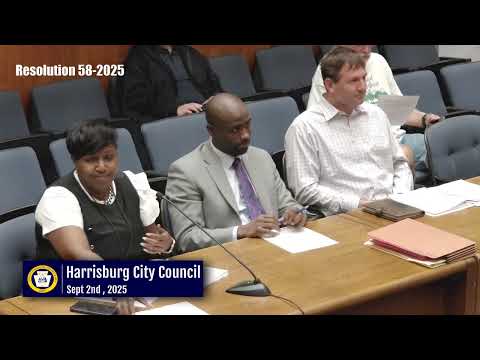
The public safety committee discussed Bill 8 of 02/2025, which would amend Chapter 3‑333 of the codified ordinances to adjust curfew hours for minors citywide and increase penalties for repeat curfew violations.
Deputy Chief Young and Commissioner Carter appeared for the department and described the measure as a tool to address recurring juvenile‑related incidents in the downtown area and beyond. Young said a prior administrative order limited enforcement to a downtown zone and that the ordinance before council would change the hours for the entire city. He described recent deployments downtown that, in his view, reduced juvenile‑related incidents in that area.
The proposed amendment would define “after hours” as 9 p.m. to 6 a.m. Sunday–Thursday during the school year and 11 p.m. to 6 a.m. Friday–Saturday during the school year, with all nights treated the same during summer vacation. The penalty section would make a violation a summary offense, with fines of $300 for a first offense, $500 for a second, and $1,000 for subsequent offenses in the same calendar year; in the court’s discretion penalties could be satisfied by community service.
Council members and community speakers raised concerns about enforcement, equity and unintended consequences. Members repeatedly asked how officers would identify age (distinguishing 17‑year‑olds from adults), how officers would respond when calls come in and whether the department has capacity to enforce a citywide change. Several council members urged non‑punitive alternatives: training credible messengers, adding diversion and mentorship programs, and strengthening youth services rather than relying primarily on fines.
Vice President Green and other council members asked staff to clarify operational details: how calls would be handled, whether officers would chase juveniles or seek to return them to guardians, how many officers are typically deployed for curfew calls, and how success would be measured (for example, fewer calls in a specific area). Deputy Chief Young said enforcement is complaint‑driven, that officers aim to resolve incidents through conversation and return juveniles home where possible, and that summary citations and community service options are intended as a last resort.
Several members asked that the item remain in committee for further review and for a plan that includes youth services and training for officers on interactions with minors. President Hill said she would keep the amendment in committee to allow council time and the law bureau to clarify language and implementation questions.
No formal vote on Bill 8 took place in committee; council requested additional information and suggested adding community‑based interventions to any enforcement plan.