
Wicomico County Emergency Services outlines 5–7 day home preparedness kit
Get AI-powered insights, summaries, and transcripts
Subscribe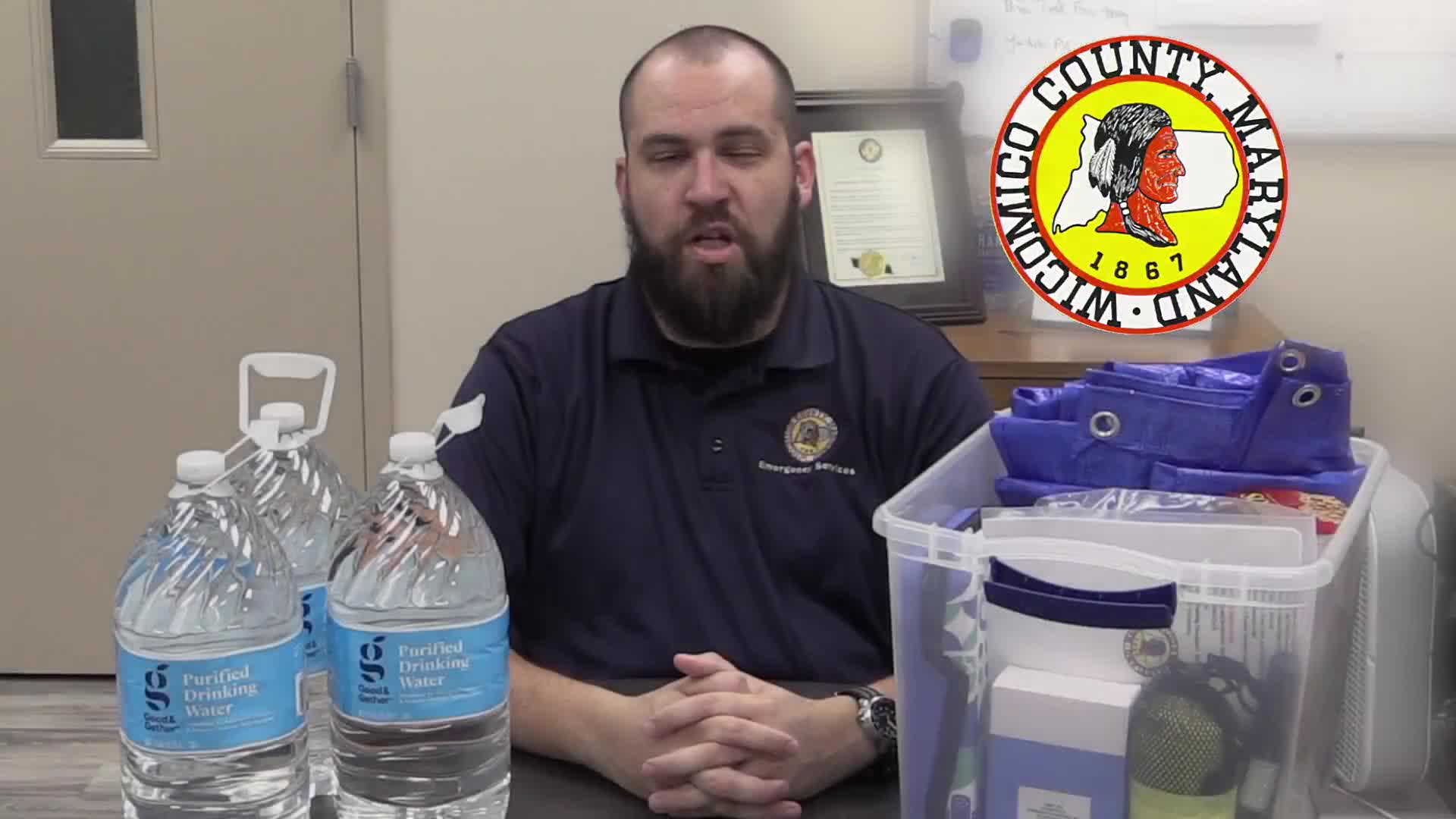
Summary
A Wicomico County Emergency Services presenter recommended one gallon of water per person per day and a five- to seven-day supply of food and essentials, and described items to include in a home emergency kit and how to store them.
Matt, a presenter from Wicomico County Emergency Services, described items residents should include in a home emergency preparedness kit and recommended storing enough supplies for five to seven days.
Matt said the “general rule of thumb is 1 gallon of water per person per day,” noting that this amount is for each person rather than per household. He emphasized water’s uses for drinking and sanitary needs and said households should also plan for pets.
He urged residents to keep nonperishable food that does not require refrigeration and to protect food from pests and water damage by storing it in protective containers rather than cardboard. “If I have this on the floor of a pantry and my house floods, the cardboard box will be ruined, and the food inside will be compromised,” he said. He named examples such as canned tuna, canned soup and shelf-stable milk, and advised pairing canned goods with a can opener if packages lack pull tabs.
Matt recommended assembling both per-person and per-household items. Per-person items include water, a rain poncho and a working flashlight with compatible batteries. Per-household items include a can opener, plastic or spare silverware, a tarp and duct tape. He said a poncho “folds up very small into this convenient pouch and doesn't take up much space in your kit” and suggested having one per person.
On power and communications, Matt advised keeping a dedicated flashlight rather than relying solely on a phone light, and storing spare batteries. He described portable power banks and noted differences in models: some have built-in plugs, some are solar-rechargeable. “This 1 is solar so that you can keep recharging it even if power goes out for an extended period of time,” he said, and cautioned that charging a phone in a vehicle can deplete a car battery and fuel.
He recommended a basic first-aid kit for minor injuries and reminded listeners that training increases effectiveness: “If you don't know how to use a triangular bandage, it’s not gonna do you a whole lot of good,” he said, and suggested first-aid or Stop the Bleed courses. He also advised checking expiration dates on kit supplies and replacing items such as alcohol pads and adhesive bandages when they degrade.
For protecting documents, Matt showed a weatherproof bag and suggested including insurance information, deeds, car titles and essential medical information. He described assembling a kit over time rather than buying all items at once and said the county provided sample bags and checklists.
Matt advised residents to prepare for five to seven days to allow time for infrastructure restoration after a major disruption. He said the county is not endorsing specific brands and that items can be purchased in stores or online. For more information or to request a preparedness bag, he provided a county phone number and the Emergency Services website for alerts and resources.
To request a weatherproof bag or for questions, Matt said residents can call (410) 548-4820 or visit the Wicomico County Emergency Services website.