Get Full Government Meeting Transcripts, Videos, & Alerts Forever!
Get email alerts on the City Budget topic
No spam. Unsubscribe anytime.
Long Beach budget hearing draws hundreds; residents press council to fund immigrant legal aid, tenant counsel and community land trust
Summary
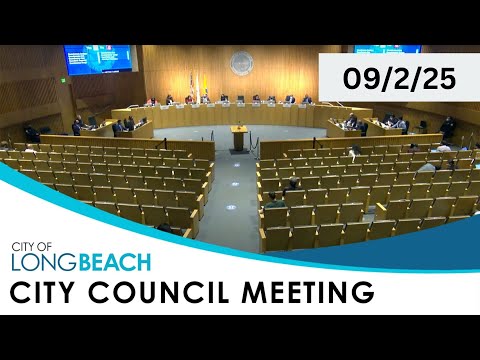
Long Beach City Council’s continuing budget hearing on Sept. 2 drew large public turnout as residents urged new municipal funding for an immigrant justice fund, expanded eviction defense and a community land trust, while department directors briefed the council on infrastructure, parks, libraries and technology plans.
Long Beach — Hundreds of residents turned out at the Sept. 2 Long Beach City Council budget hearing to press the council for direct, structural investments in programs they said protect immigrant families, prevent evictions and preserve long‑term affordable housing.
Hundreds of people signed up for public comment during the multi‑hour hearing on the proposed fiscal year 2026 budget. A coalition of community groups and nonprofit providers urged the council to allocate $2,200,000 in new city funds to a Long Beach Justice Fund to provide legal representation in immigration cases; $2,000,000 to expand the city’s tenant right‑to‑counsel program; and $400,000 for the Long Beach Community Land Trust (CLT). Organizers said the request was based on thousands of petition signatures and a wave of recent immigration enforcement actions that have affected local workers.
“These crises are connected,” organizer Eric Garcia told the council. “Immigration raids tear apart our families and workforce. We need real investment in the people who make this city run.” Garcia, reading on behalf of the community group ORALE, called the amount in the current draft budget “mostly carryover” and said the community needed new, structural funding, not one‑time dollars.
Speakers from Legal Aid Foundation, neighborhood groups and immigrant‑serving organizations recounted recent enforcement activity and court appearances that, they said, underscored the need for guaranteed local representation. “If the city doesn’t take advantage to give the Justice Fund the $2.2 million, it’s a slap in the face to the immigrant community,” said Lou Rosen, who urged immediate action.
Council members kept the budget hearing open to hear presentations from five departments: Public Works, Economic Development, Parks, Recreation & Marine (PRM), Library, Arts & Culture and Technology & Innovation (TID). Department directors outlined proposed program changes, operating pressures and capital priorities.
Public Works Director Eric Lopez highlighted investments in pavement repair and street maintenance tied to the Elevate ’28 infrastructure plan, discussed rising operating costs and said the department plans to realign bureaus to create a Transportation Services Bureau and to transfer solid‑waste operations into a new Energy & Environmental Services department. Lopez said the city is ramping up traffic‑safety staff and is preparing to begin the state‑authorized automated speed‑enforcement program; detailed plans and procurement will return to council before equipment deployment.
Economic Development Director Beau Martinez reviewed an expanded “Long Beach Department of Economic Development and Opportunity” and said one‑time funds from successor‑agency property sales will be used to underwrite neighborhood marketplace investments, small‑business grants and the GrowLongBeach loan program. Martinez described workforce programs that placed young residents in paid public‑service and industry internships and reiterated the department’s focus on leveraging city assets to diversify revenue.
PRM Acting Director Scott (last name used in department materials) outlined operations supporting park maintenance, youth programs, senior meal services and animal care. He said the department will move to bring morning restroom maintenance in‑house and expand the Park Ambassador program. PRM asked for modest structural enhancements to address recurring vandalism and to stabilize beach and lagoon maintenance budgets.
Library, Arts & Culture Director Kathy De Leon announced the department’s new name and the creation of a small Cultural Affairs unit funded from the city’s advertising and promotions fund; the unit will begin with one cultural affairs officer and clerical support and is designed to coordinate city cultural activities without supplanting the Arts Council for Long Beach. De Leon also said the department will keep several branch libraries open six days a week and will sustain youth and senior programming, while noting repeated HVAC and facility repairs had caused temporary closures this year.
TID Director Leah Erickson detailed investments in cybersecurity, data privacy, migration of legacy systems to cloud platforms, and a new project management office to handle rising demand for digital services across city departments. Erickson said TID’s budget is funded by internal service MOUs that allocate costs to departments based on inventories, budgets and head counts, and that TID is pursuing pilots for responsible use of generative AI and broader digital inclusion efforts.
Why it matters: community leaders said that while headline capital projects — streets, waterfront redevelopment and revenue generation — matter, so do the immediate safety nets that keep families housed and in town. Speakers argued that legal representation, tenant defense and community land‑trust homes prevent family separation and homelessness and leverage much larger system savings.
What’s next: Council members deferred budget decisions to regular budget‑oversight committee meetings; several council members signaled support for the community requests but emphasized the need to reconcile them with other general‑fund pressures. Public comment will continue through the oversight process, and the council will consider formal budget adoption in the coming weeks.
Ending: In the meantime the council also heard dozens of other public requests — from small‑business owners asking for targeted grants to nonprofit leaders seeking increased library and arts support — and council members asked staff for follow‑up reports where appropriate. The budget process remains open and council members invited community members to continue providing input at upcoming oversight committee sessions.