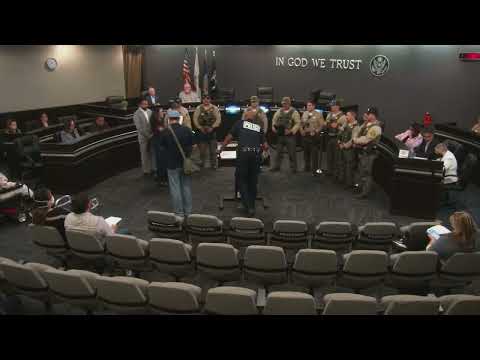
Lancaster approves $350,130 Axon body‑ and vehicle‑camera package after departmental presentation
Loading...
Summary
The Lancaster City Council authorized the Lancaster Police Department to purchase an Axon body‑worn and in‑vehicle camera package—15 body cameras and associated systems—at an estimated five‑year cost of about $350,130. The department said funds were already budgeted and the purchase includes AI‑assisted report tools and vehicle ALPR capability.
Lancaster city officials authorized the Lancaster Police Department to buy an Axon ecosystem of body‑worn and in‑vehicle cameras after an on‑record presentation and brief council questions. The department said funds for the system were already included in the police budget and the council vote to authorize the procurement passed unanimously.
Officer Lillian Shaw of the Lancaster Police Department presented the proposal, telling the council the city’s current camera provider had produced “numerous dependability issues with the lens lock product, with its hardware and with its data synchronization.” Shaw said, if approved, the department would reallocate the existing cameras to non‑sworn personnel and equip sworn officers with Axon devices used nationwide, including by the Los Angeles County Sheriff’s Department.
Shaw described features the proposal would add: automatic activation of recording when an officer draws a firearm or taser or when code‑3 lights are activated; in‑vehicle cameras with forward road view and rear passenger view; ALPR (automated license‑plate recognition) on forward vehicle cameras; the ability for the public to upload evidence via secure links; and an AI‑assisted report‑writing tool the department said would reduce officer time on paperwork.
Council discussion and vote: A councilmember asked how many cameras were included; Shaw answered “We’re looking at 15 cameras at the moment.” When asked about cost, Shaw said the five‑year total was “$350,130 approximately.” Shaw told the council the purchase was already budgeted and the council voted to authorize the purchase. One resident later asked whether camera data would be shared with third parties; the council indicated staff would walk the resident through data‑handling protocols, but the transcript contains no additional detail on specific data‑sharing agreements.
Why it matters: Body‑worn and vehicle cameras affect evidence collection, officer accountability and public records. The Axon package would also bring ALPR capability to patrol vehicles and add a public submission link that the department said would allow community members to provide photos and video related to cases.
Formal action: The council approved the authorization to purchase the Axon system; the city recorded the vote as four yes votes and the motion passed.
What was said (selected quotes): Officer Lillian Shaw said, “Body worn cameras have since become a mainstream expectation also in courts for its evidentiary value.” She described the existing system’s problems as “numerous dependability issues” and said Axon’s ecosystem offers “time saving, transparency and trust, operational efficiency [and] future ready technology.”
Details not specified on record: The staff presentation said the purchase is budgeted but did not provide the specific budget line, contract length beyond the five‑year cost estimate, or the terms for data retention or third‑party access in the transcript. The council did not provide individual named roll‑call votes in the meeting transcript excerpt; the recorded tally at the time of the vote was four yes votes.
Next steps: Staff will proceed with procurement authorization under the city’s purchasing rules as the council directed.