Get Full Government Meeting Transcripts, Videos, & Alerts Forever!
Get email alerts on the Prosecuting Attorney Hiring topic
No spam. Unsubscribe anytime.
Valley County commissioners interview three candidates to fill departing prosecutor role
Summary
Valley County held a special Sept. 2 session to interview three finalists to replace outgoing Prosecuting Attorney Ryan Noggle; candidates emphasized continuity, victim services, transparency and staffing needs as the county faces high criminal caseloads tied to tourism.
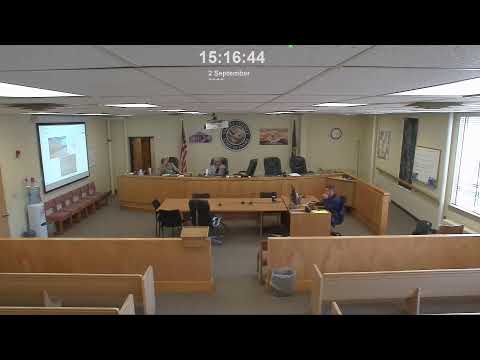
Valley County commissioners held an afternoon special session Sept. 2 to interview three finalists for the county prosecuting attorney position left open by Ryan Noggle, who has accepted a post with the Idaho Prosecuting Attorneys Association.
Brian Oakey, the county’s chief deputy prosecuting attorney, told commissioners he would seek to “continue to build upon the momentum that we’ve built over the last 4.5 years” if selected, keeping the office’s civil responsibilities while ensuring a “very capable” criminal division. Oakey said the office currently operates a rotating on-call schedule among four attorneys and that he would retain a robust civil practice while supervising administration, budgeting and staffing if elevated.
Oakey told the board the office must “always err on the side of being transparent” while balancing transparency with litigation risk, citing the Open Meetings Act as the baseline for public access to government business. He described victim services as a priority: Valley County’s office has a full-time victim/witness coordinator, a trained facility dog named Killian, and staff who work to keep victims informed and to pursue restitution or other remedies where possible.
Two outside candidates also interviewed. Spencer Lay described years of courtroom work in Boise County and six years as in‑house legal advisor to the Ada County Sheriff’s Office; he emphasized an “open door” approach to transparency and close coordination with law enforcement, training for deputies on evolving legal standards and use of pretrial or specialty court options where appropriate. Lay said he is prepared to try felonies and that a new prosecutor typically faces tests from defense attorneys seeking to see whether the office will take cases to trial.
Mark Shockley, a newly licensed Idaho attorney who has practiced in Nevada, said he favors transparency and teamwork with law enforcement and expressed support for maintaining or increasing victim‑witness services. He told commissioners he would “do it right the first time” and said his office would work closely with deputies to avoid defects that defense attorneys might later exploit.
Commissioners and candidates discussed several recurring operational issues: the office’s current caseload (Oakey and others noted roughly 41 active felony cases and about 94 misdemeanor/infraction cases), the county’s seasonal tourist population and short‑term rental pressures, cross‑training of attorneys so misdemeanor and felony work can be covered, and the possibility of adding a criminal attorney if the elevated workload proves persistent. Oakey said adding staff would be considered if high caseloads became the norm and would be reported through the budget process.
Candidates differed in emphasis but not on one point raised repeatedly by commissioners: the county has recently shifted to a more assertive prosecution posture under Noggle, and commissioners expressed an expectation that the next prosecutor maintain that approach. Oakey, Lay and Shockley each said they would support prosecutions where the facts and law warrant it and that they would work to preserve good relations with the sheriff’s office while remaining independent on charging and legal advice.
The board did not vote during the session; commissioners told candidates they planned to convene again at 4 p.m. the same day to make a decision and fill the vacancy so the office can handle its heavy docket going into fall and the busy tourism season.
The interviews included discussion of diversion and restorative approaches for juveniles, specialty courts, pretrial options, and the balance between rehabilitation and accountability. Oakey said diversion plays “an important role” for youth but that he would be “a little more hard‑nosed” with adults. Lay and Shockley said diversion and specialty programs can be effective in selected cases and stressed the need for judicial buy‑in and interagency coordination.
Commissioners asked candidates how they would handle conflicts involving law enforcement. Oakey described a standard practice of calling in outside prosecutors or neighboring counties when conflicts arise; Lay and Shockley similarly said outside counsel or the attorney general’s office would be used when appropriate to avoid appearances of favoritism.
Next steps: commissioners said they would decide later the same afternoon. The county’s bench and law enforcement officials told candidates they expect continuity, close coordination between the prosecutor’s office and the sheriff’s office, and attention to victim services as the office transitions leadership.
(Quotes in this article are taken from the Sept. 2 Valley County special session interview transcript. Candidate titles and roles are those stated in the session.)