Get Full Government Meeting Transcripts, Videos, & Alerts Forever!
Get email alerts on the Special Education topic
No spam. Unsubscribe anytime.
Special education parent advisory council reports growth, outreach and volunteer-led programs
Summary
The district's Special Education Parent Advisory Council (CPAC) told the School Committee it has expanded membership, built a school-by-school liaison structure, and is running surveys, workshops and outreach to support families of students with IEPs and 504 plans.
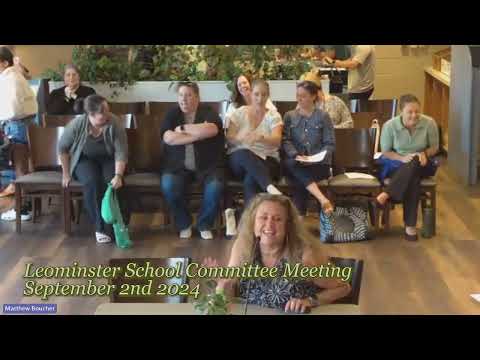
Laura Van Dorn, the district's special education administrator, and Angela Thomas, president of the Special Education Parent Advisory Council (CPAC), described CPAC's work to the School Committee on Sept. 2 and asked for continued committee support.
Van Dorn said the district serves more than 1,400 students with IEPs or 504 plans and that CPAC is made up of volunteer parents who provide a point of contact and a support network for those families.
"We are here to just give you an update on how this group of volunteer parents is supporting our over 1,400 students and families in the district who qualify as either a student with an IEP or a 504," Van Dorn said.
Thomas said CPAC recently revamped its bylaws, established defined roles (vice president, communications coordinator, technology coordinator, liaison coordinator) and created one-page summaries and postcards to reach families. The council has designated liaisons in each school and added a language liaison to reach non-English-speaking families.
CPAC leaders said they are rolling out anonymous surveys to gather parent feedback and are active on Facebook, Instagram and other platforms. Thomas said the group plans regular monthly meetings and a calendar of inclusive events and workshops for families.
A committee member asked about a remark in the presentation that Massachusetts is one of seven states that "has a law requiring CPAC." Van Dorn and Thomas said that state-level groups such as MASPAC and the Federation for Children with Special Needs provide broader support and that the local CPAC benefits from having an institutional role.
CPAC requested that committee members and school staff point families to the group at open houses and other school events and thanked volunteers for expanding the council's reach.
No formal action was taken; the session was an informational update.