Get Full Government Meeting Transcripts, Videos, & Alerts Forever!
Get email alerts on the School Grants And Attendance topic
No spam. Unsubscribe anytime.
Superintendent briefs committee on grants, rising economically disadvantaged share, English-learner screenings and attendance concerns
Summary
District officials reported grant funding history, increases in economically disadvantaged students, growing English-learner screening activity and elevated absenteeism; staff said interventions and reporting adjustments are underway.
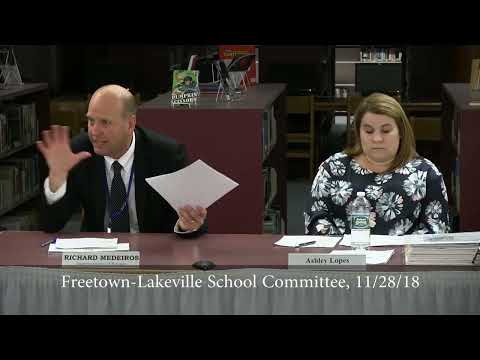
The superintendent and district administrators updated the Apponequet Regional School Committee Nov. 28 on federal grant history, trends in English-learner (EL) screenings, and what they described as “telling” levels of student absenteeism across schools.
The district provided grant data for fiscal years 2015–2019. Officials said the district’s Title I allocation for FY19 was $260,691 and that the bulk of Title I funds are used to pay for reading specialists’ salaries and associated retirement costs; that allocation leaves roughly $20,000 for other Title I interventions. The administration told the committee the district’s share of economically disadvantaged students rose from 21.3% in FY16 to 26.6% in FY19.
District staff said Title II funds are used mainly for professional development and mentor stipends, and that Title IV — a newer grant for well-rounded education and student safety — has more restrictive allowable uses, with a smaller percentage permitted for technology. The administration also noted the district no longer receives a previously available academic support grant that had funded MCAS tutoring and other tutoring interventions.
On English learners, staff reported 31 EL screenings already this school year and said 20 students are currently receiving direct EL services; administrators cautioned screening and enrollment are fluid and students enter and leave the district throughout the year. The district said consistency in EL staffing has improved in the last two years after historical instability in the program.
Attendance data prompted extensive discussion. Administrators said the district’s midterm review showed significant absenteeism across grade levels and that principals have begun convening building-based teams (guidance, administrators, counselors) to analyze causes and develop interventions. The administration emphasized some absences reflect medical or programmatic circumstances (for example, home- or hospital-based instruction) and that the district is formalizing procedures to better capture and report those cases in order to reduce counts attributed to chronic absenteeism. Staff also noted state reporting guidelines on attendance recently issued by the Department of Elementary and Secondary Education (DESE) affect how some absences are recorded.
Committee members asked for midyear updates from principals on attendance interventions and for the district to provide additional grant-related budget detail during the FY20 budget process. The director of student services also reported a loss of a special education program improvement grant (amount referenced in the meeting as “$2.74”); she said the grant was not carried over and therefore was not available to the district (the minutes do not specify whether that figure is an incomplete transcription).