Get Full Government Meeting Transcripts, Videos, & Alerts Forever!
Get email alerts on the Rent Stabilization topic
No spam. Unsubscribe anytime.
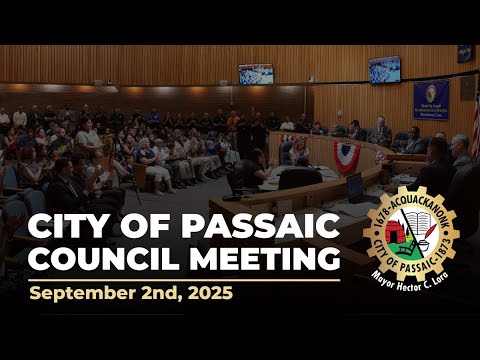
Passaic City Council adopts 3% rent cap with vacancy control after hours of public testimony
Summary
Passaic City Council on Sept. 2 approved an ordinance to cap annual rent increases at 3% and extend that cap to new tenants when units turn over. Council members cited public testimony on housing instability; landlords and tenant advocates pressed for protections, exemptions and hardship processes.
Passaic City Council on Sept. 2 passed an ordinance amending Chapter 2-31 of the city code to cap annual rent increases at 3% and to apply that cap when rental units become vacant, a policy commonly called vacancy control. The measure passed on a unanimous roll call vote by all seven council members.
The ordinance, listed in the meeting as proposed Ordinance 24-94-25, also requires landlords to file rent information with the city and preserves mechanisms for landlords to seek higher increases through existing hardship and capital-improvement provisions, according to the text presented at the hearing.
Why it matters: Proponents said the change will stabilize housing for long-term renters, veterans and survivors of domestic violence who described being priced out of Passaic since the pandemic. Opponents, including several landlords at the hearing, warned that limiting increases after vacancy could discourage investment in older buildings and make needed renovations unaffordable without a clear, predictable process for approving higher rents to cover major repairs.
At the hearing, dozens of residents and advocates addressed the council. Michael Kreitenberg, who said he manages many downtown Passaic apartments, warned the council that removing vacancy decontrol could leave owners unable to finance costly turn-over repairs in older buildings. “Old structures require a tremendous amount of attention and care,” Kreitenberg said. “If there’s not a decontrol upon vacancy of the unit, you’re going to see more and more buildings… left on cruise control.”
Several tenants and organizers urged the council to adopt the vacancy provision. Antonio, introduced at the podium by only his first name, described choosing between rent and other essentials and presented a chart to argue how smaller, consistent increases reduce long-term costs for families. “We all deserve to live with dignity and respect,” Antonio told the council.
Margie Fiore, a tenant attorney with Make the Road New Jersey, described exemptions and safeguards in the proposed ordinance intended to protect small landlords and new construction while limiting large market-driven increases. “Hardship applications and capital improvement applications… provide clear avenues for raising the rent if it’s economically necessary,” Fiore said.
Community advocates framed the ordinance as part of a broader local housing strategy. Jessica Kitson of Volunteer Lawyers for Justice emphasized veteran housing instability and urged passage to prevent displacement: “Rent stabilization is a crucial tool in combating the issue,” she said. Organizers with Make the Road and Movimiento Cosecha also spoke in favor of the ordinance and the vacancy-control provision.
Council members and the mayor repeatedly said the ordinance results from months of meetings with developers, landlords and advocacy groups and emphasized built-in safeguards. Council members noted owner-occupied single-family homes and most new construction are excluded from the ordinance, that property tax pass-throughs remain allowed, and that landlords may seek additional increases through the rent-leveling board under the ordinance’s hardship and capital-improvement provisions.
Council debate focused on balancing tenant protections with preserving a healthy housing stock. Opposing views highlighted the cost to renovate large older apartments—a figure one landlord estimated could exceed $25,000 to $50,000 for a multi-room unit—and the risk that limits on post-vacancy increases could reduce property values and shift tax burdens. Supporters warned that without vacancy control, landlords have an incentive to push out tenants to re-rent at much higher rates.
Votes at a glance: - Ordinance 24-94-25 (Rent stabilization: 3% cap, vacancy control; requires landlord filings; hardship and capital-improvement exceptions) — Passed unanimously (Councilman Monk: yes; Councilman Love: yes; Councilwoman Mello: yes; Councilman Mayer: yes; Councilman Garcia: yes; Councilwoman Coloma Muntenez: yes; Council President Schaer: yes). - CY2025 municipal budget adoption (resolution) — Passed by roll call (see council record). The budget totals $118,671,000 and uses an estimated $13,000,000 of the city’s surplus in this fiscal year, according to the finance presentation at the meeting. - Additional ordinances and procedural votes (e.g., authorizing a cap bank under N.J. law and several vehicle/parking-related ordinances) were approved or advanced to second/final reading where noted on the agenda; these were handled by separate roll-call votes during the meeting.
Implementation and next steps: The ordinance includes a rent-leveling board process for hardship and capital-improvement applications. Council members said the city will monitor housing and tax data and reconvene if the ordinance produces unintended citywide fiscal impacts. The mayor and council also announced an ad-hoc policy working group to continue stakeholder meetings and to refine implementation details.
The ordinance passed after a public hearing that drew tenants, landlords, legal-aid attorneys, veterans’ advocates and community organizers. Several speakers asked for clear guidelines from the rent-leveling board on how it will evaluate requests for increases tied to capital work or owner hardship; council members agreed to explore clearer board guidance and continued stakeholder meetings.
The meeting record shows the council set other items for future consideration, adopted the municipal budget and approved administrative measures including municipal parking and traffic ordinances and capital-repair grants, which council members said support long-term affordability and neighborhood upkeep.
A final note: The council’s ordinance text and the full roll-call vote are part of the public meeting record and are posted by the city clerk. The council’s stated plan is to monitor outcomes and revisit the policy if data indicate adverse citywide fiscal or housing impacts.