Get Full Government Meeting Transcripts, Videos, & Alerts Forever!
Get email alerts on the City Solicitor Duties topic
No spam. Unsubscribe anytime.
Holyoke committee backs charter change to let council set law department duties by ordinance
Summary
The Charter & Rules Committee voted to forward a proposed amendment to Section 39 that would make the law department’s duties subject to ordinance, following a lengthy debate about separation of powers and the council’s need for access to independent counsel.
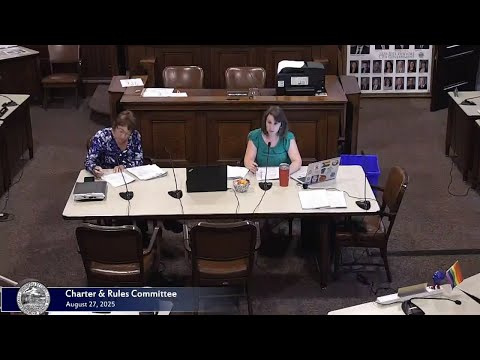
The Charter & Rules Committee of the Holyoke City Council voted to send to full council with recommendation a proposed amendment to Charter Section 39 that would replace the charter’s current expansive description of the city solicitor’s duties with language saying the city solicitor shall perform legal services as the city council establishes by ordinance.
The proposal, introduced by Councilor Jordain, would condense the first two sentences of Section 39 into a single line authorizing the council and mayor, by ordinance, to define the law department’s duties. Jordain told the committee the change is intended to remove ambiguity that has, at times, allowed the law department to assert sweeping authority that could block charter or ordinance changes. “All departments of the city, their duties and functions are set by ordinance and the law department shouldn’t be an exception,” Jordain said.
Proponents argued the change brings the law department in line with other municipal departments and prevents the department from claiming that the charter’s historical language immunizes it from ordinance-based changes. Councilor Jordain cited a 2012 Superior Court dispute in which the law department argued that the charter language conferred exclusive authority; a judge rejected that interpretation in that case, he said.
Opponents, including Solicitor Mike Bissonnette, warned the amendment could create operational problems in future administrations by constraining the law department’s ability to advise the mayor and city on emergent legal needs. “You may get a solicitor appointed by the mayor who says, ‘I’m not going to do anything unless it’s specifically in an ordinance,’” Bissonnette said, arguing that an exhaustive ordinance list could not anticipate every legal duty the city needs.
Other councilors sought middle ground. Some noted the mayor’s budget this year included funding for independent legal opinions for the council as part of a compromise during the Municipal Modernization Act negotiations, but Jordain said the ordinance mechanism is necessary if future administrations choose not to fund that service.
After discussion, the committee approved the proposed charter language and voted to move it forward to the full council with a recommendation. The motion passed by voice vote; the meeting record shows committee members voting “Aye.” The item will next be considered by the full council and, if approved there and by the mayor, would go to the Legislature as a home rule petition.
The committee debate made a point of distinguishing advisory legal opinions (which some speakers described as subject to change) from the charter’s structural authority; proponents framed the amendment as a modernization aligning 19th-century charter text with contemporary municipal practice.
The committee also noted that any subsequent changes to the law department’s scope would be implemented through ordinance and that separate provisions could specify council access to independent counsel in ordinance language.