Get Full Government Meeting Transcripts, Videos, & Alerts Forever!
Get email alerts on the Planning And Zoning topic
No spam. Unsubscribe anytime.
Eaton County planning consultant outlines targeted master plan update to allow interested villages, cities to join county zoning
Summary
Consultants and county staff described a grant-funded, targeted update to Eaton County's future land use map and zoning code to create a pathway for interested cities and villages to come under county zoning, while staff said they will review capacity before accepting new jurisdictions.
At a meeting of the Eaton County Planning Commission, consultant Jason Ball said the county is pursuing a targeted update to its master plan and zoning code to give a clear pathway for cities and villages that want to come under county zoning jurisdiction.
The update is funded by a grant from the Michigan State Housing Development Authority (MSHDA) and focuses on revising the countys future land use map and adding new land-use classifications to accommodate smaller-lot, sewered communities, Ball said. The county expects to present a draft of the limited plan update in October and, after required public notice, to aim for formal adoption around December, he added.
Ball, lead consultant with Progressive Companies, told commissioners the work responds to several municipalities that have expressed interest in joining Eaton Countys zoning jurisdiction. He said the update will create new future land use classifications (including a downtown commercial/compact neighborhood designation) and revise the zoning code so that municipalities with sewer and water can be managed under the county code. "The county received a grant from MSHDA as part of a state program to fund local units of government across Michigan to update existing ordinances and plans to support development of more housing across the state," Ball said.
Why it matters: the change would let smaller municipalities rely on county planning and permitting capacity rather than maintaining their own full zoning staffs, Ball said. That, he said, can reduce uncertainty for developers and streamline reviews by aligning zoning, permitting and building review under one agency.
Ball listed municipalities included in the draft pathway: the city of Olivet and the villages of Vermontville, Mulliken and Sunfield. He said future land use maps also are being prepared for Hamlin and Benton townships and the village of Bellevue to give those places a ready pathway if they choose to join later. Ball said Hamlin, Benton and Bellevue have not indicated interest in joining the county at this time.
Ball said the county will also review its existing zoning code for opportunities to allow more housing countywide (for example, considering two-family homes) but cautioned that development capacity in unsewered areas is limited by on-site septic systems. "You're pretty limited," Ball said, noting the countys larger constraints outside sewered places.
County staff said they will not add new municipalities until they first secure service arrangements with the 11 townships already under county zoning. "If after all this is done, we'll have to review the staff levels and where do things fall to ensure that we are still going to be able to provide adequate services for our existing 11 townships if we were to add on another municipality," said Brandy, Eaton County planning staff (last name not provided). She said the county is working on intergovernmental agreements with the current townships and will evaluate workload and staffing before expanding services.
Ball projected the code update work to continue into early next year, with municipalities that decide to join expected to adopt the county code by repealing their local zoning ordinances and, if they choose, keeping an advisory planning commission. He said municipalities that do adopt the county code could do so in 2026 or early 2027 depending on local interest.
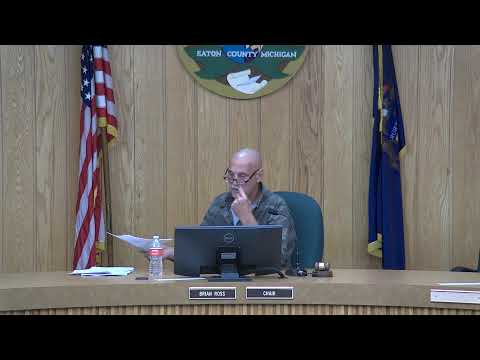
Commissioners asked how the county could influence housing supply. Commissioner Brian Ross asked what leverage the county has to increase housing. Ball answered that the countys role is mainly to reduce barriers and increase certainty for developers by centralizing technical review and by updating maps and standards; he said that alone was unlikely to "open the floodgates" but would lower hurdles for larger proposals in small municipalities.
A county staff member also noted that a separate hearing on an amendment to allow duplexes as a use by right was occurring elsewhere that evening, a development some commissioners said was timely in light of the master plan work.
No formal planning actions or votes on the master plan or zoning code were recorded during the meeting. The commission will receive the draft master plan updates in October and may forward the draft to the county board of commissioners for consideration after that presentation. Ball and county staff invited commissioners and local officials to provide feedback as the maps and draft code are finalized.
The meeting ended with routine motions to approve the agenda and to adjourn; both were passed by voice vote (counts not specified in the transcript).