
Alpena County commissioners approve resolution opposing privatization of public behavioral health system
Get AI-powered insights, summaries, and transcripts
Sign Up Free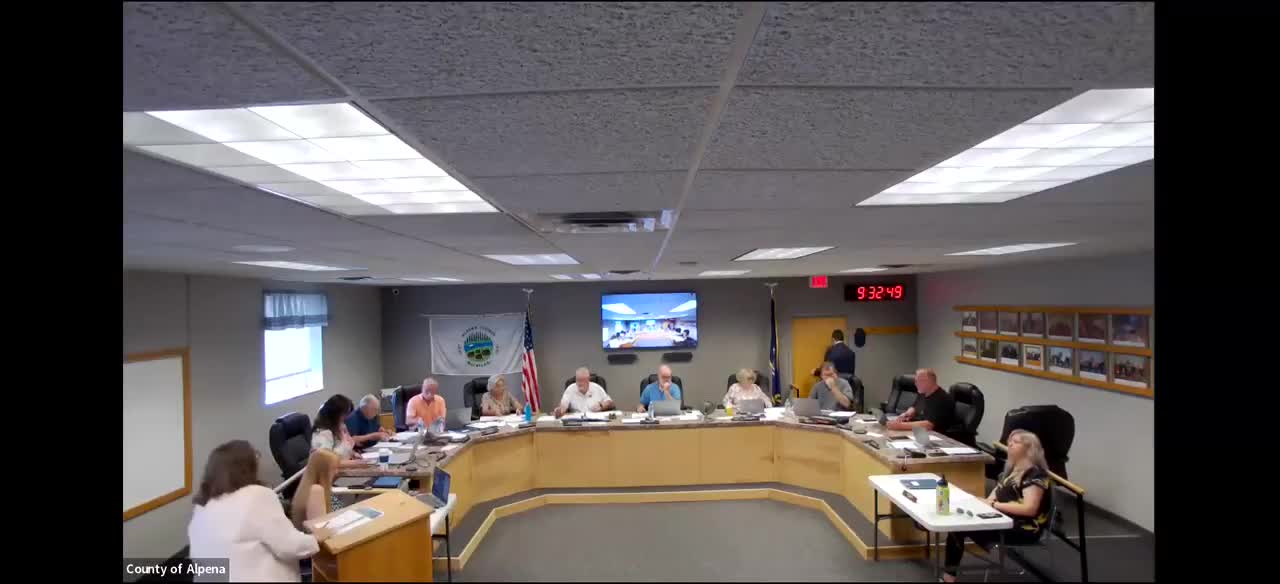
Summary
The Alpena County Board of Commissioners unanimously approved a resolution opposing state plans to privatize the public behavioral health managed-care system after a presentation from the executive director of Northeast Michigan Community Mental Health.
The Alpena County Board of Commissioners on Tuesday voted to adopt a resolution opposing the privatization of the public behavioral health system and authorized the chair to sign the document.
Nina Sork, executive director of Northeast Michigan Community Mental Health, told commissioners the agency served 2,140 clients in fiscal 2024 and provided 489 crisis services plus 609 psychiatric assessments to people across the region. She described the agency’s work as a safety net for residents with severe persistent mental illness, serious emotional disturbances in children, autism, and intellectual developmental disabilities.
Sork explained why the agency asked the board to act. She said the state has begun bidding out the PIHP (Prepaid Inpatient Health Plan) contracts and excluded regional public entities from the procurement process. “If it privatizes, you lose government immunity,” Sork said, arguing that loss of immunity would make it difficult to recruit and retain clinicians to serve the highest-risk patients. She also cited concerns about higher administrative fees under privatization, reduced transparency, and reduced local control.
Sork told commissioners the agency had recently completed CARF accreditation with no recommendations in 17 clinical programs and described a Narcan distribution partnership with the regional Overdose Prevention Engagement Network. She urged commissioners to pass the resolution to register the county’s opposition and to press legislators and the administration on the issue.
Commissioners moved and seconded a motion to adopt the resolution that had been included in the meeting packet. A roll-call vote was taken; all voting commissioners recorded “yes” and the motion carried.
Why it matters: Sork said the change would shift Medicaid-managed behavioral health dollars into the private sector and cited a difference in allowable administrative fees the agency said could reduce funds available for direct services. She also emphasized potential service gaps in rural areas and the county’s limited ability to rely on institutional beds.
Votes and next steps: The board adopted the resolution and authorized the chair to sign and transmit it. Sork said the agency would continue outreach to legislators and the governor’s office and was seeking exemptions for rural providers.