Get Full Government Meeting Transcripts, Videos, & Alerts Forever!
Get email alerts on the Labor Operations topic
No spam. Unsubscribe anytime.
Muni operators and unions denounce SFMTA’s new 'personal necessity' (702) restrictions; agency urges wellness checks for prolonged absences
Summary
Union leaders, operators and transit advocates told the board the agency’s bulletin tightening rules for operator personal necessity breaks undermines safety and dignity; SFMTA management said the procedure sets expectations and allows wellness checks when supervisors lose contact.
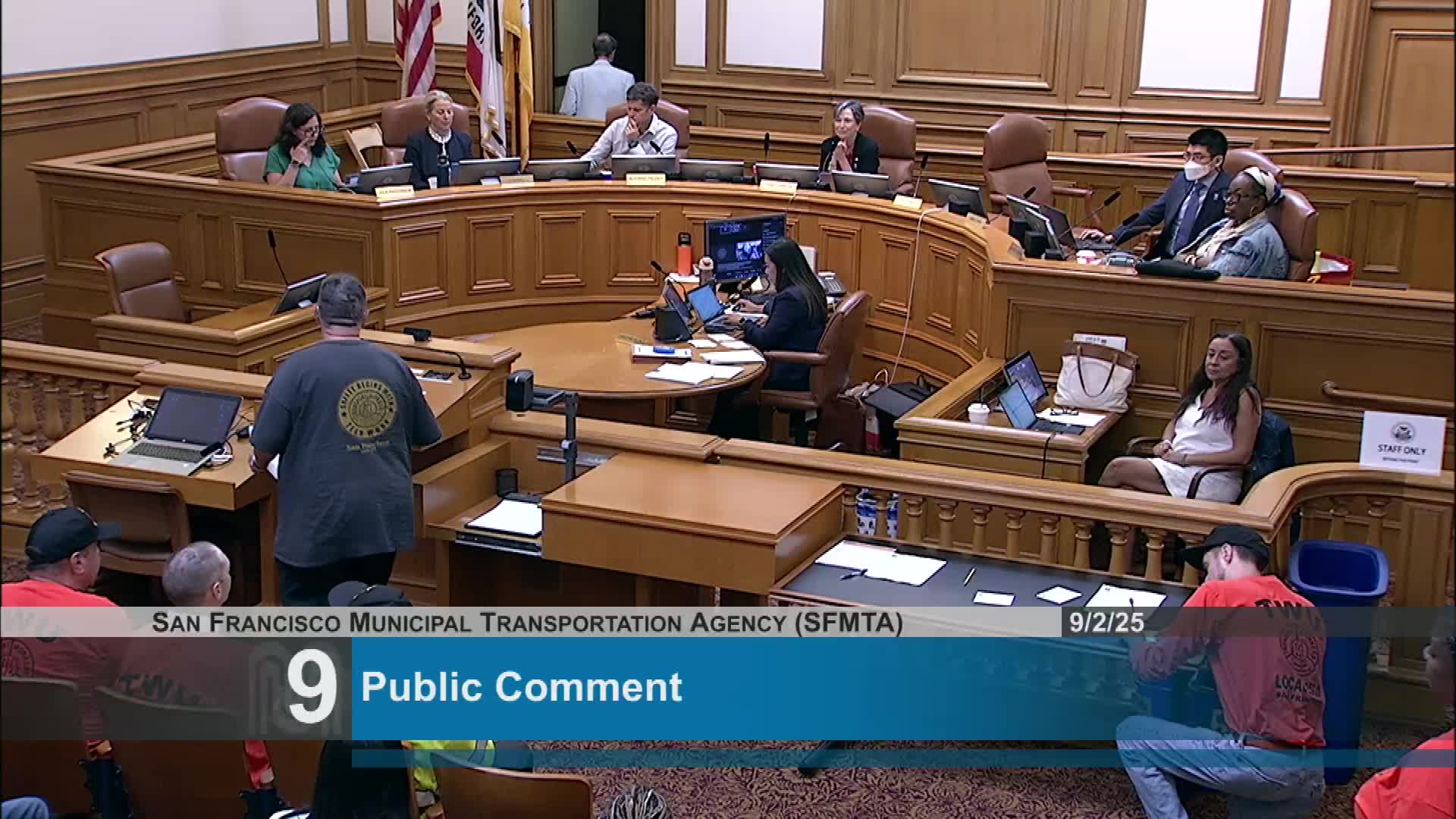
Dozens of Muni operators and union leaders used general public comment to protest a recently issued SFMTA bulletin that restricts the agency’s long‑standing practice allowing operators to take “personal necessity” (often called “702”) time during shifts.
Union leaders said the bulletin is demoralizing, threatens operator safety and forces workers to “turn and burn” through long shifts with reduced ability to take short breaks for meals, medical needs or caregiving. The Transport Workers Union and TWU Local 200 representatives described multiple grievances and said the issue had been raised in bargaining and outside forums.
“I’m not exaggerating when I say that Brent Jones’ August 16 general notice entitled operator personal necessity procedure is far and away the single most dehumanizing thing I have ever seen this agency do,” said operator Bridal Bartholomew. TWU Local 200 President Devon Anderson said the union has raised payroll and timekeeping grievances separately.
SFMTA response: Brent Jones, a senior SFMTA manager who addressed the board at the chair’s request, said the agency is seeking to set clear expectations because “a small number of employees” were using breaks in ways that degraded service and, in some cases, affected safety. Jones said the procedure does not bar operators from taking personal necessity time but asks employees to communicate with supervisors if a break exceeds a threshold so staff can confirm safety and welfare and provide support if needed.
Why it matters: Operators said breaks are essential to manage medical conditions (diabetes, incontinence or other health needs), caregiving responsibilities and to avoid fatigue that can lead to preventable accidents. Multiple operators urged management to withdraw the bulletin and to pursue the issue at the bargaining table.
Next steps: Board members requested additional communication between management and unions and asked SFMTA to provide a clearer explanation of the procedure and its application. No formal board action was taken at the meeting.