Get Full Government Meeting Transcripts, Videos, & Alerts Forever!
Get email alerts on the Urban Forestry Maintenance topic
No spam. Unsubscribe anytime.
Board debates replacement options for aging Washingtonia palms, flags safety and maintenance costs
Summary
Board members discussed several Washingtonia palms damaged by lightning and age, community sensitivity about removing iconic palms, replacement options (ribbon palms, hardwood canopy), and long-term maintenance costs and safety risks for workers.
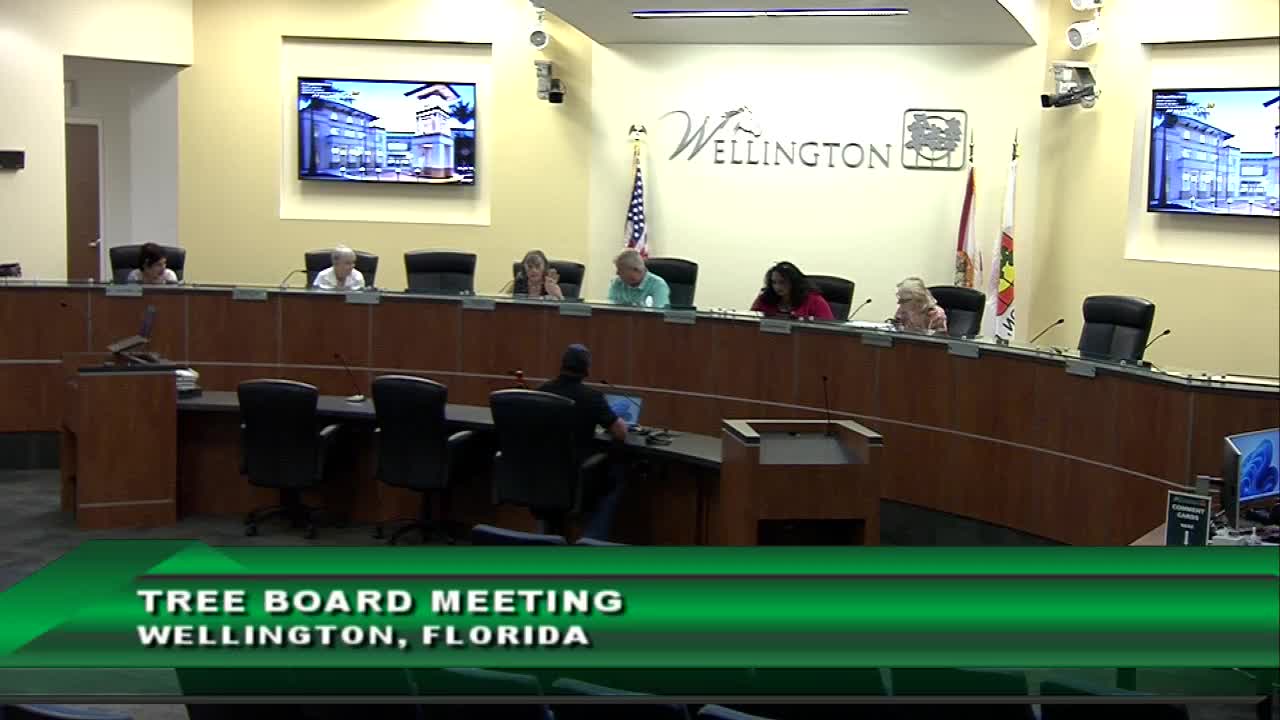
The Tree Board discussed plans for several Washingtonia palm removals and options for replacement, balancing community preference for a palm-lined look with worker safety and maintenance burdens.
A board member asked about a line in the removals spreadsheet showing five removed palms and noted they had not been replaced. The public-works staff member said several Washingtonias had been struck by lightning over the past year or two and that the palms are “coming toward the end of their lifespan.” The staff member said the palms “get to the height where they're hard to maintain” and that staff has not been replanting them to date.
Some members urged care before any removal. “Please let us know about that plan before any action is taken because that is a very sensitive subject,” one board member said. The staff member recalled past community objections when palms were removed for a pathway-widening project and suggested the board might prepare artist renderings and a public plan before replacing palms.
Replacement options and maintenance: board members and staff discussed alternatives, including shorter or slow-growing palms such as ribbon palms, groups of sable palms, or hardwood shade trees to create more canopy. One board member said ribbon palms “would look nice,” while staff cautioned certain palms still grow tall and can drop hazardous fronds or boot “boots” that require removal.
Safety concerns: staff raised worker-safety and public-safety issues with very tall Washingtonias, noting a point when palms “get to be a point when Washingtonians get dangerous, not just for the public, but for the people who are working on them.” The transcript includes a cautionary remark that tree trimmers are sometimes killed when extreme failures occur; staff and members framed that as part of why replacement timing merits careful planning.
Next steps: staff said they would develop a replacement plan with renderings and discuss timing and community engagement before widespread removals or replantings.